50 Other Ways to Say “Just to Confirm” Before Proceeding 🙂
Just to Confirm Before Proceeding means checking information again before taking action. It is used to make sure details are correct. People say it when they want clarity and accuracy. It helps avoid mistakes. It shows care and responsibility. It is common in emails and meetings.
Have you ever sent an email and later found out the time was wrong? Small mistakes can cause big problems. A quick confirmation can save time and stress. Clear words prevent confusion. Strong communication builds trust. That is why confirming matters.
Using Just to Confirm Before Proceeding is common in workplaces across the USA. It is helpful when confirming meetings, deadlines, or appointments. It keeps everyone on the same page. It supports professional communication. It makes teamwork smoother. Clear confirmation leads to better results.
Why You Should Stop Overusing “Just to Confirm” in Professional Communication
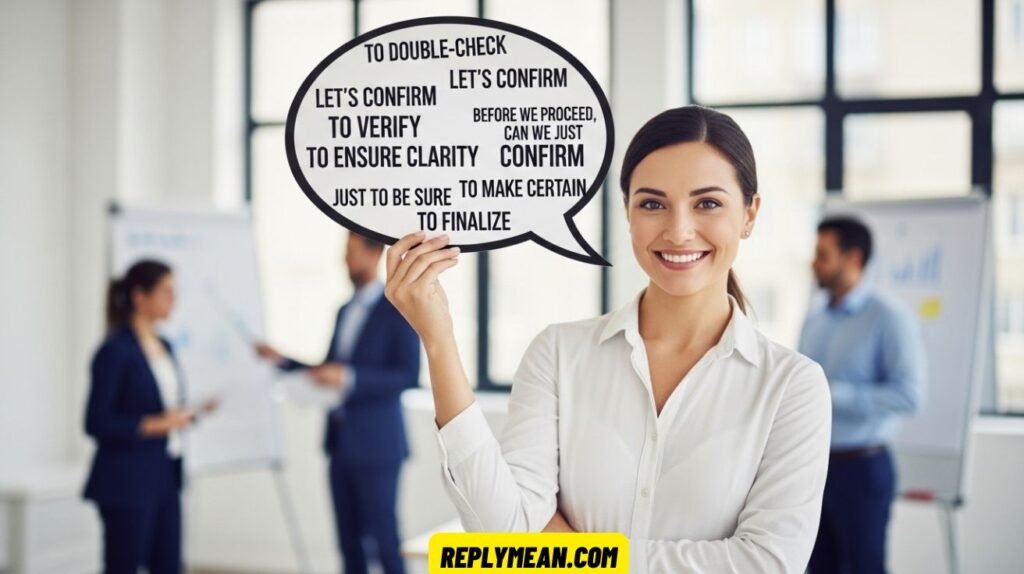
Many people do not realize that the word “just” can weaken a sentence. In American business culture, clarity and confidence matter. When you say “just to confirm,” it can sometimes sound uncertain or overly cautious. This does not mean the phrase is wrong. It simply means that there are stronger ways to say it.
When you improve your workplace email language, you also improve your credibility. Strong business communication phrases show leadership. Clear language supports ensuring accuracy in communication, especially when you are confirming meeting time, confirming appointment, or confirming deadline details.
Communication experts often say:
“Clarity builds trust. Repetition weakens authority.”
Using varied clarification phrases for emails helps you avoid sounding repetitive and helps you maintain a confident professional email tone.
Below is a simple comparison table showing how wording changes tone.
| Phrase | Tone | Impression |
| Just to confirm | Neutral | Safe but repetitive |
| To clarify | Direct | Clear and confident |
| Could you kindly confirm | Formal | Polite and respectful |
| Just checking | Casual | Friendly but informal |
| Confirming that | Professional | Structured and strong |
Understanding formal vs informal confirmation is important in American offices. Tone should match the audience. Now let us explore the alternatives.
Alternatives to “Just to Confirm”

Below are 50 other ways to say “just to confirm” before proceeding. The first twelve are required headings, followed by expanded options grouped by tone and use case.
1. To Clarify
“To clarify” is direct and confident. It is useful when you want to restate information clearly without sounding unsure. It works well in reports and corporate emails.
Example:
To clarify, the meeting will begin at 3 PM Eastern Time.
This phrase helps when verifying information in writing and supports email wording for clarity.
2. Just Making Sure
This phrase sounds friendly and conversational. It is good for coworkers you know well.
Example:
Just making sure we are meeting in Conference Room B.
It works well for checking availability politely and light internal communication.
3. To Verify
“To verify” sounds professional and precise. It is ideal when accuracy matters.
Example:
To verify, the contract amount is $12,500.
This is excellent when you must verify information professionally or review legal or financial documents.
4. Just Double-Checking
This phrase shows care and attention. It supports double-checking information without sounding formal.
Example:
Just double-checking that the presentation slides are finalized.
It is useful when confirming project details.
5. For Clarification
This is slightly more formal and common in structured communication.
Example:
For clarification, the deadline has been extended to Friday.
This fits well within corporate communication phrases.
6. To Confirm
Simple, clear, and widely accepted in professional settings.
Example:
To confirm, you will attend the client meeting tomorrow.
This supports confirmation request wording and sounds neutral.
7. I Just Want to Make Sure
This phrase softens the message. It is collaborative and polite.
Example:
I just want to make sure everyone received the updated file.
It fits within modern team alignment language.
8. Confirming That
This is useful in summaries after meetings.
Example:
Confirming that the marketing launch is scheduled for May 10.
It is helpful in confirmation message examples and documentation.
9. Just to Make Sure We’re Aligned
This phrase emphasizes teamwork and shared understanding.
Example:
Just to make sure we’re aligned, the proposal goes to the client today.
It reflects strong workplace communication tips for team culture.
10. To Ensure
“To ensure” focuses on responsibility.
Example:
To ensure everything runs smoothly, I am reviewing the agenda again.
This supports ensuring accuracy in communication.
11. For the Record
This phrase is more assertive and formal.
Example:
For the record, the client approved the revised quote.
It is often used in formal business expressions.
12. Just to Verify
This is slightly softer than “to verify” but still professional.
Example:
Just to verify, the shipment leaves tomorrow morning.
It works well in customer service confirmation phrases.
13. For Your Confirmation
This phrase is polite and slightly formal. It works well when you are sharing information and asking the other person to review it.
Example:
For your confirmation, the training session will begin at 9 AM on Monday.
This option is useful when confirming schedule details in client communication.
14. Kindly Confirm
“Kindly confirm” is professional and respectful. It is often used in American corporate emails when addressing clients or senior leaders.
Example:
Kindly confirm the delivery address before we proceed.
This phrase supports strong polite business language.
15. Please Confirm
This is simple, direct, and widely accepted in professional emails.
Example:
Please confirm the final version of the proposal.
It works well when confirming project details.
16. May I Confirm
This sounds courteous and slightly formal. It is helpful when you want to show respect.
Example:
May I confirm that the contract begins on April 1?
This is ideal for formal business expressions.
17. I’d Like to Confirm
This phrase sounds confident and professional.
Example:
I’d like to confirm our discussion regarding the updated pricing.
It fits naturally into structured corporate communication.
18. Confirming Receipt
This phrase is often used when acknowledging documents.
Example:
Confirming receipt of your signed agreement.
It is especially helpful when you need to confirm receipt of email clearly.
19. Please Verify
“Please verify” is firm but professional. It shows attention to detail.
Example:
Please verify the invoice totals before payment.
This works well when you need to verify information professionally.
20. For Verification Purposes
This phrase sounds official and is often used in documentation.
Example:
For verification purposes, please review the attached file.
It supports accuracy and careful review.
21. Just Checking In
This phrase is friendly and neutral. It works well in follow-up situations.
Example:
Just checking in regarding tomorrow’s meeting.
It is one of the most common polite follow-up phrases.
22. Quick Confirmation
This sounds efficient and modern.
Example:
Quick confirmation that the presentation is finalized.
It is helpful in fast-moving office environments.
23. Checking to Confirm
This phrase is direct and clear.
Example:
Checking to confirm that the shipment leaves today.
It is useful when clarity is essential.
24. Wanted to Reconfirm
This phrase is slightly softer and works well in ongoing projects.
Example:
Wanted to reconfirm the timeline before moving forward.
It fits well when reconfirming appointment or deadlines.
25. As Discussed, Confirming
This phrase connects to a previous conversation.
Example:
As discussed, confirming the marketing launch date.
It shows organized communication.
26. Per Our Conversation
This phrase references earlier discussions in a professional tone.
Example:
Per our conversation, the budget has been approved.
It supports proper documentation.
27. Confirming Our Agreement
This phrase is strong and clear.
Example:
Confirming our agreement on the revised terms.
It works well in formal business writing.
28. Can You Confirm
This phrase is direct but polite.
Example:
Can you confirm the meeting time for tomorrow?
It is effective when you need a quick response.
29. Please Confirm the Details
This is specific and avoids vagueness.
Example:
Please confirm the details listed above.
It helps with ensuring accuracy in communication.
30. Just Checking On
This phrase is informal but professional enough for coworkers.
Example:
Just checking on the updated draft.
It is helpful in internal teams.
31. Reconfirming Appointment
This phrase works well in scheduling emails.
Example:
Reconfirming appointment for Thursday at 10 AM.
It is common in service industries.
32. Confirming Attendance
This phrase is ideal for events and meetings.
Example:
Confirming attendance for Friday’s workshop.
It is clear and concise.
33. Confirming Schedule
This phrase focuses directly on timing.
Example:
Confirming schedule for next week’s training session.
It works well when confirming meeting time.
34. Confirming Deadline
This phrase is strong and specific.
Example:
Confirming deadline for final submission is May 15.
It helps prevent confusion.
35. Just to Be Certain
This sounds careful and responsible.
Example:
Just to be certain, the payment is due Friday.
It conveys professionalism without sounding stiff.
36. Let Me Confirm
This phrase shows ownership and responsibility.
Example:
Let me confirm the final numbers with accounting.
It is useful in leadership communication.
37. Allow Me to Confirm
This phrase is formal and respectful.
Example:
Allow me to confirm the shipping address.
It works well in client communication.
38. Please Advise if Correct
This phrase is professional and structured.
Example:
Please advise if the above information is correct.
It is common in corporate settings.
39. Seeking Confirmation
This phrase is formal and often used in official emails.
Example:
Seeking confirmation regarding the contract terms.
It sounds precise and intentional.
40. Confirming the Above
This phrase refers clearly to earlier content.
Example:
Confirming the above details for your review.
It keeps communication organized.
41. Before Proceeding, Confirming
This phrase clearly explains your purpose.
Example:
Before proceeding, confirming that all approvals are complete.
It emphasizes responsibility.
42. Prior to Moving Forward
This phrase sounds strategic and professional.
Example:
Prior to moving forward, please confirm the pricing structure.
It fits well in corporate communication.
43. For Accuracy
This phrase highlights attention to detail.
Example:
For accuracy, the event begins at 6 PM Eastern Time.
It strengthens clarity.
44. To Avoid Confusion
This phrase explains your reason for confirming.
Example:
To avoid confusion, the updated file is attached.
It prevents misunderstandings.
45. Ensuring We Are on the Same Page
This phrase promotes teamwork.
Example:
Ensuring we are on the same page regarding the project scope.
It is strong team alignment language.
46. As a Final Check
This phrase suggests careful review.
Example:
As a final check, the deadline is tomorrow at noon.
It works well before submission.
47. One Last Confirmation
This phrase signals completion.
Example:
One last confirmation that the order is ready to ship.
It sounds clear and focused.
48. Just Reconfirming
This phrase is casual but still professional.
Example:
Just reconfirming the conference call time.
It works well in internal communication.
49. Verifying Before Proceeding
This phrase is structured and formal.
Example:
Verifying before proceeding with the payment.
It emphasizes responsibility.
50. Confirming Before We Move Forward
This final phrase is direct and clear.
Example:
Confirming before we move forward with the proposal submission.
It clearly explains your intention and keeps your message professional.
See Also : Since vs Sense – Difference, Meaning & Usage Guide
Professional Ways to Confirm Details in Email
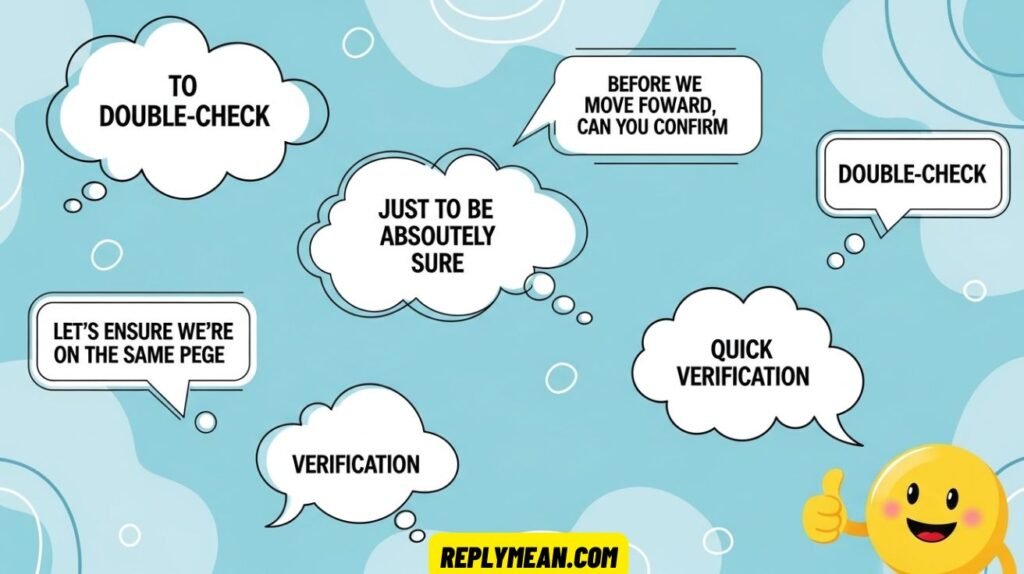
In American workplaces, learning how to confirm details in email is essential for clear communication. Instead of repeating the same phrase, professionals use varied wording to maintain a strong and confident tone. Clear confirmation prevents misunderstandings, especially when discussing contracts, pricing, timelines, or responsibilities. Using precise language helps build trust and credibility with coworkers and clients.
When you verify information professionally, your email sounds more organized and thoughtful. Strong wording shows attention to detail and respect for others’ time. Choosing the right confirmation phrase also improves your overall professional email tone. In fast-paced offices across the USA, clarity and confidence in written communication truly make a difference.
Double-Checking Information Before Moving Forward
Carefully double-checking information before proceeding can prevent costly mistakes. Whether you are confirming a deadline, location, or financial figure, reviewing details protects both you and your team. In many industries, small errors can lead to delays or confusion. Taking a moment to reconfirm ensures smoother collaboration and better outcomes.
Professionals often use clear wording when verifying information in writing. Instead of sounding unsure, they express responsibility and accuracy. This approach supports ensuring accuracy in communication while maintaining efficiency. In American business culture, being thorough is seen as a strength, especially when handling important decisions or client agreements.
Clarification Phrases for Emails in the Workplace
Using strong clarification phrases for emails helps avoid confusion in busy offices. Clear messages are especially important when teams work remotely or across different time zones. Well-structured confirmation requests allow everyone to understand expectations. Good clarification improves teamwork and reduces unnecessary follow-up messages later.
Effective workplace email language focuses on precision and simplicity. Professionals choose direct sentences that restate key details, such as meeting times or project deliverables. This method supports stronger collaboration and prevents miscommunication. Clear email wording encourages faster responses and better alignment among team members.
Confirming Meeting Time and Appointments Professionally
When confirming meeting time, it is important to repeat the exact date, time, and time zone. This avoids confusion and demonstrates professionalism. In American offices, punctuality is valued highly, so confirming schedules clearly shows respect. Structured confirmation also reduces the risk of missed calls or overlapping appointments.
Similarly, confirming appointment details is common in healthcare, consulting, and corporate settings. Professionals may also send reminders when reconfirming appointment dates. Clear communication reassures clients and colleagues that everything is organized. Using polite and confident language strengthens professional relationships and builds reliability.
See Also : 50 Other Ways to Say “Thank You for Your Insight”
Email Examples Using Alternatives to “Just to Confirm”
Here is a simple confirmation email template you can adapt:
Subject: Confirming Meeting Time
Hello Sarah,
I am writing to confirm our meeting scheduled for Thursday at 2 PM Eastern Time. Please confirm receipt of email and let me know if there are any changes.
Thank you,
Michael
Here is another example for confirming appointment:
Subject: Appointment Confirmation
Dear Mr. Davis,
Confirming appointment for March 12 at 11 AM at our Chicago office. Kindly verify if this time still works for you.
Best regards,
Amanda
These confirmation message examples show clear email etiquette phrases and structured confirmation request wording.
Common Mistakes When Confirming Information
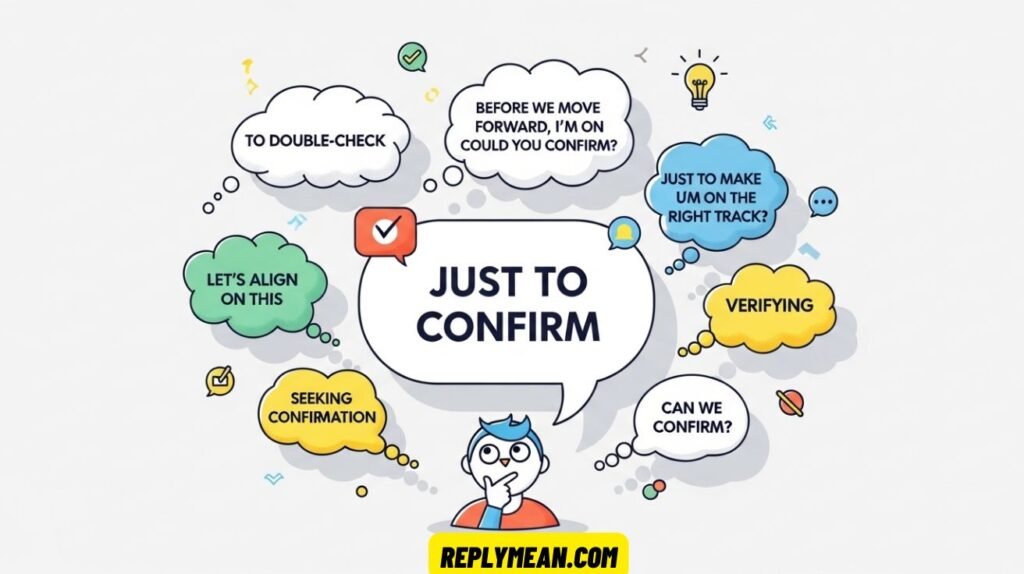
Many professionals overuse the word “just,” which can weaken authority. Others forget to be specific. Saying “just to confirm” without restating details does not help.
Another mistake is being too informal with clients. While “just checking” works internally, it may not be appropriate in formal settings.
Finally, avoid vague language. Instead of saying “just to confirm,” clearly state what you are confirming. For example, “To confirm, the project launch date is July 15.”
Clear language supports ensuring accuracy in communication and prevents misunderstandings.
FAQs
What does “just to confirm” mean?
It means checking information again to make sure it is correct.
People use it to avoid mistakes before taking action.
What is another word for just to verify?
Another word is “to clarify” or “to confirm.”
Both phrases mean checking facts to ensure accuracy.
What is another word for just confirming?
You can say “reconfirming” or “verifying.”
These words also mean checking details again.
How do I politely confirm something?
Use respectful phrases like “Could you please confirm?”
Keep your message clear, simple, and professional.
Final Thoughts
Good communication helps people work better together. The phrase “Just to Confirm” may sound small, but it plays an important role in daily life. It helps you check details before you move forward. It prevents mistakes and confusion. Clear confirmation shows responsibility and care. When you use better wording, your message sounds stronger and more professional.
Using different ways to say “Just to Confirm” improves your writing skills. It makes your emails clear and confident. Strong words show leadership and respect. In school or at work, clear confirmation keeps everyone on the same page. Simple and direct language builds trust. Good communication always leads to better results and success.