Since vs Sense – Difference, Meaning & Usage Guide (2026)
Since vs Sense are two English words that sound the same but have different meanings. “Since” shows time or reason in a sentence. “Sense” means understanding, feeling, or awareness.
Many students write “that makes since” by mistake. This small error can change the meaning of a sentence. Learning the correct word helps you write clearly and confidently.
Understanding Since vs Sense improves grammar and writing skills. These words are common in school essays and daily conversation. When you know the difference, you avoid confusion and communicate better.
What Is the Difference Between Since and Sense?
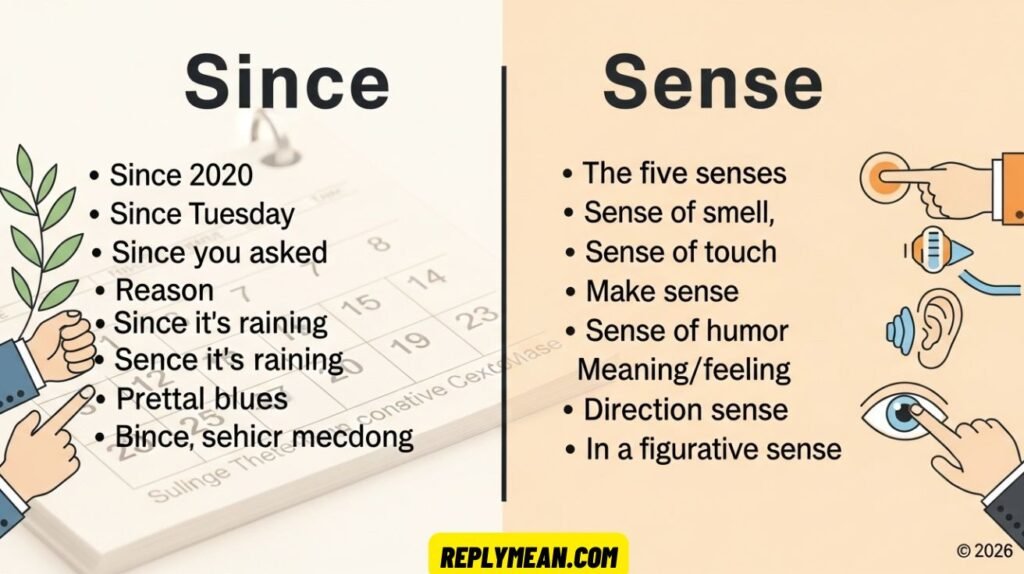
Understanding the difference between since and sense begins with knowing their parts of speech and meanings. These are examples of parts of speech in English, and each word plays a different role in a sentence.
The word since is used to talk about time or reason. It can function as since as a preposition or since as a conjunction. The word sense is a noun. It functions as sense as a noun and refers to understanding, feeling, or perception.
Below is a clear comparison table to help you see the difference quickly.
| Word | Part of Speech | Meaning | Example |
| Since | Preposition / Conjunction | Time or reason | I have lived here since 2018. |
| Sense | Noun | Understanding or feeling | That idea makes sense. |
This table highlights the core idea behind since vs sense grammar and since vs sense usage.
Since Meaning and Examples
To understand since meaning and examples, remember that this word connects to time or cause.
When used for time, it appears in since for time expressions. For example, “I have worked here since 2020.” This shows when something started.
When used for cause, it appears in since for cause or reason. For example, “Since it was raining, we stayed home.” Here, it explains why something happened.
These examples help you understand how to use since in a sentence correctly. Many grammar books also compare the since vs because difference. In American English, “because” often sounds stronger and clearer in formal writing, while “since” can sound slightly softer or more conversational.
Another common confusion is the since vs from difference. “Since” refers to a starting point in time and usually works with perfect tenses. “From” shows a starting point but does not require a perfect tense. For example, “I have lived here since 2015” is correct, but “I lived here from 2015” needs an ending time.
Sense Meaning and Examples
Now let’s look at sense meaning and examples. The word “sense” refers to understanding, awareness, or feeling. It is always used as a noun in this context, making it a strong example of noun examples in grammar.
When you say, “That makes sense,” you are expressing understanding. The phrase makes sense meaning simply means something is logical or clear.
When you say, “She has a great sense of humor,” you are describing personality. The phrase sense of humor meaning refers to someone’s ability to understand or enjoy jokes.
The phrase common sense definition refers to basic practical knowledge that most people naturally have.
Understanding how to use sense in a sentence becomes easy when you remember that it always talks about perception, awareness, or judgment.
Why People Commonly Confuse “Since” and “Sense”
The main reason people mix up these words is that they are homophones examples. They sound exactly the same in American pronunciation. Because of this, they are common common writing errors in emails, essays, and text messages.
For example, someone may write, “I have no since of direction.” The correct sentence is, “I have no sense of direction.” This mistake happens because people rely on sound instead of grammar rules.
These mistakes often appear alongside other pairs like there vs their vs they’re, than vs then difference, and affect vs effect difference. All of these are examples of sound-alike word confusion.
Recognizing that these are time vs meaning words helps solve the problem. One word connects to time and reason. The other connects to understanding and feeling.
Pronunciation Pitfalls: Hearing vs Understanding
In American English, both words are pronounced /sɪns/. Because they sound identical, learners may struggle in conversations.
This confusion is common in ESL grammar lessons and in every beginner grammar guide. Listening carefully to sentence meaning is more important than focusing only on pronunciation.
Context always provides clues. If someone says, “I have been here since Monday,” you know it refers to time. If someone says, “That makes sense,” you know it refers to understanding.
The Role of Context in Choosing Between Since and Sense
Context is the key to mastering since vs sense usage. Before choosing the word, ask yourself whether the sentence talks about time, reason, or understanding.
If the sentence explains when something started or why something happened, use “since.” If the sentence describes logic, awareness, or feeling, use “sense.”
For example, “Since you asked, I will explain,” clearly shows cause. Meanwhile, “I have a sense something is wrong” clearly shows feeling.
This simple context check works as one of the best grammar tips for learners.
Quick Grammar Tips to Avoid “Since” and “Sense” Errors
One of the best ways to avoid confusion is to understand conjunction examples in English and recognize items from an English prepositions list. “Since” belongs to these grammar categories. “Sense” does not.
If you can replace “since” with “because” and the sentence still works, then it is correct. This trick helps clarify the since vs because difference.
Another useful strategy is identifying the part of speech. If the word is naming an idea or feeling, it must be a noun, which means “sense.”
These methods support English vocabulary building and help you improve English writing skills quickly.
Common Mistakes Learners Make with Since and Sense
Many students write “That makes since” in school essays. This is one of the most common English grammar mistakes in American classrooms.
Another mistake appears in business communication. For example, “Sense you joined the company, profits increased.” The correct sentence uses “since.”
Below is a small correction table to illustrate common problems.
| Incorrect Sentence | Correct Sentence |
| That makes since. | That makes sense. |
| I lived here sense 2010. | I lived here since 2010. |
| Sense it was late, we left. | Since it was late, we left. |
Learning to spot these patterns improves your writing accuracy tips and reduces errors in professional settings.
How “Sense” Connects to Our Five Senses and Intuition
The word “sense” originally connects to the five human senses: sight, hearing, smell, taste, and touch. This physical meaning later expanded to include emotional and logical awareness.
When someone says, “I have a sense of danger,” they mean intuition. When someone says, “He has no common sense,” they mean poor judgment.
Understanding this connection strengthens your memory of the word’s meaning.
See Also : 50 Other Ways to Say “Thank You for Your Insight”
Historical Origins: Where Did “Since” and “Sense” Come From?
The word “since” comes from Old English and originally meant “after that.” This explains its connection to time.
The word “sense” comes from Latin “sensus,” meaning feeling or perception.
Although their origins are different, pronunciation changes over time caused them to sound alike. This historical knowledge makes the difference between since and sense easier to remember.
The Importance of Correct Usage in Formal Writing
Correct usage is very important in grammar for formal writing, especially in college essays and job applications. Small spelling mistakes can make writing appear careless.
In American universities, professors expect students to avoid proofreading grammar mistakes. In workplaces, correct business email grammar shows professionalism.
Below is a simple case study example.
Case Study: A college applicant wrote, “That experience made since to me.” The admissions officer noticed the mistake immediately. Although small, it affected the overall impression of the essay.
Clear grammar also matters in reports and research papers. Following academic writing tips ensures credibility.
Fun Memory Tricks to Remember Since vs Sense
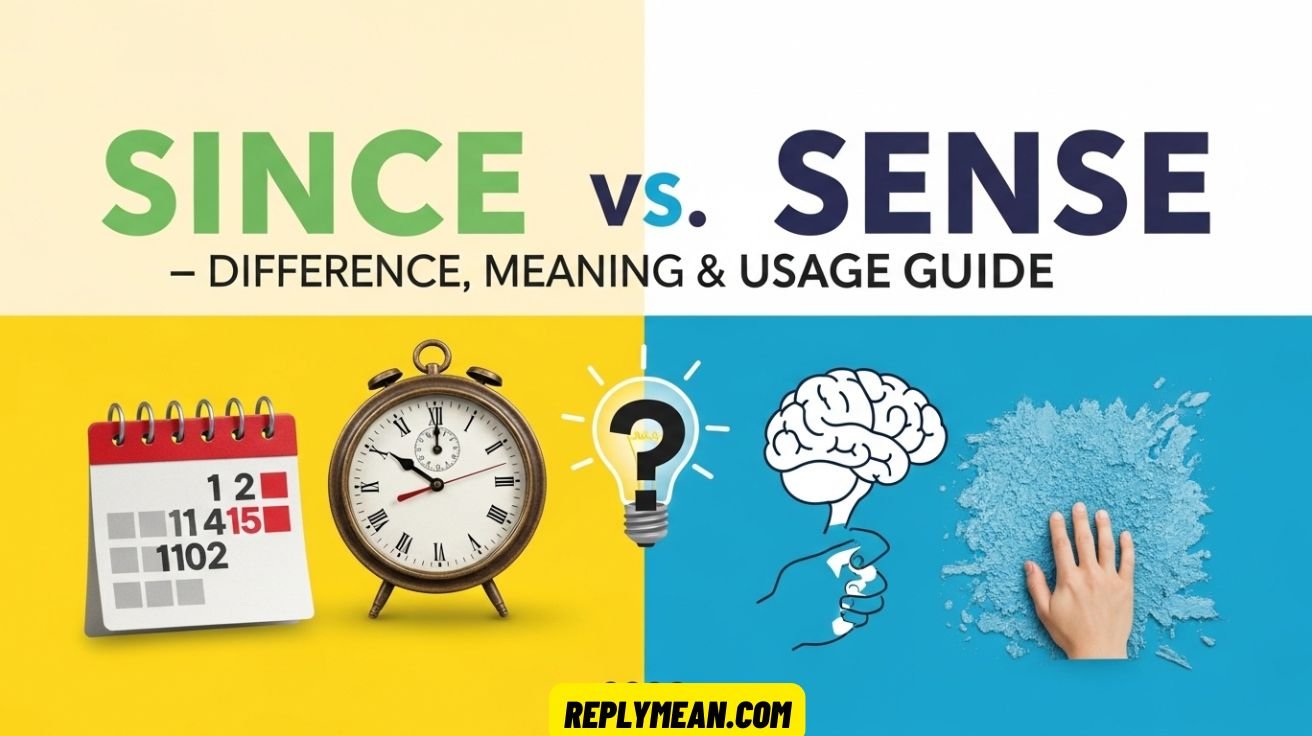
Memory tricks can make grammar easier. Think of a clock when you think of “since.” Time equals since.
Think of your brain or feelings when you think of “sense.” Understanding equals sense.
This simple idea solves most confusion.
How to Proofread Your Writing for Since/Sense Confusion
Effective proofreading requires slowing down and checking meaning carefully. During editing, ask whether the word refers to time or understanding.
Reading your writing aloud helps identify mistakes. Spell-check tools may not catch these errors because both words are spelled correctly.
Developing strong editing habits improves clarity and reduces embarrassing mistakes.
Exploring Idioms and Phrases with “Sense”
English contains many idioms with “sense.” These include “make sense,” “common sense,” and “sense of humor.”
These expressions always use “sense” because they relate to understanding and judgment. Using “since” in these phrases is incorrect.
Mastering these phrases strengthens natural American English communication.
Understanding the Difference Between Since and Sense
The difference between since and sense is simple once you understand their roles. “Since” connects to time or reason, while “sense” connects to meaning or understanding. Many learners confuse them because they sound the same, but their grammar functions are completely different in everyday American English writing.
If your sentence talks about when something started or why something happened, use “since.” If your sentence talks about logic, awareness, or feeling, use “sense.” Recognizing this pattern helps reduce common grammar mistakes and improves writing clarity in both academic and professional communication.
When to Use Since in a Sentence
Knowing when to use since depends on whether you are discussing time or cause. In time expressions, “since” shows the starting point of an action, often used with present perfect tense. For example, “I have lived here since 2019” clearly shows a time reference.
“Since” can also explain reasons. As a conjunction, it connects clauses like this: “Since it was raining, we stayed inside.” In this case, it works similarly to “because,” though it may sound slightly softer in tone in American English writing.
When to Use Sense Correctly
Understanding when to use sense becomes easier when you remember it is always a noun. It refers to awareness, judgment, or perception. For example, “That makes sense” means something is logical or easy to understand in a conversation or explanation.
You will also see “sense” in phrases like “sense of humor” or “common sense.” These expressions describe personality traits or practical judgment. Because it names an idea or quality, “sense” fits into the category of noun examples in grammar.
Common Grammar Mistakes with Since vs Sense
Many writers accidentally type “That makes since” instead of “That makes sense.” This is one of the most common English grammar mistakes in schools and workplaces. The confusion happens because both words are pronounced the same in American English speech.
Another frequent error appears in emails, such as “Sense you joined, profits increased.” The correct word is “since” because the sentence explains a reason. Careful proofreading helps eliminate these small but noticeable writing errors in formal communication.
Pronunciation and Homophones in English
“Since” and “sense” are examples of homophones, which are words that sound alike but have different meanings and spellings. In fast speech, there is no pronunciation difference, which makes listening and writing more challenging for learners.
Other homophones examples include “there vs their vs they’re” and “than vs then.” Learning these pairs improves English vocabulary building and helps you avoid embarrassing grammar mistakes in essays, reports, and business emails.
Since as a Conjunction and Preposition
“Since” functions in two important grammar roles. As a preposition, it introduces a time expression, such as “since Monday” or “since last year.” These examples show when an action began and are common in everyday American English.
As a conjunction, “since” connects clauses and explains cause. For example, “Since you asked, I will explain.” This use links ideas logically and clearly, making it an essential part of conjunction examples in English grammar lessons.
Sense and the Five Human Senses
The word “sense” originally relates to the five human senses: sight, hearing, smell, taste, and touch. Over time, its meaning expanded to include intuition, awareness, and judgment in both spoken and written English.
When someone says, “I had a sense something was wrong,” they mean intuition rather than physical perception. Understanding this connection makes it easier to remember that “sense” always relates to meaning or feeling, not time expressions.
See Also : 50 Other Ways to Say “Handsome” (Best Synonym)
Improving Writing Accuracy with Proofreading
To master since vs sense usage, slow down during proofreading. Ask yourself whether the sentence refers to time, reason, or understanding. This simple question quickly reveals which word fits the context correctly.
Reading sentences aloud also helps identify confusion. Spell checkers may not catch these errors because both spellings are correct words. Developing strong editing habits improves English writing skills and increases confidence in formal and academic writing.
FAQs
How do you use sense?
Use sense as a noun to describe understanding, awareness, or feeling, such as in “That makes sense” or “She has a strong sense of responsibility.”
It always names an idea or perception, not time.
Where do we use since?
Use since to talk about time (“I’ve lived here since 2018”) or to give a reason (“Since it was late, we left early”).
It works as a preposition or conjunction in a sentence.
What is the difference between as and since?
Both can show reason, but since clearly expresses cause or starting time, while as can show reason, time, or comparison depending on context.
“Since” is usually clearer when explaining why something happened.
Is it common sense or common since?
The correct phrase is common sense, which means basic practical judgment.
“Common since” is incorrect because “since” does not describe understanding.
Conclusion
learned the clear difference between Since vs Sense in simple steps. “Since” talks about time or reason. “Sense” talks about understanding or feeling. These two words sound the same, but they have different meanings. Many students make small spelling mistakes with them. When you know their roles in a sentence, you can choose the correct word easily. Strong grammar skills help you write better essays and emails. Careful word choice also shows that you pay attention to details in school and daily writing.
You can master Since vs Sense with regular practice and careful proofreading. Always check if your sentence speaks about time or about understanding. This simple habit will guide you to the right word. Good grammar builds confidence and improves communication skills. Teachers and classmates respect clear writing. Small improvements make a big difference over time. Keep reading, keep writing, and keep reviewing your work. With focus and effort, you will use these words correctly every time.