25 Other Ways to Say Happy Halloween (Spooky, Sweet & Caption-Ready)
Most hunts for a halloween synonym begin on October the thirtieth, with the card already bought and the pen hovering: “Happy Halloween” has been written so often that it has stopped sounding like a wish at all.
The twenty-five other ways to say happy halloween are not twenty-five copies of one greeting. Each one turns the fright dial to a different setting — sweet, cosy, costumed or truly scary — and the sort that follows reads that dial.
Each entry carries a grade, a worked example and a plain note on where the phrase earns its place and where it would misfire. Read the dial first, and the right greeting is usually standing at it.

Sorting the Twenty-Five by the Fright Dial
Quick answer: every greeting here turns the fright dial to one setting — sweet, cosy, costumed or truly scary. Name the audience and the scare they can enjoy, and the right phrase is the one already standing at that setting.
Read in one sitting, the twenty-five look like one party wearing twenty-five costumes — spooky, haunted, boo. Read one at a time, they separate cleanly: each one promises a different amount of fright, and the amount decides where the greeting can safely be sent.
Most of the set keeps the fright low — greetings are wishes, and wishes lead with warmth. A middle band turns the dial to full costume, and six phrases promise the real scare. Four shelves, twenty-five phrases, nothing left over.
Four Settings, One Dial Test
The dial’s lowest setting is pure sweet — no fright at all, the scare worn as jewellery: “boo-tiful night”, “frightfully delightful”, “creepily cheerful”, “pumpkin-spiced wishes” and “boo to you wishes”, where the warm word always carries the sentence.
One click up sits cosy creep — a shiver for decoration while the greeting stays friendly: “spooky greetings”, “hauntingly happy halloween”, “wickedly fun halloween”, “trick-or-treat cheers”, “spooktacular wishes” and “creepy-cool wishes” — six phrases whose strongest word winks rather than bites.
Full costume turns the dial to the creatures: “ghostly wishes”, “monster mash greetings”, “ghoulish greetings”, “bewitching wishes”, “howling halloween”, “haunted cheers”, “bewitched night” and “phantom fun” put a character in the doorway. True fright turns it last: “fright night fun”, “eerie greetings”, “ghastly greetings”, “spine-chilling cheers”, “dark delight wishes” and “night of frights wishes” promise the scare itself.
The Check Every Greeting Has to Pass
One discipline runs through every note here, borrowed from our guide to other ways to say sunrise and sunset. That guide sorts its phrases by the edge of the day each one keeps; a greeting deserves the same audit, pointed at the fright it promises.
The audit is a dial check. How far does this phrase turn the fright — nowhere, one click, to the creatures, or to the scare itself? And who is standing in front of it when it arrives?
“Spine-chilling cheers” on a toddler’s party invitation promises a scare the room never asked for — and the parent reading it will feel the seam.
Alternatives to Say “Happy Halloween”
1. Spooky Greetings
The house greeting of the night: spooky is Halloween’s mild house word — eerie enough to theme a card, gentle enough for the school run. It presumes an audience that wants the flavour, not the fright.
Its mildness is its fence. Spooky promises atmosphere rather than scares, and on a horror night’s poster the word can feel like a lullaby at a fireworks show. Grade: A — dial 1, every room in the house.
- “Spooky greetings to the whole street — the porch light is on and the bowl is full.”
- Best for: cards, door signs and all-ages posts
- Skip it: horror events, where the mild word undersells the night
2. Hauntingly Happy Halloween
The balanced phrase: hauntingly dresses the wish in theatre while happy keeps both feet in the warm. It presumes a card or caption that wants elegance travelling with its eeriness.
Its polish is its fence. The phrase arrives dressed up, and in a rough-and-ready group chat the polish can read as trying too hard. Grade: A — dial 1, dressed ground.
- “A hauntingly happy Halloween to you — moonlight, mischief and just enough candy.”
- Best for: family cards, photo captions and printed invitations
- Skip it: laddish group chats, where the polish shows
3. Ghostly Wishes
The spectre phrase: ghostly puts the sheeted figure at the front of the greeting — the friendliest ghost in the set, all drift and no menace. It presumes readers who like a haunting that weighs nothing.
Its softness is its fence. Ghostly carries no teeth, and a greeting meant to thrill a horror fan will float straight past them. Grade: B+ — dial 2, gentle haunts only.
- “Ghostly wishes from our side of the fence — may your evening drift by pleasantly.”
- Best for: cards, classroom notes and gentle captions
- Skip it: thrill-seekers, who ordered the teeth
4. Wickedly Fun Halloween
The mischief phrase: wickedly here means naughtily, not evilly — a wink from the friend who brought the fake spiders. It presumes a party crowd and a shared sense of humour.
Its wink is its fence. A literal reader can take wickedly at face value, and a formal card to an elderly relative may land as approval of actual wickedness. Grade: B+ — dial 1, knowing rooms only.
- “Have a wickedly fun Halloween — tricks encouraged, treats guaranteed.”
- Best for: party invitations, friends’ cards and office fun
- Skip it: formal or literal readers, where the wink can misfire
5. Boo-tiful Night
The pun phrase: boo-tiful welds the ghost’s shout to a compliment, and the weld is the whole joke. It presumes an audience that enjoys a pun arriving in fancy dress.
Its cuteness is its fence. The phrase is pure sugar, and on a grown-up horror invitation it can sound like a toddler wandered into the print shop. Grade: B — dial 0, sweet teeth only.
- “Have a boo-tiful night out there — the moon is dressed for it too.”
- Best for: kids’ cards, cute captions and classroom walls
- Skip it: adult horror bills, where the sugar shows
6. Frightfully Delightful
The paradox phrase: frightfully works as an intensifier here — very, terribly — while delightful carries the whole payload. It presumes a reader who hears the old-fashioned music inside it.
Its vintage is its fence. Frightfully meaning “very” belongs to an older register, and a young reader may take the fright at face value and brace for a scare that never comes. Grade: B+ — dial 0, vintage ears only.
- “Wishing you a frightfully delightful evening of lanterns, laughter and last-minute costumes.”
- Best for: elegant cards, older relatives and vintage-themed parties
- Skip it: young literal readers, who may brace for nothing
7. Monster Mash Greetings
The party phrase: monster mash names the dance-floor chaos of the night — every creature moving at once. It presumes noise, music and a room that is already laughing.
Its chaos is its fence. The phrase promises a party, and on a quiet card to someone spending the night alone it can rub salt into the stillness. Grade: B+ — dial 2, loud rooms only.
- “Monster mash greetings to the whole crew — see you on the dance floor at nine.”
- Best for: party posts, group chats and event pages
- Skip it: quiet cards, where the noise carries wrong
8. Creepily Cheerful
The double-agent phrase: creepily sets the wallpaper while cheerful does the talking — a grin photographed in a graveyard. It presumes readers who enjoy the contrast itself.
Its contrast is its fence. Two signals in one phrase can confuse a skimming reader, who may keep only the creepy and lose the cheer entirely. Grade: B — dial 0, careful readers only.
- “Sending creepily cheerful wishes — cobwebs on the cake, smiles underneath.”
- Best for: playful cards, teacher notes and photo captions
- Skip it: skimmers, who may keep only half the signal
9. Ghoulish Greetings
The graveyard phrase: ghoulish summons the ghoul — the graveyard’s own resident — and wears it as a badge of theme. It presumes an audience fluent in Halloween’s cast list.
Its ghoul is its fence. A ghoul feasts among graves in the old tales, and a squeamish reader may find the cast member stronger than the greeting wrapped around it. Grade: B — dial 2, fluent fans only.
- “Ghoulish greetings to everyone haunting the office party tonight.”
- Best for: fan circles, themed cards and horror-adjacent humour
- Skip it: squeamish readers, for whom the ghoul outstays its welcome
10. Trick-or-Treat Cheers
The ritual phrase: trick-or-treat names the night’s central ceremony — the knock, the choice, the sweets. It presumes doorsteps, costumes and children carrying buckets.
Its doorstep is its fence. The phrase belongs to the ritual, and in a card to someone far from any doorstep — a hospital ward, a night shift — it can underline what they are missing. Grade: A− — dial 1, doorstep ground.
- “Trick-or-treat cheers to the bravest knockers on the street tonight.”
- Best for: door signs, neighbourhood posts and party welcomes
- Skip it: readers far from the ritual, where it underlines absence
11. Bewitching Wishes
The spell phrase: bewitching promises enchantment rather than fright — the greeting sent as a small, kind spell. It presumes witches of the storybook kind and readers who find them charming.
Its charm is its fence. Bewitching also flatters, and laid on thickly in a plain card it can read as flirtation aimed at the wrong address. Grade: B+ — dial 2, storybook ground.
- “Bewitching wishes for a night of spells, sparkle and excellent hats.”
- Best for: costume captions, witch-themed parties and cards between friends
- Skip it: plain formal cards, where the charm can be misread
12. Howling Halloween
The sound phrase: howling gives the greeting a soundtrack — wolves, wind and every dog in the street answering at once. It presumes energy, and a reader who hears the joke.
Its volume is its fence. Howling is loud, and inside a gentle card — a baby’s first Halloween, a quiet village post — the noise can flatten the tenderness. Grade: B — dial 2, loud ground only.
- “Have a howling Halloween — may your pack be merry and your moon be full.”
- Best for: energetic posts, dog owners and party invitations
- Skip it: gentle cards, where the volume flattens the mood
13. Pumpkin-Spiced Wishes
The cosy phrase: pumpkin-spiced borrows the flavour of the season itself — cinnamon, warmth and a mug held in both hands. It presumes autumn is the real treat being wished.
Its season is its fence. The phrase is welded to autumn; send it outside October’s weather — a spring fancy-dress party — and the flavour arrives in the wrong month. Grade: A− — dial 0, autumn only.
- “Pumpkin-spiced wishes from our kitchen to yours — pie at seven, costumes at eight.”
- Best for: autumn cards, food lovers and cosy captions
- Skip it: out-of-season use, where the flavour lands wrong
14. Fright Night Fun
The headline phrase: fright night is the cinema’s name for an evening of deliberate scares, and fun keeps one hand on the door. It presumes an audience that queues for the thrill.
Its promise is its fence. Fright night advertises real scares; write it on a family event with small children and parents will arrive braced for the wrong evening. Grade: B+ — dial 3, thrill queues only.
- “Fright night fun at the old picture house — two classics, one scream each, minimum.”
- Best for: horror nights, teen parties and cinema posts
- Skip it: family events, where the promise misleads parents
15. Haunted Cheers
The house phrase: haunted places the greeting inside the night’s most famous building — a house with residents who never left. It presumes readers who enjoy the shiver of a setting.
Its setting is its fence. Haunted is a strong everyday word, and on a card meant purely sweet — a toddler’s first Halloween card — the house can loom larger than the cheer. Grade: B+ — dial 2, shiver-friendly rooms.
- “Haunted cheers from number thirteen — the porch ghost insists on joining in.”
- Best for: house-party invitations, street posts and playful cards
- Skip it: purely sweet cards, where the house looms
16. Spooktacular Wishes
The portmanteau phrase: spooktacular fuses spooky with spectacular, and the fuse is the fun — a firework of a greeting. It presumes a reader happy to be dazzled rather than scared.
Its sparkle is its fence. The word is a headline rather than a sentence-maker, and inside a formal card its glitter can look like a banner dragged indoors. Grade: A− — dial 1, headline ground.
- “Spooktacular wishes to the best-dressed street in the postcode tonight.”
- Best for: banners, captions and cheerful cards
- Skip it: formal cards, where the glitter shows
17. Eerie Greetings
The quiet-scare phrase: eerie names the strangeness that raises the hairs without showing a monster — the wrong note inside a familiar tune. It presumes readers who savour unease.
Its quietness is its fence. Eerie unsettles rather than entertains, and in a card for a nervous reader the unease can outlast the greeting by hours. Grade: B — dial 3, steady nerves only.
- “Eerie greetings from the fog’s side of the village — walk softly tonight.”
- Best for: literary cards, horror fans and atmospheric posts
- Skip it: nervous readers, whom the unease outlasts
18. Bewitched Night
The transformed-evening phrase: bewitched night says the whole night has been put under a spell — the ordinary street made strange and glittering. It presumes romance in the old sense: wonder.
Its spell is its fence. The phrase promises transformation, and on a plain office card the enchantment can feel like a costume the sentence cannot fill. Grade: B — dial 2, wonder-friendly ground.
- “Wishing you a bewitched night — may every streetlamp look slightly magical.”
- Best for: evening captions, romantic cards and storybook posts
- Skip it: plain office cards, where the spell hangs empty
19. Ghastly Greetings
The strong phrase: ghastly is the bluntest instrument in the set — shockingly frightful in its first sense — and the greeting wears it proudly. It presumes readers who like the night undiluted.
Its bluntness is its fence. Ghastly also means plain awful in everyday speech — a ghastly meal, a ghastly day — and a skimming reader may keep the insult and lose the ghost. Grade: B — dial 3, fluent readers only.
- “Ghastly greetings to the bravest souls on the midnight tour.”
- Best for: horror events, haunted-house bills and fan cards
- Skip it: skimmers, who may keep the wrong meaning
20. Phantom Fun
The lightest ghost phrase: phantom fun keeps the ghost and drops the dread — fun with a sheet over it and nothing underneath that bites. It presumes children, cartoons and friendly hauntings.
Its lightness is its fence. Phantom promises a ghost and delivers a giggle; a horror crowd reading it will feel short-changed by the missing menace. Grade: B+ — dial 2, young rooms only.
- “Phantom fun for the whole class — floating games, invisible prizes, real cake.”
- Best for: kids’ parties, school posts and gentle captions
- Skip it: horror crowds, who ordered menace
21. Spine-Chilling Cheers
The fullest-scare phrase: spine-chilling promises the physical shiver — the cold finger down the back — while cheers keeps it a celebration. It presumes an audience that pays for exactly that shiver.
Its shiver is its fence. On a small child’s invitation the phrase advertises an evening the child never volunteered for, and parents will decline on the spot. Grade: B+ — dial 3, volunteers only.
- “Spine-chilling cheers to everyone brave enough for the midnight showing.”
- Best for: horror bills, haunted attractions and dare posts
- Skip it: children’s invitations, where the promise frightens parents
22. Dark Delight Wishes
The gothic phrase: dark delight pairs the shadow with pleasure — velvet, candlelight and elegance after dark. It presumes taste, tailoring and a reader who dresses for the night.
Its elegance is its fence. The phrase arrives in formal wear, and in a slapstick group chat of plastic skeletons it can look like a butler at a foam party. Grade: B — dial 3, elegant ground only.
- “Dark delight wishes for a candlelit evening of velvet, vinyl and vintage horror.”
- Best for: gothic parties, elegant invitations and adult captions
- Skip it: slapstick chats, where the butler stands out
23. Creepy-Cool Wishes
The modern phrase: creepy-cool is the feed’s own dialect — spooky worn as a compliment, the aesthetic approved. It presumes a young, online reader who rates the look first.
Its fashion is its fence. Cool dates faster than any word in the set, and inside a card kept for years the compliment may read as last season’s slang. Grade: B — dial 1, current feeds only.
- “Creepy-cool wishes to everyone whose costume took three weeks and fourteen tutorials.”
- Best for: social captions, teen cards and costume posts
- Skip it: keepsake cards, where the slang dates
24. Night of Frights Wishes
The epic phrase: night of frights gives the evening a title, like a film or a fairground ride — one whole night, frights in the plural. It presumes scale: an event, a tour, a marathon.
Its scale is its fence. The phrase promises an epic, and under a quiet photograph of a single pumpkin it can sound like a trailer for a film that never starts. Grade: B — dial 3, event-sized ground.
- “Night of frights wishes to everyone working the haunted trail tonight — scream responsibly.”
- Best for: event posters, haunted attractions and party titles
- Skip it: single-photo captions, where the epic overshoots
25. Boo to You Wishes
The doorstep phrase: boo to you is the ghost’s own greeting, returned with a smile — the smallest scare in the language, sized for a peekaboo. It presumes toddlers, grandparents and anyone who jumps happily.
Its smallness is its fence. Boo is a baby-sized fright, and on an adult horror card it can read as the writer not taking the night seriously. Grade: A− — dial 0, gentle rooms.
- “Boo to you wishes from the smallest ghost on the street — treats, please.”
- Best for: toddlers’ cards, family chats and sweet captions
- Skip it: adult horror bills, where the small scare shrinks
Complete Lines: The Phrase in a Finished Sentence
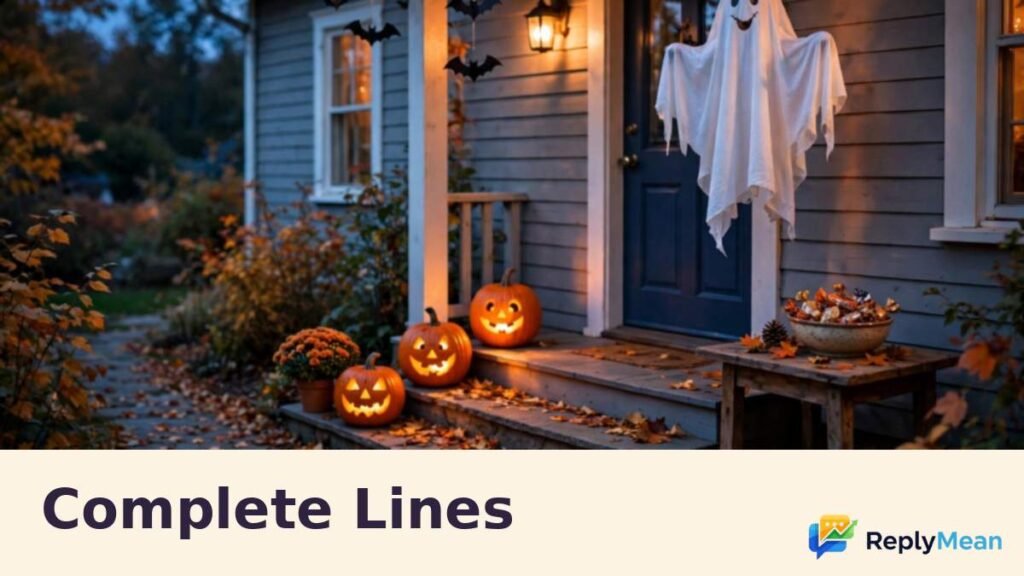
A bare greeting still needs its sentence around it before it can be sent. The ten lines here are finished — dial, phrase and scene in one — ready for the card, the caption, the invitation and the doorstep.
- For the family card, from the house with the crooked porch: “Hauntingly happy Halloween — costumes optional, candy guaranteed, courage provided.”
- For the kids’ party invitation, short and loud: “Boo to you! Join us for phantom fun, pumpkin games and more sweets than any goblin can carry.”
- For the Instagram caption, under the costume photograph: “Creepy-cool wishes to everyone who dressed up, showed up and stayed for the last dance.”
- For the office email, as the sign-off: “Wishing you a spooktacular Halloween — and a perfectly ordinary Friday to recover in.”
- For the doorstep sign, beside the candy bowl: “Trick-or-treat cheers welcome here: knock twice, take two, and mind the ghost on the porch.”
- For the horror-movie night, on the invitation: “Fright night fun at ours on Saturday — spine-chilling cheers provided, courage bring-your-own.”
- For the teacher’s note, to the whole class: “Ghostly wishes to my little monsters: read something eerie, eat something orange, sleep if you dare.”
- For the October birthday, on the card: “Pumpkin-spiced wishes on your day — a birthday with built-in fancy dress and free decorations.”
- For the group chat, as the opener: “Monster mash greetings, everyone — who is bringing the cobwebs, and who is bringing the cake?”
- For the elegant dinner, on the invitation: “Dark delight wishes: dinner at eight, candles lit, costumes encouraged but entirely optional.”
When the Greeting Lands Wrong
The wrong setting rarely sounds wrong in the sender’s head — it sounds wrong in the reader’s evening. Four repairs, each a move along one dial.
“Spine-Chilling Cheers” on the Toddler’s Invitation
A parent prints invitations for a three-year-old’s Halloween tea and picks the scariest phrase in the set because it sounds the most Halloweeny. The writer meant festive; the receiving parents read a promise of nightmares and quietly RSVP no.
The repair lowers the dial, not the theme. “Boo to you wishes” keeps the ghosts and drops the shiver — a scare sized for a three-year-old is a peekaboo, and peekaboo never needs a warning.
“Boo-tiful Night” on the Horror Festival Poster
A horror festival bills its midnight marathon with the sweetest pun in the set. The programmer meant playful; the audience reads a children’s matinee, and the hard-core crowd stays home with the lights on.
The repair raises the dial to match the promise. “Night of frights wishes” — or plain “fright night fun” — advertises the evening the festival is actually selling.
“Dark Delight Wishes” on the Office Poster
An office manager decorates the staff-party poster with the gothic phrase, aiming at elegance. Half the team reads a dress code, two read a warning, and one asks whether costumes have become compulsory.
The repair keeps the party and drops the velvet. “Spooktacular wishes” promises the same evening in words nobody has to decode before deciding to come.
“Pumpkin-Spiced Wishes” in the April Group Chat
A spring fancy-dress party gets its invitation written in the cosiest autumn phrase. The host meant warmth; the guests read the date twice, hunting for the October they must have missed.
The repair keeps the warmth and changes the flavour. “Monster mash greetings” carries a party in any month of the year — the mash was never seasonal.

Short Forms for Texts and Quick Messages
Most of these greetings are not written on cards at all; they are typed under photographs at the speed of a feed. The short forms keep the dial setting and drop the ceremony — small enough for a caption, exact enough to mean something.
- “Spooktacular wishes 🎃” — the headline form: for the street-party photograph that needs no other caption.
- “Boo to you 👻” — the friendly form: for the toddler in the sheet costume.
- “Boo-tiful night 🌙” — the sweet form: for the porch portrait after bedtime rounds.
- “Creepy-cool wishes 😎” — the feed form: for the costume that took real engineering.
- “Pumpkin-spiced wishes ☕” — the cosy form: for the kitchen-table pumpkin carving shot.
- “Ghostly wishes 🕯️” — the gentle form: for the candlelit window photograph.
- “Howling Halloween 🐺” — the loud form: for the pack photograph, dogs included.
- “Fright night fun 🦇” — the brave form: for the midnight-movie selfie.
- “Monster mash greetings 🧟” — the party form: for the dance-floor group shot.
- “Haunted cheers 🥂” — the house form: for the party host’s own post.
Frequently Asked Questions
What can I say instead of Happy Halloween?
Any of the twenty-five here. Match the phrase to the fright its reader enjoys: “boo to you wishes” for the very young, “spooktacular wishes” for a cheerful card, “spine-chilling cheers” only where the scare is welcome.
What is a cute Halloween greeting for kids?
“Boo-tiful night” and “boo to you wishes” lead the sweet shelf — puns and peekaboo, with no fright standing behind them. “Phantom fun” adds a friendly ghost whose whole job is games and cake.
What is a scary Halloween greeting for adults?
The true-fright shelf: “spine-chilling cheers”, “night of frights wishes” and “ghastly greetings”. Save them for horror fans and haunted-house crowds; on a family card they promise more evening than anyone ordered.
How do I wish a colleague a happy Halloween at work?
Keep the dial low: “spooktacular wishes” or “pumpkin-spiced wishes” read as seasonal and safe inside an office thread. Skip the gothic and the spine-chilling — at work, a greeting should never need a warning.
What is a good short Halloween caption?
One phrase and one emoji usually do the whole job: “Boo-tiful night 🌙” for the costume shot, “Howling Halloween 🐺” for the party, “Pumpkin-spiced wishes ☕” for the cosy one.
Conclusion
The twenty-five are one festival wearing four settings. Sort other ways to say happy halloween by the fright each phrase promises — sweet, cosy, costumed or truly scary — and the right greeting stops being a guess and starts being a setting.
Underneath every setting sits the same quiet discipline: name the spooky honestly, say how much of it you mean, and let one exact greeting do the work of six repeated ones.