25 Other Ways to Say Thank You for the Clarification (Clear, Warm & Professional)
Every long email thread turns on the same small hinge: a policy gets explained, a figure gets untangled, a deadline gets moved — and somebody has to type thank you for the clarification without sounding like a form letter signing itself.
The twenty-five phrases below all run that same errand, but each one lands its thanks somewhere different — on the words, on the work behind them, on what the reader now holds, on the fog lifting, on what happens next — and they are sorted by the target test: where does the gratitude actually land?
Each entry carries a grade, one worked example and a plain note on where the phrase shines — and where it misfires: a two-word thanks under three paragraphs of explaining, a cathedral of gratitude over a one-line answer. Read the target first, and the right phrase is usually standing beside it.
Sorting the Twenty-Five by the Target Test
Quick answer: other ways to say thank you for the clarification sort by the target test — where the thanks lands. Some land on the words, some on the work, some on the gain, some on the light, some on the use, and one lands on nothing at all.
Read in one pass, the twenty-five blur into one polite hum — appreciate, grateful, thankful, helpful. Read one at a time, they separate by target: six land on the words, four on the work, five on the gain, five on the light, four on the use, and one lands on nothing.
Families repeat. Five phrases open with the same verb — appreciate, at 1, 9, 13, 20 and 25 — and land on three different shelves. Five more open with “that”, at 6, 10, 11, 15 and 19, and report a result instead of addressing a person.
The Words Shelf First, the Work Shelf Second
Words phrases thank the explanation itself: “I Appreciate the Explanation”, the plain receipt, “Thanks for the Insightful Explanation”, the receipt with a compliment folded in, “I Value Your Explanation”, “I’m Thankful for Your Explanation”, “Your Explanation Was Exactly What I Needed” and “I’m So Glad You Explained That”.
Work phrases thank the labour behind the words: “I Appreciate Your Time and Effort”, the invoice acknowledged, “I’m Thankful for the Help”, “I Appreciate Your Effort to Help” and “I Appreciate You Taking the Time to Clarify”. Each one pays the person, not the paragraph.
Ten entries, one shared strength: words and work phrases are the safest on the page. Both name something real that the other person actually did, so neither can be mistaken for boilerplate — the failure mode of this whole family of phrases.
The Gain Shelf Third, the Light Shelf Fourth
Gain phrases thank for what the reader now holds: “Grateful for the Insight”, the cargo named, “I’m Thankful for the Clarity”, “I’m Grateful for the Clarification” — the sheet phrase itself with one word swapped — “I Appreciate the Additional Information” and “I Can’t Thank You Enough for the Clarity”.
Light phrases report the fog lifting: “Thanks for Clearing That Up”, the deed done, “That’s Clear Now, Thank You”, “That Makes Perfect Sense Now”, “You’ve Made It Clear” and “You’ve Made Everything So Much Simpler”. Each describes the reader’s new weather rather than the writer’s gratitude.
Ten entries, one shared limit: gain and light phrases describe the receiving end. They shine when the explanation was the hard part; spent on a routine answer, the gain sounds inflated and the light sounds theatrical.
The Use Shelf Fifth, the Bare Shelf to Finish
Use phrases thank for what the clarity does next: “That Was Very Helpful”, the verdict, “That Really Helps”, “That’s Exactly What I Needed to Know” and “That’s Helpful to Know”. Each points forward — the meeting can proceed, the form can be filed, the decision can be made.
The bare shelf holds exactly one phrase: “Much Appreciated”, the thanks with no target at all. It names no words, no work, no gain — two words of pure receipt, and the only entry here that can be spent without checking anything first.
Five entries, one shared warning: use phrases grade the explanation like a tool, which is honest in a working thread and chilly in a personal one — and the bare phrase, spent under real labour, underpays it.
The Check Every Thanks Has to Pass
One discipline runs through every phrase here, borrowed from our guide to other ways to say self-care. That guide sorts synonyms by what each word promises; a thank-you deserves the same audit, aimed at where its gratitude lands.
The audit is one question. What is this phrase actually thanking — the words, the work, the gain, the light, the use — and does that match what the other person actually did in the message above?
“Much appreciated” typed under three careful paragraphs of explaining is the classic mismatch: real labour paid with a bare receipt. The sender meant efficiency; the reader hears a shrug, and the next explanation that sender gets will be shorter.
Ways to Say “Thank You for the Clarification”
1. I Appreciate the Explanation
The plain-receipt form: it thanks the explanation itself, by name, with no decoration — the sentence equivalent of signing for a parcel. It presumes a working thread and a reader who values directness over warmth.
Its plainness is its fence. Receipts confirm delivery without praising the contents; after a genuinely generous explanation, this one can read as the minimum the sender could decently type. Grade: A− — words-led, receipt ground.
- “I appreciate the explanation — the new rota makes sense now, and I’ll follow it from Monday.”
- Best for: routine work threads and policy replies
- Skip it: generous, effortful explanations that deserve more
2. Thanks for Clearing That Up
The deed-done form: it thanks the other person for an act — clearing — rather than for a text. The phrasal verb keeps it brisk and spoken, a corridor thank-you rather than a letter one.
Its briskness is its fence. Clearing up is also what happens to weather and messes; in a formal thread to a senior reader, the idiom can sound like the confusion was clutter they made. Grade: B+ — light-led, deed ground.
- “Thanks for clearing that up — I had the two deadlines swapped in my notes.”
- Best for: quick threads, chats and familiar colleagues
- Skip it: formal letters and senior first contacts
3. Much Appreciated
The bare form: two words, no target, no verb of feeling — gratitude reduced to a stamp. It presumes a thread so routine that the thanks is a courtesy tick rather than a message in itself.
Its bareness is its fence. Everything depends on what sits above it: under a one-line answer it is perfectly sized; under three paragraphs of careful explaining, it underpays the labour in full view. Grade: B — bare-led, stamp ground.
- “Much appreciated — I’ll update the sheet this afternoon.”
- Best for: one-line answers and routine confirmations
- Skip it: long explanations and first-time favours
4. Grateful for the Insight
The cargo form: it thanks for the insight — the thing carried away from the explanation, not the explanation itself. It presumes the reply contained a genuine discovery, a fact or angle the reader did not have before.
Its cargo is its fence. Insight is a strong word for a restated deadline; spent on ordinary information, it flatters the sender in a way careful readers notice and discount. Grade: B+ — gain-led, cargo ground.
- “Grateful for the insight — I hadn’t seen the fee as a percentage before.”
- Best for: analysis, advice and expert replies
- Skip it: routine information and restated facts
5. I’m Thankful for the Clarity
The state form: it thanks for clarity as a condition — the reader’s head is clear, and the phrase says so in the language of feeling rather than reporting. It presumes a muddle that genuinely lifted.
Its feeling is its fence. Thankful runs warmer than this phrase’s neighbours; in a stiff thread it can sound personal where the sender only meant procedural. Grade: A− — gain-led, state ground.
- “I’m thankful for the clarity on the refund window — I’ll pass it to the team.”
- Best for: team threads and customer replies
- Skip it: stiff, legalistic exchanges
6. That Was Very Helpful
The verdict form: it grades the explanation’s usefulness in the past tense — the help has already happened and is being marked. It presumes a practical exchange where usefulness is the honest currency.
Its grading is its fence. A verdict thanks the result and skips the person; stacked with nothing warmer, a thread of verdicts starts to read like star ratings under somebody’s work. Grade: B+ — use-led, verdict ground.
- “That was very helpful — the worked example settled it for the whole class.”
- Best for: training, support and how-to threads
- Skip it: personal favours, where the person matters more
7. I’m Grateful for the Clarification
The twin form: this is the governing phrase itself with one word swapped — grateful standing where thank you stood. It presumes a writer who wants the safe centre of the whole set with a half-step more formality.
Its closeness is its fence. In a thread where the plain phrase has already appeared twice, the twin solves nothing; the reader hears the same sentence wearing a tie. Grade: A — gain-led, twin ground.
- “I’m grateful for the clarification on the voting rule — we’ll minute it that way.”
- Best for: formal threads and minuted decisions
- Skip it: threads already repeating the plain phrase
8. Thanks for the Insightful Explanation
The compliment form: it thanks the explanation and grades it in the same breath — insightful does the praising while thanks does the paying. It presumes an explanation that genuinely taught something, not merely repeated something.
Its compliment is its fence. Insightful is the strongest adjective on this page; spent on a forwarded paragraph, it reads as flattery with the price tag left on. Grade: B+ — words-led, compliment ground.
- “Thanks for the insightful explanation of the tariff change — the example made it land.”
- Best for: expert explanations and teaching replies
- Skip it: forwarded or routine information
9. I Appreciate Your Time and Effort
The invoice form: it thanks for the cost of the explanation — the time taken, the effort spent — rather than the explanation itself. It presumes the reply visibly cost something: research, checking, a careful rewrite.
Its invoice is its fence. The phrase certifies labour; sent after a thirty-second answer, it certifies labour that never happened, and the reader can hear the form letter clearing its throat. Grade: A− — work-led, invoice ground.
- “I appreciate your time and effort on the breakdown — I know the figures took digging.”
- Best for: researched replies and out-of-hours help
- Skip it: instant answers and forwarded notes
10. That Really Helps
The forward form: present tense, eyes ahead — the help is not being graded after the fact but used right now. It presumes a thread still in motion, where the clarification unlocks the next step.
Its momentum is its fence. Really helps is a half-sentence of thanks; as the only reply to a long explanation it can read as the reader already turning away to use the answer. Grade: B+ — use-led, forward ground.
- “That really helps — I can file the claim today now the dates are straight.”
- Best for: moving threads and quick decisions
- Skip it: closing messages, where it leaves the door open
11. That’s Clear Now, Thank You
The weather-report form: it announces the reader’s new condition first — clear now — and tags the thanks on behind it. It presumes a real before-and-after: confusion above the line, understanding below it.
Its order is its fence. Leading with your own state makes the thanks a footnote; to a reader who worked hard on the explanation, the report can matter more than the gratitude. Grade: B+ — light-led, weather ground.
- “That’s clear now, thank you — the two charges are separate, not a duplicate.”
- Best for: confused threads finally resolved
- Skip it: explanations nobody was confused about
12. I Value Your Explanation
The appraisal form: value prices the explanation like an asset — held, kept, worth something. It presumes a considered reply and a writer who wants respect to do the work that warmth does elsewhere.
Its appraisal is its fence. Value is a cool verb; in a thread needing gratitude rather than esteem, the reader can feel assessed instead of thanked. Grade: B+ — words-led, appraisal ground.
- “I value your explanation of the clause — it will shape how we redraft it.”
- Best for: professional and advisory threads
- Skip it: warm or personal exchanges
13. I Appreciate the Additional Information
The supplement form: it thanks for the extra — the information beyond what was asked or already known. It presumes the reply genuinely added material rather than merely restating the original point.
Its supplement is its fence. Additional quietly grades the first answer as insufficient; to a sensitive sender, the thanks can carry a small printout of what was missing. Grade: B+ — gain-led, supplement ground.
- “I appreciate the additional information on renewals — the grace period changes our plan.”
- Best for: follow-ups that genuinely added facts
- Skip it: first replies, where nothing was additional yet
14. I’m Thankful for the Help
The assistance form: it thanks for the help as a whole — the explaining folded into the wider act of being helped. It presumes a relationship where the clarification was one kindness among others.
Its breadth is its fence. Help covers so much that the clarification itself can get lost inside it; a reader who crafted a careful explanation hears thanks for everything except the craft. Grade: B+ — work-led, assistance ground.
- “I’m thankful for the help with the application — the eligibility part finally reads plainly.”
- Best for: ongoing support and mentoring threads
- Skip it: single, precise explanations
15. That’s Exactly What I Needed to Know
The fit form: it thanks by reporting a perfect match — the explanation landed precisely on the question. It presumes a specific gap that the reply filled without remainder.
Its precision is its fence. Exactly is a strong claim; spent on a partial answer, it closes a thread that still has a question living in it. Grade: A− — use-led, fit ground.
- “That’s exactly what I needed to know — the threshold is per order, not per item.”
- Best for: precise answers to precise questions
- Skip it: partial answers and open questions
16. I’m Thankful for Your Explanation
The signed form: it keeps item 1’s target — the explanation — and warms the verb, thankful doing what appreciate did, with the giver named in the possessive. It presumes the same receipt, personally delivered.
Its warmth is its fence. Between items 1 and 16 the difference is temperature, not content; a reader collecting thanks across a long project will hear the two as one phrase in two coats. Grade: A− — words-led, signed ground.
- “I’m thankful for your explanation of the rota swap — it reads fairly to everyone now.”
- Best for: colleagues and repeated collaborators
- Skip it: threads where item 1 was already used
17. That Makes Perfect Sense Now
The click form: it reports the moment the pieces seated — sense, made, now. It presumes an explanation with moving parts that finally arranged themselves in the reader’s head.
Its click is its fence. Perfect is a ceiling word; spent on a merely adequate answer it promises a comprehension the next question may immediately contradict. Grade: A− — light-led, click ground.
- “That makes perfect sense now — the deposit offsets the final bill, not the first.”
- Best for: multi-part explanations finally assembled
- Skip it: simple answers, where perfect overshoots
18. You’ve Made It Clear
The credit form: it hands the clarity to the other person as their workmanship — you made this. It presumes a genuinely murky subject that the sender rendered plain, and credits the making rather than the material.
Its credit is its fence. Made it clear can imply it was unclear in the sender’s own earlier message; aimed at the person who caused the muddle, the thanks develops an edge. Grade: A− — light-led, credit ground.
- “You’ve made it clear at last — the handover notes finally match the rota.”
- Best for: murky subjects rendered plain
- Skip it: the person who caused the confusion
19. That’s Helpful to Know
The filing form: it thanks by shelving the information — helpful, to know, stored for later. It presumes the clarification is a fact for the records rather than a key to an immediate decision.
Its shelving is its fence. To know is the coolest ending on this page; after a warm, effortful explanation it can sound like a librarian stamping a book she did not enjoy. Grade: B — use-led, filing ground.
- “That’s helpful to know — the archive keeps recordings for six years, not two.”
- Best for: reference facts and records threads
- Skip it: effortful, personal explanations
20. I Appreciate Your Effort to Help
The attempt form: it thanks for the effort rather than the outcome — the trying itself is what gets paid. It presumes goodwill that may or may not have fully landed, and honours it either way.
Its attempt is its fence. Effort praised too pointedly can whisper that the result fell short; a reader proud of a complete answer hears a medal for participation. Grade: B+ — work-led, attempt ground.
- “I appreciate your effort to help untangle the invoice — the credits make sense now.”
- Best for: partial answers and hard problems
- Skip it: complete answers, where it undersells them
21. Your Explanation Was Exactly What I Needed
The commission form: the explanation is reviewed like work delivered to order — it matched the brief exactly. It presumes a specific request and a reply that fulfilled it without wandering.
Its brief is its fence. Exactly what I needed sets the reader’s need as the measure of the explanation’s worth; a reply that taught more than was asked can feel graded down for the extra. Grade: A− — words-led, commission ground.
- “Your explanation was exactly what I needed — the timeline, the costs, nothing spare.”
- Best for: requested briefings and direct questions
- Skip it: generous answers that went beyond the ask
22. I Can’t Thank You Enough for the Clarity
The ceiling form: the largest phrase in the set — thanks declared insufficient in advance, spent on clarity itself. It presumes a confusion that genuinely cost the reader: worry, delay, a decision stuck for days.
Its ceiling is its fence. Spent on a one-line answer, the phrase inflates past its errand and the reader discounts every future thanks from that sender by the same margin. Grade: A− — gain-led, ceiling ground.
- “I can’t thank you enough for the clarity on the visa rule — we can finally book.”
- Best for: costly confusion finally resolved
- Skip it: small answers and routine threads
23. You’ve Made Everything So Much Simpler
The sweep form: it credits the explanation with simplifying not one point but everything — the whole desk, cleared by a single reply. It presumes a tangle of connected confusions that loosened together.
Its sweep is its fence. Everything is a wide claim; in a careful thread it can sound like the reader has stopped checking the details the sender worked hardest on. Grade: B+ — light-led, sweep ground.
- “You’ve made everything so much simpler — one form, one fee, one date to remember.”
- Best for: tangled processes finally unified
- Skip it: precise threads where details are the point
24. I’m So Glad You Explained That
The relief form: gladness does the thanking — the emotion is the message, and the explaining is what caused it. It presumes a reader who was quietly anxious or embarrassed about not understanding.
Its relief is its fence. So glad runs personal; in a stiff thread between strangers it can warm the exchange past the point either side intended. Grade: A− — words-led, relief ground.
- “I’m so glad you explained that — I had been reading the chart backwards for weeks.”
- Best for: friendly threads and quiet confusions
- Skip it: stiff first contacts and formal notices
25. I Appreciate You Taking the Time to Clarify
The full-courtesy form: the set closes with the most complete receipt — the person, the time and the act all named in one sentence. It presumes an explanation that interrupted real work and deserves a formal close.
Its completeness is its fence. As the longest phrase here it lands heavily; spent twice in one thread, or on a ten-second answer, the ceremony starts to echo. Grade: A — work-led, full-courtesy ground.
- “I appreciate you taking the time to clarify the handover — the team has it from here.”
- Best for: formal closes and senior colleagues
- Skip it: quick chats and tiny answers
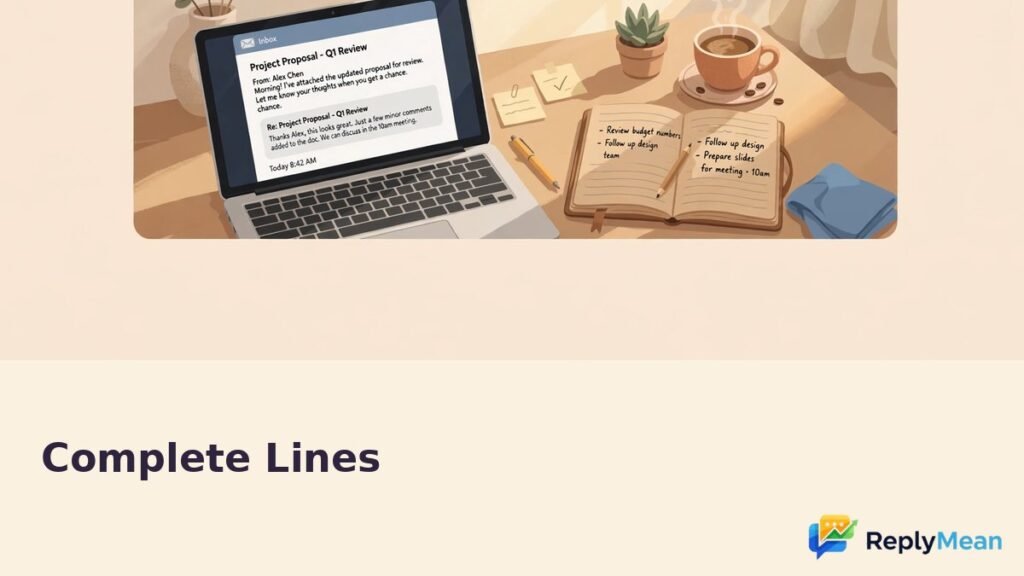
Complete Lines: The Thanks With Its Occasion Attached
A bare phrase still needs its sentence around it before it can close a thread. The ten lines here are finished — the thanks, the occasion and the next step in one — ready to paste under the reply that earned them.
- For the policy email, to a careful colleague: “I appreciate you taking the time to clarify the leave rule — I’ll book against the new dates.”
- For the figures thread: “Your explanation was exactly what I needed — the two totals reconcile now.”
- For the onboarding call: “I’m so glad you explained that — the login order finally makes sense.”
- For the client thread: “I’m grateful for the clarification on the delivery window — we’ll plan the launch around it.”
- For the contract clause: “I value your explanation of the renewal term — we’ll redraft on that reading.”
- For the support fix: “That was very helpful — the reset worked, and the error has not come back.”
- For the timetable change: “Thanks for clearing that up — I had the old exam dates in my diary.”
- For the group thread: “That’s clear now, thank you — one form from everyone by Friday, as explained.”
- For the expert answer: “Thanks for the insightful explanation — the example is what made it land.”
- For the small, quick answer: “Much appreciated — that’s all I needed.”
When the Thanks Lands Wrong
Thanks rarely fail in the dictionary — they fail in proportion, when the size of the gratitude is weighed against the size of the explanation above it. Four repairs follow, each one a change of shelf rather than a change of heart.
“Much Appreciated” Sent Under Three Paragraphs of Explaining
A colleague answers a tangled question with three careful paragraphs — checked figures, a worked example, a warning about the edge case. The reply underneath reads, in full: much appreciated.
The repair climbs from the bare shelf to the work shelf. “I appreciate you taking the time to clarify” names the person, the time and the act — the labour gets paid at its actual size.
“I Can’t Thank You Enough” Spent on a One-Line Answer
Someone confirms a single date — yes, the fifteenth — and receives the largest phrase in the set, thanks declared insufficient in advance. The sender meant warmth; the reader hears ceremony aimed at a postage stamp.
The repair drops to the light shelf. “That’s clear now, thank you” matches a one-line errand with a one-line receipt — and keeps the ceiling phrase in credit for the day a real confusion lifts.
“That’s Helpful to Know” Sent to a Mentor
A mentor writes a long, personal explanation — part answer, part encouragement — and is thanked like a reference book being shelved. The facts were received; the person was not.
The repair moves to the words shelf. “I’m thankful for your explanation” names the giver inside the gift, and the thread stays a conversation instead of becoming a filing cabinet.
“I Appreciate Your Time and Effort” Sent for a Forwarded FAQ
A reply arrives that cost its sender eleven seconds — a forwarded link, a pasted paragraph — and is thanked for its time and effort. The invoice certifies labour that never happened, and both sides know it.
The repair pays for what actually arrived. “I’m grateful for the clarification” thanks the gain itself — true at any size of errand, and impossible to catch out.
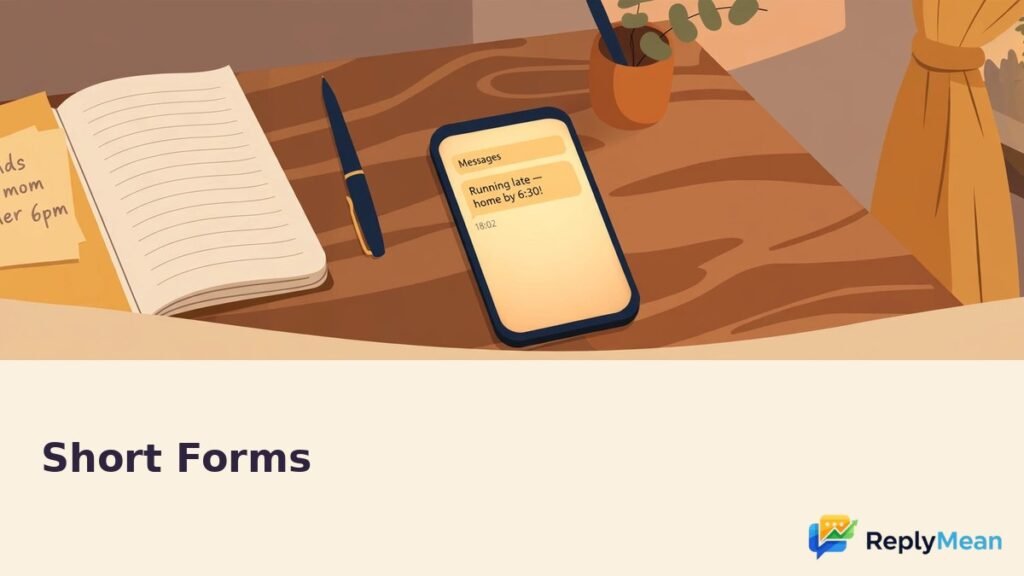
Short Forms for Texts and Captions
Most clarifications arrive in small spaces — a chat window, a comment thread, a reply box already full. The short forms keep the target and drop the ceremony — small enough for the box, sized right for the errand.
- “Clear now, thanks” — the light kept short: for chat replies.
- “Got it — thank you” — the receipt kept plain: for quick confirmations.
- “That clears it up” — the deed kept brief: for familiar threads.
- “Makes sense now” — the click kept single: for group chats.
- “Appreciated!” — the bare form kept warm: for one-line answers.
- “Thanks, that’s clear” — the report kept compact: for comment threads.
- “Understood, thank you” — the formal kept short: for client chats.
- “Perfect, thanks” — the fit kept light: for precise answers.
- “All clear now” — the weather kept bright: for team channels.
- “Thanks for explaining” — the words kept direct: for friendly threads.
Frequently Asked Questions
What is the most professional way to say thank you for the clarification?
“I appreciate you taking the time to clarify” is the safest professional form: it names the person, the time and the act, and it closes a thread without warmth overshooting or gratitude undershooting. “I value your explanation” runs it close in advisory settings.
Is “much appreciated” enough on its own?
Only when the answer above it was small. Under a one-line confirmation it is perfectly sized; under a researched, multi-paragraph explanation it underpays the labour in full view, and the next answer that sender writes will be shorter.
How do I stop sounding repetitive in a long thread?
Rotate shelves, not synonyms. Thank the words once, the work once and the light once — the gratitude keeps landing in different places, so no single phrase wears smooth. Five phrases here open with appreciate; spending all five reads as one phrase five times.
Should I thank for the clarification in the group thread or privately?
In the thread, briefly — the thanks closes the question for everyone watching and credits the explainer in public. Anything warmer, longer or more personal belongs in a private message, where it cannot look like it was performed for the audience.
What if the clarification didn’t actually clear things up?
Thank the work, then ask the next question. “I appreciate your time and effort” pays for the labour honestly without claiming a clarity you do not have — and it keeps the door open for the follow-up the thread still needs.
Conclusion
The twenty-five are one errand wearing twenty-five targets. Sort other ways to say thank you for the clarification by the target test — the words, the work, the gain, the light, the use, or nothing at all — and the thanks stops being boilerplate and starts being aim.
Underneath every target sits the same small courtesy: the gratitude should be sized to the explanation it answers. The dictionary defines an explanation as the details or reasons that someone gives to make something clear or easy to understand — and the best thank-you on this page is simply the one whose target matches what was actually given.