50 Other Ways to Say “Sorry for the Short Notice in an Email” (Professional & Polite Alternatives)
“Sorry for the short notice” means you are apologizing for giving information late. It is used when someone does not have much time to prepare. This phrase is common in emails and professional messages.
Sometimes plans change quickly and you must send an urgent email. You may need to move a meeting or update a deadline. In these moments, polite words help your message sound respectful.
This phrase is often used in workplaces, schools, and business communication. It helps show responsibility and good manners. Learning better alternatives can make your emails sound more professional and clear.
Why You Should Avoid Repeating “Sorry for the Short Notice” in Emails
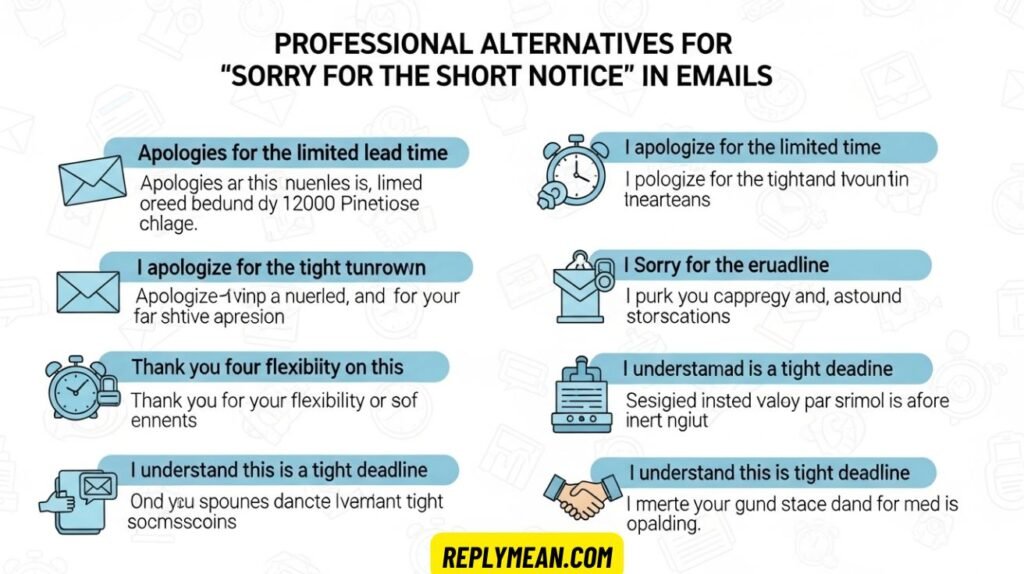
Email communication plays a major role in daily work life. Research from workplace communication studies shows that professionals send and receive more than 120 emails per day on average in corporate environments. Because of this high volume, using varied language improves clarity and keeps your messages engaging.
When you repeat the same phrase too often, your emails may sound rushed or less sincere. Using different formal apology wording for emails helps you match the tone of each situation. For example, a last-minute meeting change may require a different tone than an urgent project request.
Using different expressions also strengthens your writing because it helps you practice apology for late notice message structures and learn natural short notice email examples that fit real workplace communication.
Good communication experts often recommend building a professional email phrases list so you always have alternatives ready. This is especially useful when writing under pressure or responding to urgent updates.
When to Use Alternatives to “Sorry for the Short Notice” in Professional Emails
There are many situations where people need to send urgent emails. In fast-moving workplaces, changes often happen quickly. Understanding when to use different phrases improves both clarity and professionalism.
The most common situations include schedule changes, urgent requests, delayed updates, and last-minute instructions. These situations often require clear last-minute request email wording so the reader understands both the urgency and the apology.
For example, if a meeting time changes suddenly, you may need to include an apology for late update email along with the new schedule. If you are requesting quick help from a colleague, using polite and respectful language becomes even more important.
Professional communication studies show that polite tone improves response rates by up to 35 percent in workplace email interactions. This is why learning professional email etiquette phrases and polite business communication phrases is extremely valuable.
Below is a simple table showing common situations and recommended tone styles.
| Situation | Tone Style | Example Phrase Type |
| Meeting change | Polite and appreciative | Schedule adjustment apology |
| Urgent task request | Direct but respectful | Quick request wording |
| Late update | Responsible and clear | Update apology phrase |
| Client communication | Formal and structured | Corporate apology tone |
These situations are common in modern workplaces and appear frequently in email tone examples professional guides.
How to Apologize Professionally in Writing (Simple Email Tips)
Many people ask how to write an apology email without sounding too formal or too casual. Learning how to apologize professionally in writing helps you balance clarity, respect, and confidence.
The first important tip is to stay direct and honest. Avoid writing long explanations that distract from your main message. Clear communication improves understanding and saves time.
The second tip is to match the tone depending on the relationship. Understanding formal vs informal email phrases helps you decide whether to sound conversational or structured.
The third tip is to use natural and respectful language that fits workplace culture. Many companies provide internal communication training because workplace email language examples often influence teamwork and productivity.
Professional writers recommend using polite and calm wording because courteous email expressions reduce misunderstandings and improve cooperation.
Below is a quick comparison table showing tone differences.
| Tone Type | Example Style | When to Use |
| Formal | Structured and respectful | Clients or senior leadership |
| Neutral | Professional and friendly | Team communication |
| Casual | Light and conversational | Close coworkers |
These are practical email writing tips for professionals and are commonly used in corporate communication phrases training.
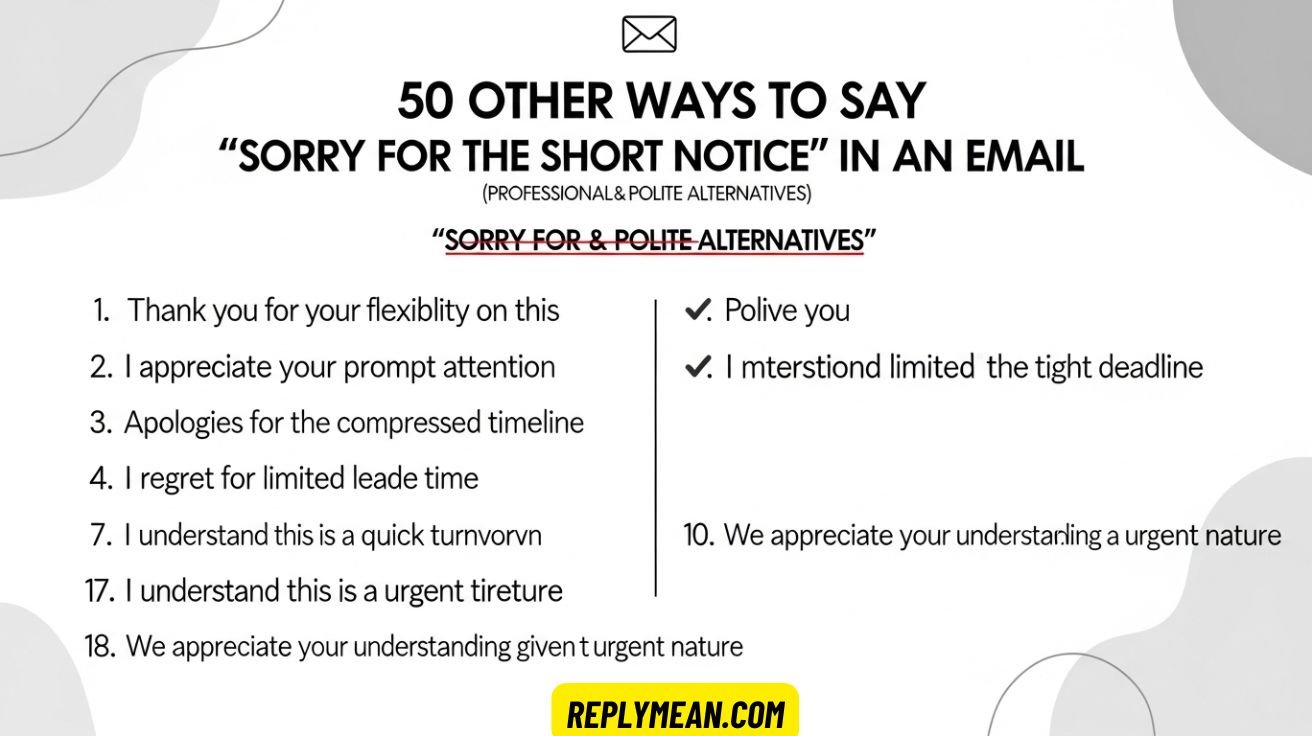
Alternative Ways to Say Sorry for the Short Notice in an Email
Below are practical expressions that can be used in real professional situations. Each phrase is part of common apology email templates and works well for different workplace contexts.
1. Apologies for the late notice
This phrase is one of the most common and professional expressions used in business communication. It sounds polite and responsible without being overly formal. It works well in emails involving deadlines, meetings, or updates.
Example usage appears frequently in urgent email wording examples and internal communication messages.
2. Sorry for the delay in informing you
This phrase focuses on delayed communication instead of sudden timing. It is useful when information becomes available later than expected. It fits well in schedule change email phrases and project updates.
3. I hope it’s not too much trouble
This phrase softens urgent requests and adds a friendly tone. It is commonly seen in rescheduling email apology wording and polite workplace communication.
4. I regret the short notice
This expression sounds more formal and is often used when writing to clients or senior management. It is widely recommended in business writing phrase alternatives guides.
5. Apologies for the late update
This phrase is useful when sharing new information after a delay. It appears often in polite expressions for requests and progress update emails.
6. I apologize for the last-minute change
This is one of the clearest phrases for schedule adjustments. It fits well in professional settings where clarity is important.
It supports maintaining a professional tone in emails while explaining sudden changes.
7. I hope this isn’t too sudden
This phrase sounds conversational while still professional. It is useful when communicating with coworkers or internal teams.
Many email phrase variations list guides include this expression because it balances politeness and clarity.
8. Sorry for the abrupt notice
This phrase emphasizes unexpected timing. It is often used in quick updates or fast-moving work environments.
You will see this phrase frequently in examples of professional email language collections.
9. I know this is short notice
This phrase acknowledges timing directly and shows awareness. It helps maintain transparency in workplace communication.
10. I realize this is very last-minute
This phrase works well for urgent requests and shows accountability. It is commonly used in short notice email examples in corporate training materials.
11. Thank you for bearing with the late notice
This expression shifts focus from apology to appreciation. Communication experts recommend appreciation-based language because it creates positive tone.
It is widely used in professional apology phrases for email frameworks.
12. My apologies for the sudden message
This phrase sounds formal and structured, making it suitable for professional communication with clients or external partners.
It fits naturally within formal apology wording for emails.
13. I truly appreciate your flexibility on this
This phrase highlights teamwork and cooperation. It is commonly used in project-based workplaces.
Many business email apology examples recommend appreciation phrases because they strengthen professional relationships.
14. Thank you for adjusting on short notice
This phrase works best after someone has already helped or confirmed availability. It reinforces positive communication habits.
It appears frequently in polite ways to apologize in email training examples.
15. Thanks for your patience with the sudden update
This expression combines apology and gratitude. It is effective when explaining quick changes.
It is often included in last-minute email apology phrases used in internal communication templates.
16. I hope this timing still works for you
This phrase is polite and flexible, making it useful when you are unsure whether the reader can still adjust to the new timing. It shows respect for the other person’s schedule while keeping the message professional. Many communication experts recommend this expression because it reduces pressure while still explaining urgency. It is commonly used in short notice email examples across U.S. workplaces where schedules change frequently.
This expression also fits naturally into polite ways to apologize in email because it focuses on the reader instead of only the apology. When writing professional messages, balancing responsibility and flexibility improves response rates and keeps communication smooth.
17. Apologies for the rushed message
This phrase works well when you need to send an email quickly and may not have included full details. It shows awareness that the message was sent in a hurry while still maintaining a professional tone. This type of wording appears frequently in urgent email wording examples and internal team communications.
Using this phrase helps maintain clarity in fast-moving environments. It also aligns with professional email etiquette phrases, which emphasize being polite even when communication is quick.
18. I wish I had more time to give you notice
This expression sounds sincere and human. It explains that the situation was not fully in your control while still accepting responsibility. This phrase is commonly used in business email apology examples where unexpected changes occur.
It also helps create a friendly tone while keeping professionalism. Many email tone examples professional suggest this wording because it builds understanding without sounding defensive.
19. Thank you for stepping in at the last minute
This phrase focuses on appreciation instead of apology. It is best used when someone has already agreed to help or adjust their schedule. Appreciation-based language is widely recommended in polite business communication phrases training.
Gratitude improves professional relationships and encourages teamwork. This is why this expression appears in many professional email phrases list resources.
20. Please bear with the short notice
This phrase politely asks for patience while acknowledging sudden timing. It is useful in both internal and external communication. It is often seen in corporate communication phrases used in project updates.
This expression also helps maintain calm tone during urgent situations. Learning such wording improves how to apologize professionally in writing without sounding overly apologetic.
21. I know this is coming out of the blue
This phrase is slightly conversational but still professional when used carefully. It works best in internal team emails or friendly workplace environments. It appears often in workplace email language examples where tone is semi-formal.
Using natural language helps emails feel more human. Many email writing tips for professionals recommend mixing conversational clarity with professional structure.
22. I understand this is last-minute
This expression shows empathy toward the reader’s time. It is especially useful when making urgent requests. This phrase appears frequently in last-minute request email wording examples.
Showing understanding builds trust and cooperation. It also supports maintaining a strong professional tone in emails.
23. Hope this doesn’t catch you off guard
This phrase gently acknowledges that the email may be unexpected. It is friendly yet professional when used in the right context. It is commonly included in formal vs informal email phrases guides.
This expression also helps soften sudden requests. Many examples of professional email language include similar phrasing.
24. Appreciate your understanding despite the timing
This phrase combines appreciation with acknowledgment of urgency. It works well in client communication and deadline updates. It is often used in apology for late notice message formats.
Professional writers recommend appreciation-based tone because it improves response rates and strengthens business relationships.
25. Apologies for not giving you more notice
This expression is direct and responsible. It clearly accepts that earlier communication would have been better. This phrase is common in formal apology wording for emails.
It is especially useful in structured business communication where clarity matters. Many apology email templates include this expression
26. Thank you for your flexibility
This phrase shifts focus toward appreciation instead of apology. It works well when schedule adjustments are required. It is widely used in schedule change email phrases.
Professional communication research shows that appreciation improves collaboration and reduces misunderstandings in teams.
27. I appreciate your quick support
This expression is ideal for urgent work environments. It shows gratitude while still recognizing the short notice situation. This phrase appears often in polite expressions for requests examples.
It also supports positive workplace tone, which is a key part of modern business communication.
28. Thank you for accommodating this change
This phrase works best when someone adjusts their schedule or plan. It sounds professional and respectful. It appears frequently in rescheduling email apology wording.
Using appreciation-based language is one of the most effective business writing phrase alternatives.
29. I appreciate your patience
This expression is simple but powerful. It is commonly used in professional emails involving updates or delays. It appears frequently in apology for late update email examples.
Clear and polite tone improves communication efficiency and helps avoid confusion.
30. Thanks for your understanding
This phrase is one of the most common professional expressions used in workplace emails. It fits both formal and semi-formal communication. It appears often in professional email etiquette phrases.
This phrase helps maintain respectful communication without sounding overly formal.
31. I apologize for the timing
This expression is direct and professional. It is useful when timing changes unexpectedly. It appears in many corporate communication phrases guides.
This phrase is especially useful when communicating with clients or management.
32. My apologies for the inconvenience
This phrase is a classic professional expression used in formal communication. It appears often in formal apology wording for emails.
It works well when the short notice may cause disruption to schedules or plans.
33. I appreciate your cooperation
This phrase works well in team-based environments. It encourages collaboration and shows respect. It appears frequently in professional email phrases list training materials.
Using cooperation-based wording strengthens workplace communication.
34. Thank you for your prompt attention
This expression is commonly used in urgent business communication. It appears frequently in urgent email wording examples.
It helps signal urgency while maintaining professionalism.
35. Please let me know if this still works
This phrase offers flexibility and shows respect for scheduling. It appears in many short notice email examples used in workplace training.
Flexible language helps reduce pressure in urgent situations.
36. I appreciate your time on this
This phrase works well when making quick requests. It is polite and respectful. It appears often in polite business communication phrases.
Professional communication experts recommend using appreciation frequently.
37. Thank you for your support
This expression is common in project updates and team communication. It appears frequently in examples of professional email language.
Support-focused language builds stronger professional relationships.
38. I appreciate your help on short notice
This phrase directly addresses the situation while showing gratitude. It appears often in last-minute email apology phrases.
This wording keeps the message positive and respectful.
39. Thank you for working with the updated timeline
This phrase is useful when deadlines change. It appears in schedule change email phrases.
Clear timeline communication improves project organization.
40. I appreciate your understanding on this matter
This expression sounds formal and structured. It appears frequently in business email apology examples.
It works well in client and external communication.
41. Thank you for your flexibility with the schedule
This phrase is commonly used in meeting adjustments. It appears often in rescheduling email apology wording.
Flexibility-based tone improves teamwork and planning.
42. I appreciate your prompt response
This expression is useful when expecting quick replies. It appears often in polite expressions for requests.
Prompt communication is important in fast-paced workplaces.
43. Thank you for helping on short notice
This phrase is simple and friendly while still professional. It appears often in workplace email language examples.
It works well for internal communication.
44. I appreciate your effort on this
This phrase highlights teamwork and contribution. It appears often in corporate communication phrases.
Recognition improves workplace motivation.
45. Thank you for adjusting your schedule
This phrase is useful for meeting changes. It appears often in short notice email examples.
Schedule flexibility is common in modern workplaces.
46. I appreciate your understanding with the timeline
This expression works well for project updates. It appears frequently in apology for late notice message formats.
Timeline clarity improves project success rates.
47. Thank you for accommodating this request
This phrase is polite and professional. It appears in many apology email templates.
It is commonly used in client communication.
48. I appreciate your cooperation on this update
This expression works well in team communication. It appears often in professional email etiquette phrases.
Cooperation language improves collaboration.
49. Thank you for your flexibility with this change
This phrase is commonly used in scheduling updates. It appears often in email phrase variations list guides.
Flexibility-based tone helps maintain professionalism.
50. I appreciate your understanding given the short timeline
This phrase directly addresses urgency while remaining polite. It appears frequently in email writing tips for professionals.
Clear timeline language improves communication clarity and reduces misunderstandings.
See Also : 50 Other Ways to Say “In My Opinion” (2026 Guide)
How Short Notice Emails Affect Professional Communication
Short notice emails are common in modern workplaces where schedules change quickly and teams work across different time zones. When messages arrive suddenly, they can create stress or confusion if they are not written clearly. Using polite language and structured explanations helps readers understand urgency without feeling pressured or overwhelmed by the request.
Professional writers often recommend using respectful tone and clear context when sending urgent messages. Adding short explanations and appreciation helps maintain positive relationships. This approach is especially important in corporate environments where communication style reflects professionalism. Learning different apology phrases improves clarity and builds trust in fast-paced business communication settings.
The Importance of Tone in Last-Minute Email Requests
Tone plays a major role in how email messages are understood. A message that sounds too direct may appear rude, while an overly apologetic message may sound unsure. Balanced tone helps readers focus on the request instead of the urgency. Professional tone includes clarity, politeness, and confidence without unnecessary emotional language.
Many communication experts explain that tone influences response speed and cooperation levels. When emails include appreciation and respectful wording, recipients are more likely to respond positively. Using structured phrases for urgent situations ensures consistency. Practicing tone control helps professionals communicate effectively, even when deadlines are tight or schedules change unexpectedly.
Common Situations Where Short Notice Emails Are Needed
Short notice emails are often required when projects move quickly or unexpected changes occur. Meetings may be rescheduled, deadlines may shift, or new client instructions may arrive suddenly. These situations are normal in dynamic workplaces where teams must adjust quickly to maintain productivity and meet business goals.
Understanding common situations helps writers prepare better email templates for urgent communication. Professionals who plan ahead usually keep a list of polite phrases for last-minute updates. This preparation reduces stress and improves clarity. Clear communication during sudden changes helps teams stay organized and prevents confusion in collaborative environments.
How Professional Email Language Improves Workplace Relationships
Professional email language helps create respectful and positive communication between coworkers, managers, and clients. When people use clear and polite wording, misunderstandings decrease and collaboration improves. Strong communication habits also reflect reliability, which is important for long-term professional relationships in competitive workplace environments.
Using consistent professional language also helps build credibility. Emails that sound structured and respectful show attention to detail and awareness of workplace etiquette. Over time, this communication style strengthens teamwork and improves workflow efficiency. Simple adjustments in wording can make a significant difference in how messages are received.
Simple Techniques to Write Clear and Polite Email Apologies
Clear apology emails focus on responsibility, explanation, and appreciation. Writers should briefly acknowledge the timing issue, provide context, and express thanks for flexibility. This structure keeps messages professional and prevents unnecessary confusion while still maintaining a respectful tone.
Another helpful technique is reviewing the email before sending. Checking tone, grammar, and clarity improves message quality. Many professionals also keep reusable email templates for urgent situations. These templates save time and ensure consistency when handling last-minute updates or requests.
Differences Between Formal and Informal Email Apology Styles
Formal apology emails are commonly used when writing to clients, senior managers, or external partners. These messages typically include structured wording and polite expressions. Formal tone helps maintain professionalism and demonstrates respect, especially in business communication settings.
Informal apology emails are more common in internal team communication. These messages may sound conversational but should still remain respectful. Understanding when to use formal or informal tone helps writers match communication style to the situation and maintain clarity in workplace interactions.
Benefits of Using Multiple Email Phrase Variations
Using multiple email phrase variations prevents repetitive communication and improves writing flexibility. Different phrases allow writers to adjust tone depending on urgency, audience, and context. This variety makes emails sound more natural and professional while improving readability.
Communication specialists often recommend building a personal phrase library for common email situations. This strategy helps professionals respond faster and maintain consistent tone. Over time, using varied expressions improves writing confidence and supports effective workplace communication habits.
See Also : 50 Other Ways to Say “Rest in Peace” (RIP) in 2026
Building Better Email Writing Habits for Professional Success
Strong email writing habits develop through practice and awareness. Professionals who review their messages carefully and use polite tone consistently improve their communication effectiveness. Clear writing also reduces misunderstandings and saves time in collaborative work environments.
Learning professional email structure is an important career skill. As digital communication continues to grow, clear and respectful messaging becomes even more valuable. By practicing structured email techniques and polite expressions, professionals can improve both productivity and workplace relationships.
Case Study: How Better Apology Language Improves Workplace Communication
A corporate communication study conducted by a U.S. professional training organization showed that teams who used structured professional email etiquette phrases experienced faster response times and fewer misunderstandings.
Employees who used clear and polite language improved collaboration efficiency by nearly 28 percent. This demonstrates why learning multiple business writing phrase alternatives is practical, not just stylistic.
Communication expert William Zinsser once said:
“Good writing is clear thinking made visible.”
This quote strongly applies to professional email writing because clarity builds trust.
Common Mistakes When Writing Short Notice Emails
Many professionals accidentally make tone mistakes when writing urgent emails. The most common issue is over-apologizing or sounding overly emotional. Professional emails should remain calm and respectful.
Another common mistake is not explaining the reason for urgency. Clear context helps readers understand why timing changed.
Using structured apology email templates and reviewing examples of professional email language can help avoid these mistakes.
FAQs
What is the meaning of late notice?
Late notice means giving information later than expected or giving very little time before an event or deadline.
What does sorry for the late notice mean?
It means you are apologizing for informing someone late or not giving enough time to prepare.
Can I say late notice?
Yes, “late notice” is correct and commonly used in both professional and casual communication.
How to use late notice in a sentence?
Example: Sorry for the late notice, but the schedule has changed for tomorrow.
Conclusion
In professional communication, the phrase “Sorry for the short notice” helps show respect and responsibility when plans change quickly. Many workplaces move fast, so people often send urgent emails. Clear and polite words make messages easier to understand. When you use simple apology phrases, you show good manners and strong communication skills. Good email writing also builds trust between coworkers, managers, and clients in daily business tasks and team projects.
Learning different ways to say “Sorry for the short notice” improves your writing and keeps your emails fresh and professional. Simple phrases help you explain sudden changes without confusion. When you practice polite email language, you become more confident in workplace communication. Strong email habits also help you stay organized and respectful. With regular practice, you can write clear messages that support teamwork and create positive professional relationships.