50 Other Ways to Say “After Careful Consideration”
After Careful Consideration means making a choice after thinking very carefully. It shows that a person looked at all the facts and options. It tells others the decision was not quick or careless.
Many people use After Careful Consideration in letters and emails. But using the same phrase again and again can sound boring. Learning new ways to say it can make your writing stronger.
After Careful Consideration is common in business and school writing. Companies use it in decision letters and announcements. It helps show respect, responsibility, and clear thinking.
Meaning of “After Careful Consideration”

“After careful consideration” is a formal decision phrase used to show that a decision was not rushed. It means someone has taken time to think, review information, compare options, and reflect before making a final choice. In American workplaces, this phrase signals maturity, responsibility, and fairness.
It is common in HR rejection letter phrases, corporate announcements, and academic settings. For example, companies use it in professional rejection email phrases when informing candidates they were not selected. Universities use it in admissions letters. Managers use it in business decision announcement examples to show leadership and accountability.
The reason this phrase is popular in the U.S. is cultural. American professional culture values fairness, transparency, and logic. When leaders use this wording, it reassures readers that the outcome is based on reason rather than emotion.
Still, using the same words repeatedly can weaken your message. That is why understanding phrases similar to after careful consideration is essential for strong workplace communication vocabulary.
Synonyms for After Careful Consideration
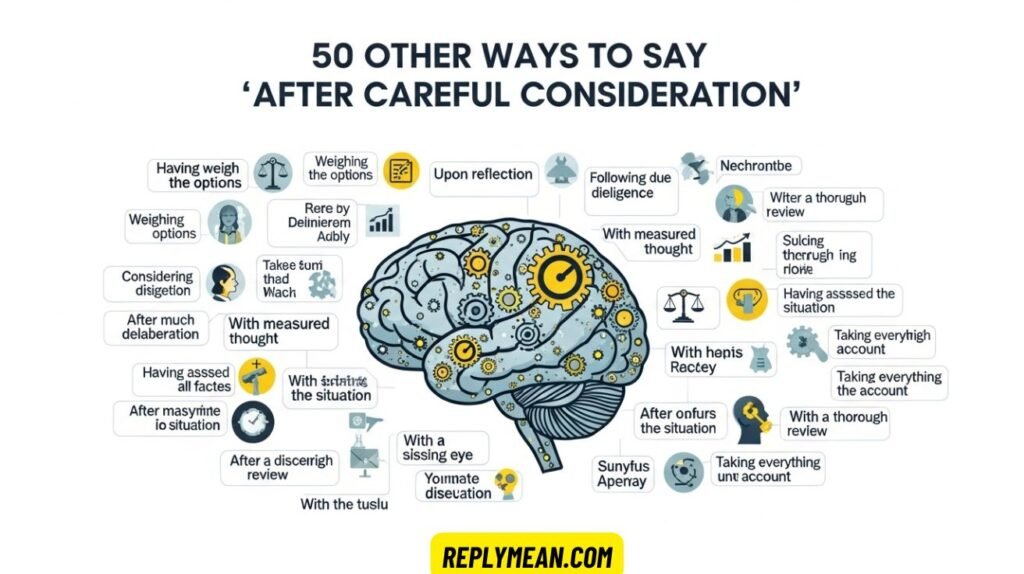
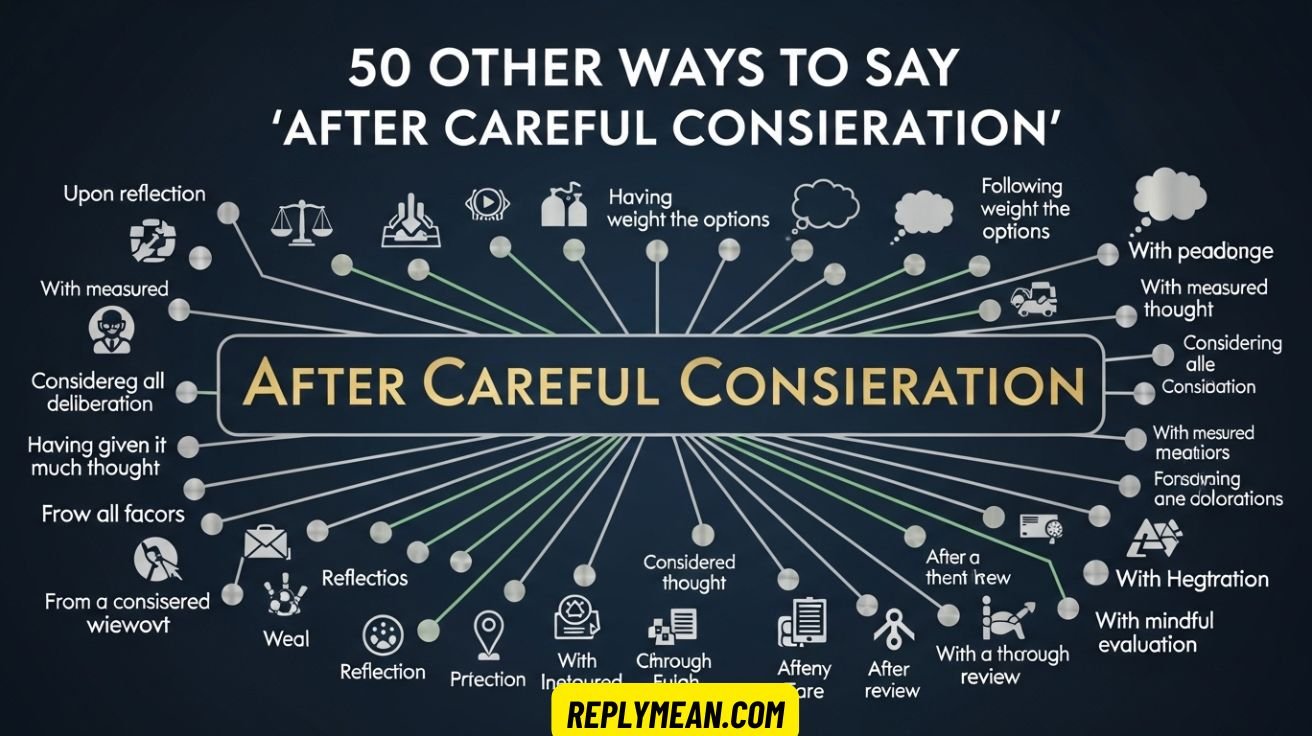
Below are professional and reflective alternatives. These options improve your corporate email language, strengthen your persuasive writing vocabulary, and help you use better decision-making expressions in daily communication.
1. Upon Reflection
“Upon reflection” feels thoughtful and personal. It suggests someone paused and looked back carefully before making a decision. It works well in speeches, personal letters, and even some business settings.
This phrase is excellent when writing reflective leadership statements or sharing lessons learned. It is one of the most natural reflective language examples in modern communication.
2. After Thorough Evaluation
This phrase emphasizes analysis and review. It sounds structured and data-driven, which makes it perfect for reports and corporate communication examples.
In American business culture, using words like evaluation and assessment signals professionalism and logic. It is often used in finance, research, and management decisions.
3. Following Deep Thought
This alternative adds emotional weight. It suggests serious mental effort. It works well in motivational speeches, blog writing, and leadership reflections.
It belongs in a strong reflective synonyms list because it shows both logic and emotion.
4. After Weighing the Options
This phrase clearly shows comparison. It is one of the strongest weighing options phrase examples for decision clarity.
It is commonly used in negotiations, hiring processes, and vendor selection announcements.
5. Upon Careful Review
This is one of the safest formal writing transition phrases in business. It works well in legal and administrative settings.
It is also considered one of the most trusted legal wording alternatives when replacing “after careful consideration.”
6. After Meticulous Analysis
This phrase communicates precision and detail. It is common in technical industries such as healthcare, engineering, and research.
Using this phrase improves your academic writing phrases and makes your communication more authoritative.
7. Following Extensive Deliberation
This wording is often used by boards, committees, and executive teams. It fits perfectly in decision announcement wording at high levels of leadership.
It signals teamwork and time investment in the decision process.
8. Upon Close Examination
This alternative highlights inspection and review. It works well when discussing audits, compliance checks, or quality assurance.
It strengthens professional credibility.
9. After Thoughtful Assessment
This phrase balances emotion and logic. It is softer than analysis but still professional.
It works well in everyday business communication phrases and internal company emails.
10. After Pondering Deeply
This phrase is more personal and reflective. It fits speeches, personal blogs, and storytelling contexts.
It adds humanity to your message.
11. Upon Detailed Scrutiny
This alternative sounds formal and serious. It is strong in contracts and compliance documents.
It is frequently used as one of the reliable serious consideration synonyms in law and finance.
12. After a Thorough Review
This is one of the simplest and most effective replacements. It is clear, direct, and appropriate in nearly every professional setting.
It works perfectly in formal letter introduction phrases and professional tone phrases.
13. After Deliberate Consideration
“After deliberate consideration” shows that a decision was made slowly and with intention. The word deliberate suggests control, patience, and logic. It is one of the strongest deliberate decision synonyms used in American corporate settings.
This phrase works well in leadership announcements and policy updates. It fits naturally into executive communication phrases and formal business emails when explaining a final decision clearly and confidently.
14. Following Critical Reflection
“Following critical reflection” suggests that someone carefully examined both facts and personal responsibility. It shows deeper thinking beyond surface-level review.
This expression is useful in performance reviews, leadership messages, and academic discussions. It belongs in strong reflective statement examples because it communicates growth and self-awareness.
15. After Measured Judgment
“After measured judgment” implies balance and fairness. It suggests the decision was not emotional but carefully weighed.
This phrase is effective in legal settings and corporate policies. It strengthens your professional tone phrases and shows authority in high-stakes decisions.
16. Upon Comprehensive Review
“Upon comprehensive review” communicates that every detail was examined. It sounds complete and thorough.
This is common in compliance departments and research reports. It fits perfectly among trusted formal writing alternatives for structured communication.
17. After Strategic Evaluation
“After strategic evaluation” highlights planning and long-term thinking. It shows the decision connects to bigger goals.
This phrase works in corporate planning and investment decisions. It improves clarity in business decision announcement examples and executive reports.
18. Following Careful Inspection
“Following careful inspection” emphasizes physical or technical review. It often applies to quality checks or audits.
It strengthens credibility in operational updates. Many organizations use it in corporate communication examples related to safety or compliance.
19. After Precise Evaluation
“After precise evaluation” suggests accuracy and data-driven thinking. It sounds professional and reliable.
This wording improves academic writing phrases and technical documents. It communicates careful measurement and logical analysis.
20. Upon Rigorous Analysis
“Upon rigorous analysis” signals high standards and detailed research. It is often used in scientific or financial reports.
This phrase enhances authority and belongs among serious decision-making expressions that reflect discipline and expertise.
21. Following Thorough Consideration
“Following thorough consideration” sounds balanced and professional. It communicates care without being overly complex.
It is one of the safest phrases similar to after careful consideration for everyday workplace use
22. After Attentive Review
“After attentive review” suggests focus and care. It shows the reader that attention was given to details.
This phrase works well in HR updates and contract discussions. It supports respectful and professional communication.
23. After Assessing All Factors
“After assessing all factors” highlights evaluation of multiple elements. It shows a complete picture was considered.
This expression is helpful when explaining business or policy decisions in clear, simple language.
24. Following a Full Review Process
“Following a full review process” emphasizes structure and fairness. It reassures readers that procedures were followed.
This phrase works well in government, education, and corporate announcements.
25. After Reviewing the Details
“After reviewing the details” is simple and direct. It sounds clear and transparent.
This wording fits naturally in professional email wording when communicating updates or clarifications.
26. Upon Final Evaluation
“Upon final evaluation” signals closure. It shows the review stage is complete.
This is common in hiring and vendor selection announcements across U.S. organizations.
27. After Careful Examination
“After careful examination” suggests close inspection and seriousness. It works well in legal and financial writing.
This phrase strengthens clarity and belongs among trusted legal wording alternatives.
28. Following Internal Review
“Following internal review” shows the decision was discussed within the organization. It emphasizes teamwork.
It works well in corporate announcements and policy changes.
29. After Evaluating All Options
“After evaluating all options” highlights comparison and fairness. It signals that no choice was ignored.
It is one of the clearest weighing options phrase examples for workplace decisions.
30. Upon Review of the Proposal
“Upon review of the proposal” sounds professional and structured. It is commonly used in business negotiations.
This wording fits well in contracts and partnership discussions.
31. After Structured Analysis
“After structured analysis” suggests organization and logic. It sounds technical and methodical.
It works in research reports and strategic planning documents.
32. After Considering the Circumstances
“After considering the circumstances” shows context mattered. It communicates fairness.
This phrase is strong in disciplinary decisions and management discussions.
33. After Serious Consideration
“After serious consideration” signals depth and responsibility. It implies the issue was important.
It is widely used in job offers and career decisions.
34. After Long Consideration
“After long consideration” emphasizes time investment. It suggests patience and careful thinking.
This wording works in personal announcements and business negotiations.
35. Following Careful Thought
“Following careful thought” sounds gentle and respectful. It fits both personal and professional communication.
It is one of the most flexible formal ways to say I have decided
36. After Reviewing Everything
“After reviewing everything” is conversational yet professional. It sounds honest and transparent.
It works well in team communication and internal updates.
37. Upon Reconsideration
“Upon reconsideration” implies a second look. It suggests openness to change.
This phrase is useful when correcting or revising decisions.
38. After Mindful Review
“After mindful review” combines logic and awareness. It sounds calm and thoughtful.
It fits leadership messages and personal development statements.
39. Following Personal Reflection
“Following personal reflection” emphasizes self-examination. It sounds sincere and authentic.
It is powerful in speeches and career transition announcements.
40. After Balanced Judgment
“After balanced judgment” suggests fairness and logic. It sounds composed and mature.
This phrase strengthens leadership credibility.
41. Upon Thoughtful Review
“Upon thoughtful review” communicates both care and clarity. It sounds respectful.
It is appropriate in HR updates and executive memos.
42. Upon Profound Reflection
“Upon profound reflection” expresses deep personal insight. It feels emotional yet serious.
It works well in life-changing announcements and keynote speeches
43. After Soul-Searching
“After soul-searching” is deeply personal. It suggests emotional honesty.
It fits personal blogs and major life decisions.
44. After Much Thought
“After much thought” is simple and sincere. It is less formal but still respectful.
It works well in everyday emails and announcements.
45. Following Meaningful Reflection
“Following meaningful reflection” suggests growth and understanding. It sounds mature.
It is strong in leadership lessons and mentoring messages.
46. After Deep Contemplation
“After deep contemplation” emphasizes serious thinking. It feels philosophical.
It fits speeches, essays, and personal storytelling.
47. Upon Careful Introspection
“Upon careful introspection” highlights internal self-analysis. It sounds reflective and wise.
It is ideal in personal statements and reflective writing.
48. After Extended Reflection
“After extended reflection” shows time and patience. It suggests the decision was not rushed.
This wording works well in professional resignations and career announcements
49. Following Sincere Consideration
“Following sincere consideration” emphasizes honesty and integrity. It sounds respectful.
It fits formal announcements and difficult conversations.
50. After Evaluating My Priorities
“After evaluating my priorities” shows personal clarity. It signals values-based decision-making.
This phrase works perfectly in career transitions and professional development announcements.
See Also : 50 Other Way to Say “Talk to You Soon”
Comparison Table of Tone and Usage
Below is a helpful table showing tone differences.
| Phrase Type | Tone Level | Best For | Professional Strength |
| Upon Careful Review | Formal | Legal, HR | Very High |
| After Thorough Evaluation | Analytical | Corporate reports | Very High |
| After Weighing the Options | Balanced | Hiring decisions | High |
| Following Deep Thought | Reflective | Speeches | Medium |
| Upon Profound Reflection | Emotional | Personal writing | Medium |
Understanding tone helps you choose the right wording in polite ways to decline an offer or deliver difficult messages.
Case Study: Rewriting a Rejection Email
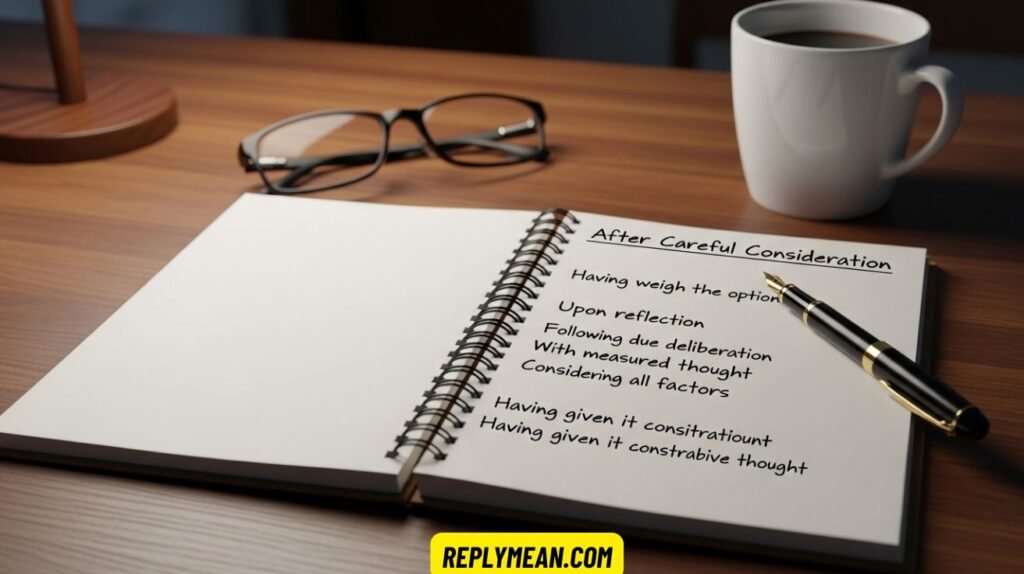
Original sentence:
After careful consideration, we regret to inform you that you were not selected.
Improved professional version:
Upon careful review of all applications, we have decided to move forward with another candidate.
Reflective version:
After evaluating all options, we chose the applicant whose experience most closely aligns with our current needs.
These examples show how small wording changes improve clarity and professionalism.
How to Choose the Best Alternative
When deciding which phrase to use, consider context. If you are writing an executive announcement, choose structured language like “following extensive deliberation.” If you are sending a rejection email, select respectful wording from trusted polite decline phrases. If you are writing an academic report, use stronger analytical expressions.
Strong communication is not about sounding complicated. It is about clarity and tone. As leadership expert John Maxwell once said, “Communication works for those who work at it.” Choosing better words strengthens trust.
Why “After Careful Consideration” Sounds Overused in Professional Writing
In American workplaces, the phrase “after careful consideration” appears in emails, HR notices, and corporate updates. While it shows respect and thoughtful decision-making, it can quickly feel repetitive. When every rejection letter or announcement uses the same wording, communication begins to sound robotic instead of sincere and human.
Modern business communication phrases require variety and clarity. Using better ways to say after careful consideration helps you sound confident and intentional. Strong professional tone phrases improve your credibility and make your message feel fresh. Small wording changes can make a major difference in how readers understand and respond.
How Word Choice Shapes Thoughtful Decision-Making
Language strongly influences how others view your judgment. When you use clear decision-making expressions, you show logic and responsibility. A formal decision phrase communicates that you examined facts, compared options, and avoided rushing. This builds trust with colleagues, clients, and leadership teams across different industries in the United States.
Choosing precise wording also reflects emotional intelligence. Reflective language examples such as “upon reflection” or “after weighing the options” suggest fairness and balance. Strong workplace communication vocabulary allows you to present decisions calmly and respectfully, even when delivering difficult news like policy changes or rejection updates.
Professional Email Wording for Workplace Decisions
Emails are the most common form of corporate communication examples today. Replacing overused phrases with formal writing alternatives improves clarity and tone. For example, using “upon careful review” instead of “after careful consideration” keeps your corporate email language professional while adding variation.
Professional rejection email phrases especially benefit from thoughtful wording. HR rejection letter phrases should feel respectful, not cold or automated. Using alternatives to I have decided or polite decline phrases shows empathy. This strengthens your organization’s reputation and maintains positive relationships with applicants and partners.
Formal Writing Alternatives for Academic and Legal Contexts
In academic writing phrases and legal wording alternatives, precision matters. Expressions such as “after meticulous analysis” or “upon detailed scrutiny” demonstrate structure and evidence-based thinking. These phrases signal authority and seriousness, which are important in research papers, compliance reports, and legal decisions.
Formal writing transition phrases also help guide readers logically. When presenting arguments or conclusions, structured language improves understanding. A clear decision announcement wording shows that conclusions were reached responsibly. This level of clarity strengthens persuasive writing vocabulary and reinforces your professional credibility.
Polite Ways to Decline an Offer Without Sounding Harsh
Declining an offer requires tact and professionalism. Polite ways to decline an offer often include reflective statement examples that soften the message. Instead of repeating the same phrase, try serious consideration synonyms like “after evaluating my priorities” or deliberate decision synonyms such as “following careful thought.”
These subtle changes make communication feel respectful. When explaining how to say after careful consideration professionally, tone is everything. Balanced wording reassures the reader that the decision was not personal but based on thoughtful evaluation. This approach protects relationships and supports positive future interactions.
Decision Announcement Wording for Leaders and Executives

Executive communication phrases must sound confident and clear. Leaders often announce strategic shifts, policy updates, or hiring decisions. Using phrases similar to after careful consideration such as “following extensive deliberation” conveys authority and collaboration.
Strong decision-making expressions help teams understand the reasoning behind changes. When employees see that leadership engaged in weighing options phrase examples, they feel more secure. Transparent communication builds trust, improves morale, and strengthens organizational culture across American businesses.
Resume Language Improvement Through Stronger Phrasing
Job seekers benefit from resume language improvement that reflects maturity. Instead of vague wording, candidates can use reflective synonyms list options like “after strategic evaluation” or “upon comprehensive review” when describing project decisions.
Employers value clarity and thoughtful decision-making skills. By showing deliberate reasoning in project summaries, applicants demonstrate leadership ability. Using strong professional tone phrases within resumes signals responsibility, planning, and analytical thinking, which are qualities highly respected in competitive U.S. job markets.
See Also : Coach’s vs Coaches’ vs Coaches: What’s the Real Difference?
Choosing the Right Phrase for Every Situation
Context determines which alternative works best. Corporate environments may require structured corporate email language, while personal writing allows softer reflective language examples. Understanding audience expectations ensures that your message feels natural and effective.
Better ways to say after careful consideration depend on tone, purpose, and relationship. Whether writing formal letters, internal updates, or persuasive arguments, selecting the right expression enhances clarity. Thoughtful word choice strengthens communication, builds respect, and ensures your message leaves a positive impact.
FAQs
What does it mean “after careful consideration”?
It means a decision was made after thinking deeply and reviewing all the facts carefully.
It shows thoughtful decision-making and that the choice was responsible, not rushed.
How do you use “after careful consideration” in a sentence?
You use it at the beginning of a sentence to introduce a final decision in formal writing.
Example: After careful consideration, we have decided to proceed with another option.
What can I say instead of “after careful consideration”?
You can say “upon careful review,” “after thorough evaluation,” or “after weighing the options.”
These are better ways to say after careful consideration in professional communication.
What is another word for careful consideration?
Another word is deliberation, reflection, or evaluation.
These are common serious consideration synonyms used in business and academic writing.
Final Thoughts
After Careful Consideration, strong writers choose their words with care and purpose. They understand that clear language shows respect and confidence. When you replace common phrases with better ones, your message becomes stronger and more professional. This small change improves your writing in school, business, and daily life. Careful wording shows maturity and responsibility.
After Careful Consideration, you can select phrases that match your situation and audience. Formal settings need structured language, while personal messages need softer words. Good communication builds trust and shows leadership. When you practice using better expressions, you grow as a writer. Clear and thoughtful language always creates a positive and lasting impression.