
25 Other Ways to Say I Know You Are Busy (Polite, Professional & Brief)
Every request sent to a crowded desk begins with the same small knock. Writers search for politer ways to say i know you’re busy because the plain sentence — i know you are busy — has to do two jobs at once: excuse the interruption, then make the ask anyway.
The twenty-five phrases below all make that same knock, but each one points at a different part of the other person’s week — the diary, the clock, the load they are carrying, the duties already owed — and they are sorted by the inventory test: what does the phrase say is full?
Each entry carries a grade, one worked example and a plain note on where the phrase shines — and where it misfires: a swamp claimed for a quiet week, a stranger’s whole life inventoried in a first email. Read what is full first, and the right phrase is usually standing beside it.

Sorting the Twenty-Five by the Inventory Test
Quick answer: other ways to say i know you are busy sort by the inventory test — what the phrase says is full. Some fill the diary, some the clock, some the load, some the duty list, and some name the person with nothing in between.
Read in one pass, the twenty-five blur into one polite murmur — understand, realize, appreciate, mindful. Read one at a time, they separate by what they fill: five fill the diary, four the clock, seven the load, four the duty list, and five name the person directly.
Verbs repeat while objects change. Five phrases open with appreciate, at 4, 9, 13, 19 and 24, and five with realize, at 2, 8, 12, 16 and 21 — yet no two of the ten fill the same shelf twice in a row. The verb is the knock; the object is the news.
The Diary Shelf First, the Clock Shelf Second
Diary phrases name the calendar itself: “I Understand Your Schedule Is Full”, the page with no white left, “I Realize Your Agenda Is Tight”, “I Know Your Agenda Is Packed”, “I Appreciate Your Tight Schedule” and “I Realize You Have a Busy Agenda”.
Clock phrases name time itself: “I Know Your Time Is Precious”, the hour priced, “I Appreciate Your Limited Time”, “I Understand You’re Pressed for Time” and “I Appreciate the Demands on Your Time”. Each treats minutes, not meetings, as the scarce thing.
Ten entries, one shared strength: diary and clock phrases are the safest on the page. Both name a thing the reader can check — a calendar, a clock — so neither can be heard as a comment on the reader’s character, energy or worth.
The Load Shelf Third, the Duty Shelf Fourth
Load phrases name the weight being carried: “I Realize You Have a Lot on Your Plate”, the serving metaphor, “I Realize You’re Juggling a Lot Right Now”, “I Know You’re Swamped Right Now”, “I Understand Your Plate Is Full”, “I Get That You’re Overloaded Right Now”, “I Appreciate You’re Handling a Lot” and “I Know Your Hands Are Full”.
Duty phrases name obligations already owed: “I Recognize You Have Pressing Commitments”, the promises with dates, “I’m Aware You Have Pressing Deadlines”, “I Realize Your Commitments Are Many” and “I Understand You’re Pressed With Tasks”. Each points at work that was claimed before your request arrived.
Eleven entries, one shared limit: load and duty phrases describe the reader’s life back to them. They warm a message when the description is accurate — and accuse when it is not, because a wrong inventory sounds like surveillance, not sympathy.
The Person Shelf to Finish
Person phrases name the reader with no object in between: “I Appreciate How Busy You Are”, the direct address, “I’m Aware Your Days Are Hectic”, “I Get That Things Are Busy for You”, “I’m Mindful of How Busy You Are” and “I’m Mindful of Your Busy Life”.
Five entries, one shared warning: person phrases are the warmest here and the riskiest. Said to a friend, they land as care; said to a stranger or a senior, they can read as a verdict on a whole life delivered by someone who has seen one inbox.
The shelf order is the safety order. The further a phrase stands from a checkable object — diary, clock — and the closer it stands to the person, the more the relationship has to carry it. Choose the shelf your standing with the reader can afford.
The Check Every Acknowledgement Has to Pass
One discipline runs through every opener here, borrowed from our guide to other ways to say thank you for the clarification. That guide sorts thank-yous by where the gratitude lands; an acknowledgement deserves the same audit, aimed at what it claims is full.
The audit is one question. What is this phrase actually filling — the diary, the clock, the load, the duties, the person — and is that thing genuinely full, at the size the phrase states it, for the reader it is sent to?
“I’m mindful of your busy life” spent on a colleague whose only problem is one Friday deadline fills a whole life for a clock’s errand. The sender meant respect; the reader hears a biography they never gave, and the request underneath arrives already resented.
Ways to Say “I Know You Are Busy”
1. I understand your schedule is full
The plain-inventory form: it reads the reader’s diary back to them — schedule, full — with no metaphor and no comment attached. It presumes a working relationship and a calendar the reader already knows is crowded.
Its plainness is its fence. A full schedule is the most ordinary claim on this page; spent on someone whose week is genuinely on fire, it can sound like the sender has not looked up from the diary at all. Grade: A− — diary-led, plain ground.
- “I understand your schedule is full, so I’ll keep this to the one decision we need.”
- Best for: routine work emails and meeting requests
- Skip it: crises, where the diary is the smallest part of the story
2. I realize you have a lot on your plate
The serving form: it pictures the reader’s work as food heaped on one plate — visible, finite, nobody’s fault. It presumes a colleague close enough for a kitchen metaphor to land as sympathy rather than decoration.
Its metaphor is its fence. The plate is the most borrowed image in office English; in a formal thread to a senior reader it can sound like the sender reached for the nearest idiom instead of looking at the actual week. Grade: B+ — load-led, serving ground.
- “I realize you have a lot on your plate this week — this can sit until Thursday.”
- Best for: familiar colleagues and team threads
- Skip it: formal first contacts and senior readers
3. I know your time is precious
The pricing form: it values the reader’s time like a rare material — precious — before spending any of it. It presumes a reader whose minutes genuinely cost something: a senior, a specialist, a stranger being asked a favour.
Its price is its fence. Precious is a jewel word; spent on a routine colleague it flatters past the errand, and spent twice in one thread it starts to sound like the opening of a sales letter. Grade: B+ — clock-led, pricing ground.
- “I know your time is precious, so the question is short: do we renew in March?”
- Best for: senior readers and cold requests
- Skip it: everyday colleagues, where the jewel outshines the ask
4. I appreciate how busy you are
The direct form: no object at all — the phrase thanks the reader for the plain fact of being busy, person to person. It presumes a relationship warm enough that naming the person, rather than the calendar, reads as care.
Its directness is its fence. How busy you are is a judgement about the reader delivered by the sender; to a stranger it can sound like a review of their life stapled to a request. Grade: B+ — person-led, direct ground.
- “I appreciate how busy you are at the moment — thank you for fitting this in.”
- Best for: known colleagues and warm threads
- Skip it: first contacts, where the verdict arrives before the standing
5. I’m aware your days are hectic
The weather form: it describes the reader’s days as hectic — a climate, not a choice — and steps politely around them. It presumes a stretch of genuinely frantic days that both sides have already watched happen.
Its weather is its fence. Hectic claims a storm; spent on a merely full week it overdresses the errand, and spent on someone quietly struggling it can name the chaos they were hoping nobody had clocked. Grade: B — person-led, weather ground.
- “I’m aware your days are hectic right now, so there’s no rush on this from my side.”
- Best for: visibly frantic periods both sides have named
- Skip it: calm weeks and quietly struggling readers
6. I get that things are busy for you
The shrug form: the loosest phrase in the set — get, things, busy — three soft words that claim almost nothing specific. It presumes a chat register, where precision would sound colder than the vagueness does.
Its looseness is its fence. Things is the emptiest noun on this page; in a written request to anyone senior, the shrug reads as the sender not knowing — or not asking — what the reader’s week actually holds. Grade: B — person-led, shrug ground.
- “I get that things are busy for you — just ping me when the draft lands.”
- Best for: chats, texts and familiar teammates
- Skip it: formal emails and anyone senior
7. I recognize you have pressing commitments
The formal form: recognize and commitments are both boardroom words, and pressing adds the deadline pressure without drama. It presumes a professional reader whose obligations are contractual, dated and known to matter.
Its formality is its fence. In a friendly thread the full dress uniform startles; the reader braces for a complaint or a legal letter, and the small request underneath arrives wearing the wrong clothes. Grade: A− — duty-led, formal ground.
- “I recognize you have pressing commitments this quarter, so I’ll send the summary in advance.”
- Best for: formal emails, clients and senior colleagues
- Skip it: friendly threads, where the uniform startles
8. I realize you’re juggling a lot right now
The circus form: it pictures the reader keeping many objects in the air at once — skill implied, dropping feared. It presumes several live projects the sender can actually name, not a guess at a busy life.
Its picture is its fence. Juggling compliments the skill and predicts the drop in the same breath; a reader who has just missed a deadline hears the second half louder than the first. Grade: B+ — load-led, circus ground.
- “I realize you’re juggling a lot right now — the report can join the act next week.”
- Best for: colleagues mid-project with many live threads
- Skip it: readers who have just dropped something
9. I appreciate your limited time
The ration form: it treats the reader’s time as a limited supply — measured, finite, not to be wasted. It presumes a short ask and a reader who will check whether the message honours its own opening.
Its ration is its fence. Limited time promises brevity; if three paragraphs and two attachments follow, the phrase becomes evidence against the sender, quoted back by every reader who reaches the end. Grade: A− — clock-led, ration ground.
- “I appreciate your limited time — two lines only: the venue is confirmed for May.”
- Best for: genuinely short asks to busy readers
- Skip it: long messages, where it indicts itself
10. I’m mindful of how busy you are
The careful form: mindful does the work — the sender claims not just knowledge but ongoing care, a watching brief over the reader’s load. It presumes a relationship where that care has been shown before, in acts.
Its care is its fence. Mindful is a strong claim to make in a first message; unearned, it reads as a technique — the empathy phrase from a template, deployed at the exact moment a favour is needed. Grade: B+ — person-led, careful ground.
- “I’m mindful of how busy you are this month, so the invite comes with a genuine no attached.”
- Best for: established relationships and sensitive asks
- Skip it: first contacts, where the care is unearned
11. I understand you’re pressed for time
The pressure form: pressed names the squeeze directly — time on one side, the reader on the other. It presumes a deadline both sides can see, and a request that will genuinely be short.
Its pressure is its fence. Pressed describes a feeling as much as a fact; a reader who was coping fine can hear the phrase as the sender deciding they must be struggling. Grade: B+ — clock-led, pressure ground.
- “I understand you’re pressed for time today, so here’s the answer first: yes, approved.”
- Best for: deadline days and quick decisions
- Skip it: readers who are coping, and dislike being told otherwise
12. I realize your agenda is tight
The fit form: agenda gives the diary its formal name, and tight measures the gaps between entries — there are none. It presumes a scheduled reader: meetings back to back, a day planned in blocks.
Its fit is its fence. Agenda belongs to meetings; spent on someone whose work is deep, unscheduled labour — a maker, a writer, a nurse — it inventories the wrong furniture and misses their actual load. Grade: B+ — diary-led, fit ground.
- “I realize your agenda is tight on Friday — ten minutes is all I’m asking for.”
- Best for: meeting-heavy readers and diary requests
- Skip it: unscheduled workers, whose load is not in a diary
13. I appreciate the demands on your time
The claims form: it pictures the reader’s time as a counter where many claims are already queued — demands, plural, arriving from every side. It presumes a reader in genuine demand: a manager, an expert, a gatekeeper.
Its queue is its fence. Demands is a heavy word for ordinary requests; spent on a peer’s normal week it inflates their importance and your errand at once, and careful readers discount both. Grade: B+ — clock-led, claims ground.
- “I appreciate the demands on your time, so I’ve put the whole request in one page.”
- Best for: managers, experts and readers in real demand
- Skip it: ordinary weeks, where demands overstates the queue
14. I know you’re swamped right now
The flood form: swamped puts the reader under water — work above the head, air at a premium. It presumes a flood both sides can see: a launch, a deadline pile-up, a season everyone in the office names.
Its flood is its fence. Right now makes the claim temporary, which is its kindness — but spent on a merely busy week it cries emergency, and spent weekly it trains the reader to ignore the weather report entirely. Grade: B+ — load-led, flood ground.
- “I know you’re swamped right now with the launch — this waits until the dust settles.”
- Best for: launches, pile-ups and named crunch periods
- Skip it: ordinary busy weeks, where the flood is a puddle
15. I’m aware you have pressing deadlines
The dated form: deadlines are the one duty with a clock printed on it, and pressing says they are close. It presumes the sender knows the dates — or at least knows they exist — and is timing the request around them.
Its dates are its fence. Name deadlines you cannot see and the phrase becomes a guess wearing a uniform; a reader whose deadlines are actually next month hears surveillance where sympathy was intended. Grade: A− — duty-led, dated ground.
- “I’m aware you have pressing deadlines this week, so my question is for Monday’s list.”
- Best for: deadline seasons the sender genuinely knows
- Skip it: guessed deadlines, where it reads as surveillance
16. I realize your commitments are many
The count form: many is the whole claim — no single duty named, just the number of them, respectfully large. It presumes a reader whose obligations are known to be numerous, even if the sender cannot list them.
Its count is its fence. Many without one named example can sound like the sender is counting a life they have not looked at; between strangers it flatters vaguely, and vague flattery is the first thing busy readers delete. Grade: B — duty-led, count ground.
- “I realize your commitments are many this term, so consider this an invitation, not an ask.”
- Best for: visibly obligated readers and soft invitations
- Skip it: strangers, where the count is a guess
17. I understand your plate is full
The served form: item 2’s plate, filled — where that phrase heaped the food, this one declares the plate at capacity, nothing more fits. It presumes the same kitchen register and a reader who will not mind the echo.
Its echo is its fence. Two plate phrases in one set is plenty; spend both in one thread and the metaphor curdles — the reader stops hearing sympathy and starts hearing a menu. Grade: B+ — load-led, served ground.
- “I understand your plate is full, so I’ll take the minutes off it this week.”
- Best for: familiar colleagues, especially when offering relief
- Skip it: any thread where item 2 already served
18. I know your agenda is packed
The luggage form: packed is what a suitcase is — every corner filled, the lid sat on to close. It presumes a diary like item 12’s, but claims it in a warmer, more spoken word.
Its luggage is its fence. Packed sits one register below agenda’s formality; to a very senior reader the mixed signal — boardroom noun, travel verb — can read as neither formal nor friendly, but unsure. Grade: B+ — diary-led, luggage ground.
- “I know your agenda is packed tomorrow, so I’ll send the notes instead of booking you.”
- Best for: busy diaries and spoken-register emails
- Skip it: the most senior readers, where the registers clash
19. I appreciate your tight schedule
The diary twin: item 12’s tight fit, claimed with appreciate instead of realize — the same crowded diary, thanked for rather than noticed. It presumes a reader who has already made room once, or is being asked to again.
Its twinship is its fence. Against item 12 the difference is one verb of temperature; a reader who has received both in a month hears a template with interchangeable parts, and the gratitude thins accordingly. Grade: B+ — diary-led, twin ground.
- “I appreciate your tight schedule — thank you for making room for this call.”
- Best for: thanking a reader who has already made room
- Skip it: threads where item 12 was already spent
20. I understand you’re pressed with tasks
The task form: pressed again, but the weight named is tasks — countable units of work, not hours. It presumes a reader buried in a list: tickets, cases, files, each one small and none of them finished.
Its tasks are its fence. Tasks understates work that is not task-shaped — thinking, caring, deciding — and a reader doing that heavier work hears their load described as a to-do list. Grade: B — duty-led, task ground.
- “I understand you’re pressed with tasks, so I’ve written mine as a checklist you can clear fast.”
- Best for: task-shaped work: support, admin, casework
- Skip it: thinkers and deciders, whose load is not a list
21. I realize you have a busy agenda
The plain-diary form: the set’s most literal diary claim — busy, agenda, nothing figurative anywhere. It presumes nothing but a schedule, which makes it the diary shelf’s safest seat and its plainest.
Its plainness is its fence. Busy agenda says the least of any diary phrase; where a warmer or sharper claim was available, this one can read as the sender declining to choose. Grade: B+ — diary-led, plain ground.
- “I realize you have a busy agenda this week — happy to take the slot nobody wants.”
- Best for: neutral professional emails and safe first asks
- Skip it: warm threads, where plain reads as distant
22. I get that you’re overloaded right now
The circuit form: overloaded borrows the language of systems — a load past the rated limit, failure priced in. It presumes a reader genuinely past capacity, and a sender close enough to say so without it sounding like a diagnosis.
Its rating is its fence. Overloaded is the strongest load word here; spent on ordinary busyness it pathologizes a normal week, and spent on a senior reader it can sound like the sender questioning their capacity to cope. Grade: B — load-led, circuit ground.
- “I get that you’re overloaded right now — park my request until the board meeting passes.”
- Best for: genuinely past-capacity weeks, between familiars
- Skip it: senior readers and ordinary busy weeks
23. I’m mindful of your busy life
The widest form: not the week, not the diary — the life. Mindful claims the care of item 10 and stretches it over everything the reader is. It presumes years of standing: family, old friendship, a bond that includes the life outside work.
Its width is its fence. Busy life is the largest claim on this page; from a colleague of three months it arrives as presumption — an inventory of a whole existence, taken by someone who has seen a calendar. Grade: B — person-led, widest ground.
- “I’m mindful of your busy life, so this comes with no deadline and no follow-up nudge.”
- Best for: old friends, family and long-standing bonds
- Skip it: work colleagues, where the width presumes
24. I appreciate you’re handling a lot
The carrying form: handling pictures the load in motion — not stored, not scheduled, being carried right now by the reader’s own hands. It presumes effort visibly in progress, and thanks the carrier mid-carry.
Its motion is its fence. Handling a lot can whisper that the load looks barely handled; a proud reader may hear the effort praised and the competence questioned in the same four words. Grade: B+ — load-led, carrying ground.
- “I appreciate you’re handling a lot this week — my bit can be the lightest box.”
- Best for: mid-crunch colleagues visibly carrying work
- Skip it: proud readers, where the carrying sounds doubted
25. I know your hands are full
The capacity form: the set closes with the oldest idiom here — hands full, no room to take one more thing. It presumes a reader who literally cannot accept another object, task or favour until something is put down.
Its age is its fence. The idiom is so worn that in a formal thread it can read as a pleasantry the sender did not choose — wallpaper at the exact moment the message needed a chosen phrase. Grade: B+ — load-led, capacity ground.
- “I know your hands are full with the move, so the keys can wait until Monday.”
- Best for: friendly threads and literal, practical favours
- Skip it: formal threads, where the idiom is wallpaper
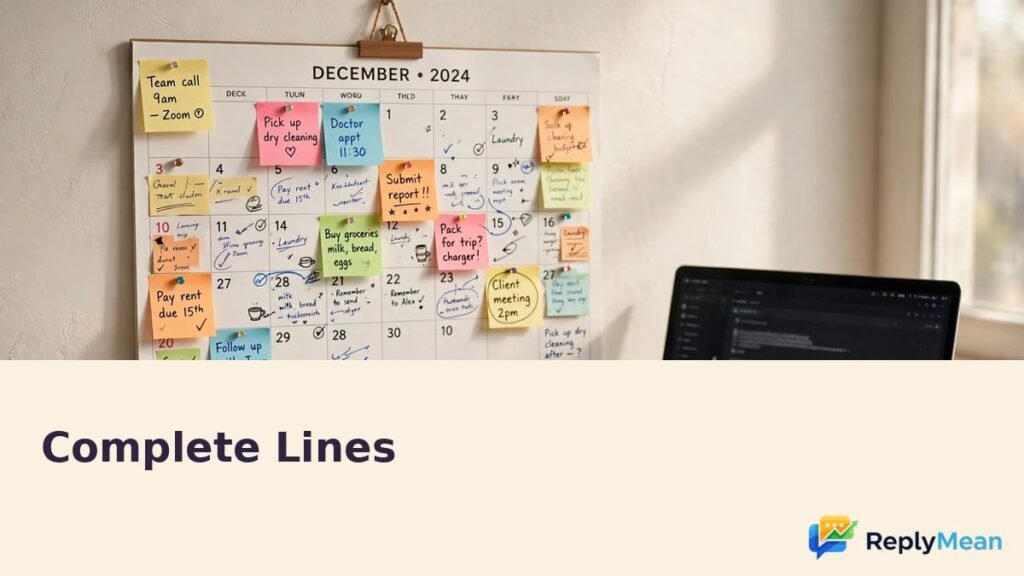
Complete Lines: The Acknowledgement With Its Request Attached
A bare acknowledgement still needs its errand attached before it can open a message. The ten lines here are finished — the knock, the request and the mercy in one — ready to paste at the head of the email that follows them.
- For the meeting request, to a packed diary: “I know your agenda is packed, so I’ll take any twenty minutes this week — or none, if none exist.”
- For the favour, to a senior reader: “I know your time is precious, so the favour is small and the deadline is yours to set.”
- For the follow-up, to a swamped colleague: “I know you’re swamped right now, so this is a nudge, not a chase — reply whenever the water drops.”
- For the deadline week, to a pressed team: “I’m aware you have pressing deadlines, so my question is written to be answered in one word.”
- For the introduction, to a reader in demand: “I appreciate the demands on your time, so I’ll make the introduction in this single line and step back.”
- For the apology-adjacent ask: “I understand your schedule is full, and I’m sorry to add to it — this is the only item.”
- For the client thread, kept formal: “I recognize you have pressing commitments, so the documents are attached in the order you’ll need them.”
- For the friend, kept light: “I know your hands are full at the moment — no reply needed, this is just the news.”
- For the recurring thread, kept fresh: “I realize your commitments are many, so this thread will carry one question at a time from now on.”
- For the smallest possible ask: “I appreciate your limited time: one signature, page two, whenever it suits.”
When the Acknowledgement Lands Wrong
Acknowledgements rarely fail in the dictionary — they fail in the inventory, when the thing the phrase fills is not the thing that is actually full. Four repairs follow, each one a change of shelf rather than a change of heart.
“I Know You’re Swamped” Sent to the Director
A junior writes to a director whose week is full of scheduled decisions, not floodwater, and opens with the swamp. The director reads a weather report for a week that is, in fact, a diary — and a faint suggestion that the sender finds the place chaotic.
The repair climbs to the diary shelf. “I understand your schedule is full” names the checkable thing — the calendar — and lets the request arrive without a climate attached.
“I’m Mindful of Your Busy Life” Sent About One Deadline
A colleague needs one signature before Friday and opens by inventorying the reader’s entire life. The reader, whose only problem is one deadline, hears a biography they never gave — and the small request underneath starts to feel like a claim on everything.
The repair drops to the clock shelf. “I appreciate your limited time” sizes the claim to the errand: one signature, one deadline, nothing about a life.
“I Appreciate How Busy You Are” Sent for the Fourth Time This Week
The first acknowledgement is courtesy; the fourth in one week is a lever. Each repetition tells the reader their busyness is being watched, counted and held against the unanswered thread — the politeness curdles into pressure with a smile on it.
The repair changes shelves and adds a date. “I realize you have pressing commitments — this one needs a yes or no by Thursday” respects the duties once, plainly, and then does the honest thing: it asks.
“I Get That Things Are Busy for You” Sent to a New Client
A first email to a new client opens with the set’s loosest shrug — get, things — and the client learns two facts: the sender wants something, and the sender has not troubled to learn anything about their world. The casual register reads as carelessness at the exact moment standing is being decided.
The repair dresses for the room. “I recognize you have pressing commitments” carries the same meaning in the formal register — the duties named, the reader respected, the standing intact.

Short Forms for Texts and Captions
Most acknowledgements are sent in small spaces — a chat window, a text thread, a message box already half full. The short forms keep the inventory and drop the ceremony — small enough for the box, sized right for the errand.
- “Know you’re slammed — quick one” — the load kept short: for chat openers.
- “Whenever you surface” — the clock kept kind: for no-rush texts.
- “Two minutes, promise” — the ration kept honest: for small asks.
- “No reply needed” — the mercy kept whole: for news, not requests.
- “When the diary breathes” — the calendar kept light: for meeting asks.
- “Plate-full friendly ping” — the serving kept playful: for familiar threads.
- “Deadline-week pass” — the duties kept excused: for crunch periods.
- “One-word answer fine” — the pressure kept off: for quick decisions.
- “Adding nothing, just thanks” — the knock without an errand: for pure gratitude.
- “Your time, your timing” — the respect kept complete: for senior readers.
Frequently Asked Questions
What is the most professional way to say i know you are busy?
“I recognize you have pressing commitments” is the safest professional form: it names the duties in the formal register and presumes nothing about the reader’s life. “I understand your schedule is full” runs it close in ordinary office threads.
Is it rude to say “i know you’re busy” in an email?
Not rude, but tired — and slightly risky. Repeated weekly it starts to sound like a lever rather than a courtesy, and to a senior reader it can read as a verdict on their week delivered by someone who has only seen an inbox.
Should the acknowledgement come before or after the request?
Before, briefly — it is a knock, and knocks come first. But keep it to one clause: an acknowledgement longer than the request it introduces stops being politeness and becomes the message, with the actual ask buried underneath it.
How often can I reuse the same opener before it wears out?
Twice in a thread is plenty. Rotate shelves instead of synonyms — diary once, clock once, load once — and each knock lands on a different object, so no single phrase wears smooth or starts to sound like a lever.
What if the person is not actually busy?
Then skip the acknowledgement entirely. A busyness claim aimed at a quiet week sounds like a script, and readers can tell; a plain request, politely made, respects the reader more than an inventory of a load they are not carrying.
Conclusion
The twenty-five are one knock wearing twenty-five inventories. Sort other ways to say i know you are busy by the inventory test — the diary, the clock, the load, the duties, or the person — and the opener stops being a reflex and starts being a reading of the reader’s actual week.
Underneath every shelf sits the same small truth: the claim should match the calendar it describes. The dictionary defines an interrupt as to stop a person from speaking for a short period by something you say or do — and the best acknowledgement here is simply the one that makes that small interruption feel seen, sized and forgiven.