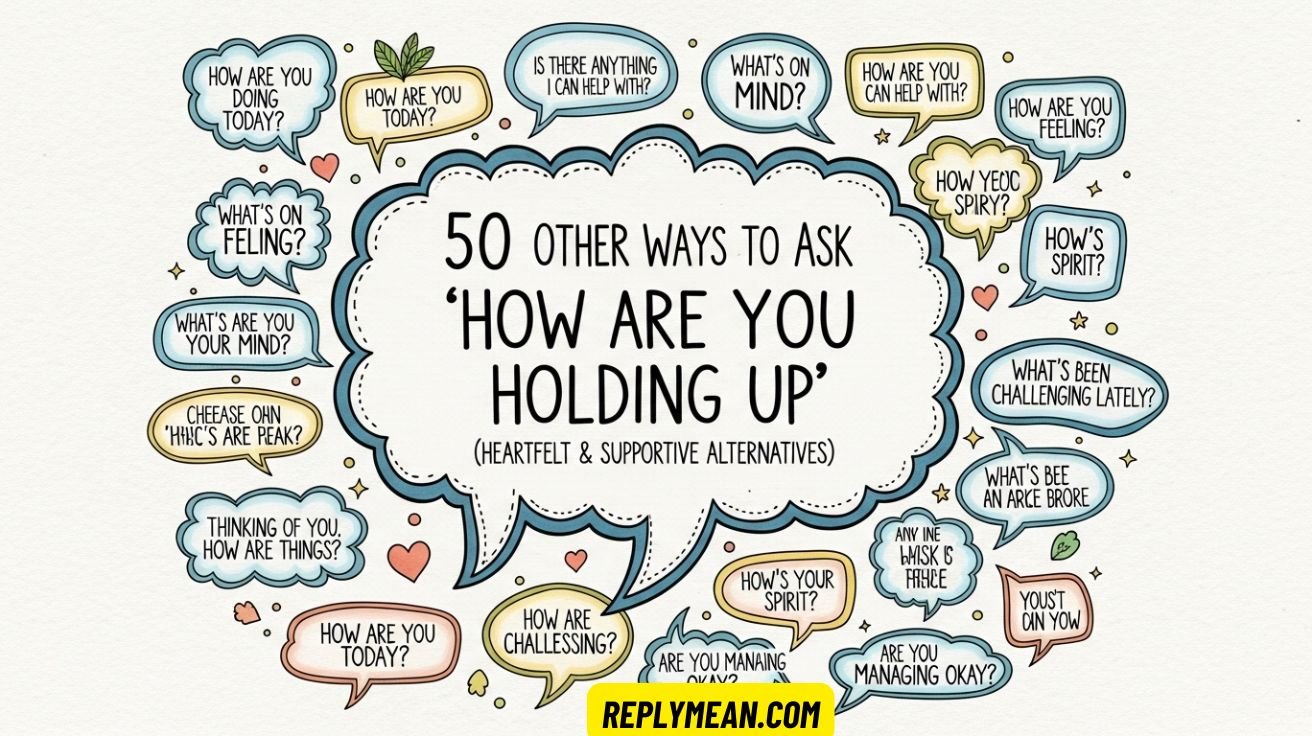
50 Other Ways to Ask “How Are You Holding Up” (Heartfelt & Supportive Alternatives)
“How Are You Holding Up” is a caring question. People use it when someone faces stress or pain. It asks about emotional strength during a hard time.
We all want to support others in difficult moments. The right words can make someone feel safe and valued. Simple phrases can bring comfort and hope.
“How Are You Holding Up” is common in serious situations. People say it after loss, illness, or big life changes. It shows concern and emotional support.
Why Finding Other Ways to Ask “How Are You Holding Up” Matters

Words shape relationships. In American culture, people often value independence, so they may not openly talk about their struggles. This is why using thoughtful language matters. When you learn caring ways to ask someone how they are, you create a safe space.
Using different phrases shows emotional intelligence. It helps you practice supportive communication skills and use emotional awareness language. Instead of asking the same question again and again, you can choose words that fit the moment.
For example, there is a difference between asking about someone’s workload and asking about their feelings. One is practical. The other is emotional. When you choose carefully, your words become heartfelt messages to send, not just routine greetings.
Many therapists in the U.S. suggest using mental health check-in questions regularly, especially after stressful events. Studies show that people who feel emotionally supported recover from stress faster and report higher levels of trust in relationships. This is why knowing how to ask someone if they’re okay in a thoughtful way is so powerful.
Alternatives to “How Are You Holding Up?”

Below are the required alternatives explained in detail. Each one works in slightly different situations. These are examples of better ways to say how are you while still sounding natural.
1. How are you doing these days?
This is one of the most natural and flexible casual ways to check in when you want to replace “How are you holding up.” It feels open, relaxed, and friendly without sounding too serious. In the United States, people often use this phrase when reconnecting after a while or when they know someone has been busy. It works well in texts, emails, phone calls, and face-to-face talks. Because it is broad, it allows the other person to decide how much they want to share. That makes it one of the safest and most effective caring ways to ask someone how they are without putting pressure on them.
This phrase is also helpful if you are learning what to say instead of how are you in a way that feels more personal. When you say, “How are you doing these days?” you are inviting a real update, not just a polite “I’m fine.” It can lead to deeper conversation and become one of your go-to thoughtful conversation starters. When spoken with warmth, it turns into one of those simple yet powerful meaningful ways to connect that build stronger relationships over time.
2. How have you been feeling lately?
This phrase shifts the focus from daily events to emotions. It is one of the most direct mental health check-in questions you can ask without sounding clinical. Instead of asking about work or schedules, you are gently asking about feelings. In American culture, where people sometimes hide emotional struggles, this can open the door to honest sharing. It is especially helpful after stressful events, illness, or personal loss.
If you are unsure how to ask someone if they’re okay, this phrase offers a gentle approach. It is one of the best empathetic expressions because it shows you are paying attention to emotional well-being. It also demonstrates strong supportive communication skills, since you are focusing on the person’s inner world rather than surface details. When asked sincerely, it can lead to deep, healing conversations.
3. How are you managing everything?
This question recognizes effort and responsibility. It works well for parents balancing family life, professionals handling heavy workloads, or students juggling school and part-time jobs. By asking this, you acknowledge that life feels full and sometimes overwhelming. It becomes one of the most practical resilience and coping questions because it focuses on how someone is handling pressure.
In workplaces, this is one of the most respectful professional ways to ask how someone is doing without crossing personal boundaries. It shows awareness of responsibilities while still expressing care. When paired with an offer to help, it turns into one of the most supportive phrases to show concern during busy seasons. It reminds people they are not alone in managing stress.
4. How’s everything going with you?
This phrase is broad, friendly, and comfortable. It fits almost every situation, from casual chats with friends to light conversations with coworkers. It gives the other person freedom to choose what they want to talk about, whether it is work, family, health, or something else. Because of its flexibility, it is one of the easiest better ways to say how are you without repeating the same old greeting.
It also works well as one of the more relaxed conversation starters for friends when you want to reconnect. The tone feels warm and open. When spoken kindly, it becomes one of the small but powerful warm conversational phrases that keep relationships strong. Its simplicity makes it natural, yet it still shows genuine interest.
5. How are you coping?
This is a more serious and direct question. It is best used when you know someone is facing hardship, such as grief, health issues, or major stress. By asking this, you are clearly acknowledging difficulty. It becomes one of the strongest phrases to use in difficult times because it does not ignore the challenge.
When used carefully, it is one of the most meaningful emotional support phrases you can offer. It invites honest answers about stress and struggle. If you want to provide comforting words for friends, this question opens the door for them to share their coping process. It shows courage in expressing empathy in conversations, especially during painful moments.
6. How’s life treating you?
This phrase has a lighter tone, but it can still carry depth. It works well in everyday settings when you want to sound warm and slightly playful. It is one of the more creative and friendly creative ways to start a conversation while still asking about well-being.
Although it sounds casual, it can lead to meaningful discussion. When someone is struggling, they may respond honestly. This makes it one of the gentler supportive questions to ask when you are unsure how serious the situation is. It balances warmth and curiosity in a way that feels natural in American conversations.
7. How’s your day been so far?
This phrase keeps the focus on the present. It works especially well in workplaces and during daytime conversations. Because it focuses only on the current day, it feels manageable and not overwhelming. It is one of the simplest casual ways to check in that still shows attention.
In professional settings, it becomes one of the most practical polite ways to ask about someone’s well-being. It does not go too deep, but it leaves room for deeper sharing if needed. When spoken kindly, it can turn into one of the most effective ways to show you care through text during busy schedules.
8. How are you getting on?
This phrase asks about progress. It works well when someone is working through a project, recovery, or life transition. Although it sounds slightly formal, it is still understood and appreciated in the U.S. It becomes one of the useful supportive communication skills when you want to show interest in ongoing effort.
Because it focuses on progress rather than feelings alone, it can reduce emotional pressure. It is one of the more balanced caring ways to ask someone how they are, especially when you know they are working toward something important. It shows respect for their journey and their pace.
9. How’s your mood today?
This question focuses directly on emotional state. It encourages awareness and honesty. It is one of the clearest examples of emotional awareness language because it helps people reflect on their feelings in the moment.
It is also one of the strongest mental well-being questions for close relationships. Asking about mood feels personal but not overwhelming. When you want to send heartfelt messages to send during emotional ups and downs, this phrase can help you build a stronger emotional connection.
10. How are things holding up?
This phrase is very close to the original keyword but feels slightly refreshed. It works well when checking on someone after stress, illness, or big change. It shows steady concern without being dramatic. It is one of the natural phrases to show concern in everyday language.
Because it sounds familiar, people often feel comfortable answering honestly. It fits easily into supportive text messages and personal conversations. It also reflects strong supportive questions to ask when you want to gently explore someone’s situation.
11. How’s your spirit?
This phrase feels uplifting and hopeful. It focuses on inner strength rather than problems. It is often used in motivational or faith-based conversations, but it can work for anyone who needs encouragement. It becomes one of the most inspiring words of encouragement during tough times.
When you ask about someone’s spirit, you are using meaningful personal connection phrases that go beyond daily details. It encourages resilience and positivity. This makes it one of the more powerful emotional check-in phrases during hard seasons.
12. How are you handling things?
This question balances emotions and responsibilities. It recognizes that life can feel heavy while still giving the person space to explain how they are coping. It is one of the strongest and most flexible resilience and coping questions you can use.
It also demonstrates mature supportive communication skills because it avoids judgment and invites reflection. If you are unsure how to ask about mental health politely, this phrase offers a respectful option. It shows you care about both emotional and practical sides of life, making it one of the most complete alternatives to “How are you holding up.”
13. How are you feeling right now?
This phrase focuses on the present moment. It invites honesty without asking someone to explain their whole week or month. When you ask this question, you are creating space for immediate emotional sharing. It works well during stressful events, after difficult news, or when someone seems overwhelmed. It is one of the most effective mental health check-in questions because it centers on current feelings instead of past events.
This question is also helpful when learning how to ask someone if they’re okay without sounding dramatic. It feels calm and caring. In American culture, many people hide their feelings, so asking gently in the present tense helps them feel safer. It becomes one of the most practical empathetic expressions you can use.
14. How are you staying strong?
This phrase recognizes resilience. It tells the person you see their effort. It is one of the best resilience and coping questions because it highlights strength instead of weakness. When someone feels tired or stressed, hearing that you notice their strength can feel encouraging.
This also works as one of the powerful words of encouragement during tough times. It shows admiration while still asking how they are truly doing. It is a good example of expressing empathy in conversations while keeping the tone positive and hopeful.
15. How’s your heart today?
This phrase feels warm and emotional. It focuses on inner feelings rather than daily tasks. It is especially meaningful during grief, breakups, or emotional stress. It sounds soft and kind, making it one of the most tender phrases to show concern.
When you use this phrase, you are practicing emotional awareness language. It creates a deeper emotional connection. It can also be used in heartfelt messages to send to close friends or family members when you want to check in on their emotional well-being.
16. How are you doing emotionally?
This is direct but respectful. It works well when you want clarity without guessing. It is one of the most straightforward mental well-being questions you can ask. It removes confusion and focuses clearly on emotional health.
It is also useful when learning how to ask about mental health politely. Instead of assuming someone is struggling, you gently invite them to share. This makes it one of the strongest examples of compassionate language examples in everyday conversation.
17. How’s your energy lately?
Energy often reflects stress levels. When someone feels drained, they may not say it directly. This question gently explores physical and emotional balance. It is a subtle form of caring ways to ask someone how they are without sounding too serious.
In workplaces, this can be one of the best professional ways to ask how someone is doing because it focuses on workload and wellness. It also supports strong supportive communication skills by acknowledging both body and mind.
18. How’s your well-being?
This phrase feels broad and thoughtful. It covers physical, emotional, and mental health all at once. It is one of the most respectful polite ways to ask about someone’s well-being in both personal and professional settings.
Because it sounds balanced and mature, it fits serious conversations. It helps you practice supportive questions to ask that show you truly care about the whole person, not just one issue.
19. How are you keeping up?
This question recognizes effort and pressure. It works well for students, parents, and professionals. It is one of the most relatable casual ways to check in when life feels busy.
At the same time, it can become one of the strongest phrases to use in difficult times when someone feels overwhelmed. It gently asks about coping without judging performance.
20. How’s your mental health?
This question is direct and clear. It removes stigma and treats mental health as normal. In the United States, conversations about therapy and stress are becoming more common, so this question feels modern and responsible.
It is one of the strongest mental health check-in questions and shows confidence in how to sound more caring in conversation. When asked gently, it becomes a powerful way of checking in on loved ones.
21. How’s your headspace?
This phrase feels modern and conversational. It focuses on mindset and emotional clarity. It works especially well among younger adults and friends.
It is one of the more relaxed creative ways to start a conversation while still being meaningful. It encourages openness and helps build personal connection phrases that feel natural and real.
22. How’s your resilience holding up?
This phrase emphasizes strength and recovery. It shows you see someone working hard emotionally. It is one of the best resilience and coping questions for difficult seasons.
It also serves as one of the deeper empathetic questions to ask because it acknowledges emotional endurance without assuming weakness.
23. How are you faring these days?
This phrase feels slightly formal but still warm. It works well in emails or respectful conversations. It is one of the elegant better ways to say how are you.
Because it sounds thoughtful, it can become one of the most effective warm conversational phrases in professional and personal settings alike.
24. How’s everything on your end?
This phrase feels conversational and friendly. It works well in workplace chats and casual texts. It invites a broad update without pressure.
It also fits into strong conversation starters for friends because it opens space for sharing multiple topics at once.
25. How’s your outlook today?
This question focuses on mindset and hope. It gently explores optimism. It is helpful during uncertain times.
It becomes one of the most thoughtful emotional support phrases because it encourages reflection and forward thinking.
26. Are you hanging in there?
This phrase feels supportive and relatable. It is commonly used during stress. It works well in supportive text messages when someone feels overwhelmed.
It is one of the classic comforting things to say during hard times because it acknowledges struggle while offering solidarity.
27. What’s been on your mind lately?
This is one of the most powerful deep questions to ask a friend. It invites thoughtful reflection and emotional honesty.
It is also a strong example of meaningful ways to connect because it encourages sharing beyond surface-level updates.
28. Is there anything weighing on you?
This question shows care and attentiveness. It is gentle and non-judgmental.
It works as one of the most supportive kind messages for someone struggling, especially when paired with an offer to listen.
29. How are you processing everything?
This phrase focuses on emotional reflection. It is useful after big events or shocking news.
It demonstrates strong supportive communication skills and helps in expressing empathy in conversations.
30. How are you getting through this week?
This question makes stress feel temporary. It narrows the focus to a short period of time.
It is one of the more practical ways to show you care through text while keeping the tone realistic and hopeful.
31. How are you feeling about everything?
This phrase blends emotion and situation. It encourages deeper explanation.
It is one of the stronger empathetic expressions because it validates complex feelings.
32. How’s your stress level lately?
This question feels practical and direct. It works well in professional and personal settings.
It is a useful example of mental well-being questions that feel normal and responsible.
33. Are you taking care of yourself?
This phrase shows protective care. It reminds someone to rest and recharge.
It fits naturally into emotional support message examples and feels nurturing and kind.
34. How are you holding up with all this change?
This variation adds context to the original phrase. It makes your question specific.
It is one of the clearest phrases to show concern during life transitions.
35. How are things feeling for you?
This question focuses on emotional experience rather than events.
It becomes one of the most flexible thoughtful conversation starters for deeper dialogue.
36. How are you navigating everything?
This phrase suggests complexity and movement. It works well during big life adjustments.
It is one of the best supportive questions to ask when someone feels uncertain.
37. How’s your week treating you?
This is lighter and casual. It works well among coworkers and friends.
It fits nicely into casual ways to check in while still sounding thoughtful.
38. How are you dealing with the pressure?
This phrase acknowledges stress directly.
It becomes one of the strongest phrases to use in difficult times because it names the challenge openly.
39. What can I do to support you?
This question moves beyond words into action.
It is one of the most powerful emotional support phrases because it offers real help.
40. How are you sleeping lately?
Sleep reflects stress. This question gently explores health.
It works as one of the most practical mental health check-in questions without sounding too intense.
41. How’s your motivation these days?
Motivation often drops during hard times. This question feels encouraging.
It is one of the most effective words of encouragement during tough times when spoken kindly.
42. How are you feeling about the future?
This phrase explores hope and anxiety together.
It is one of the deeper empathetic questions to ask during uncertain moments.
43. How are you balancing everything?
Balance is a common challenge in American life.
This becomes one of the most relatable caring ways to ask someone how they are.
44. Are you feeling supported?
This question checks social support.
It is one of the strongest tools for checking in on loved ones in meaningful ways.
45. How’s your confidence holding up?
Confidence often drops under stress.
This becomes one of the more thoughtful phrases to show concern about emotional stability.
46. How are you adapting?
Adaptation shows growth and flexibility.
This question fits well into resilience and coping questions during change.
47. How’s your peace of mind?
This phrase focuses on calmness and anxiety.
It works well as one of the softer mental well-being questions in emotional conversations.
48. How are you feeling inside?
This question encourages vulnerability.
It is one of the purest empathetic expressions because it invites honest sharing.
49. What’s been hardest for you lately?
This is a deep and direct question.
It serves as one of the strongest deep questions to ask a friend when you want real understanding.
50. I’ve been thinking about you. How are you really?
This phrase combines care and honesty. It feels personal and sincere.
It is one of the most powerful ways to show you care through text and a beautiful final example of personal connection phrases that truly make a difference.
See Also : 50 Other Ways to Say “Weed” (2026) – A Complete Guide to Slang
Why “How Are You Holding Up” Can Feel Repetitive

Many people use “How are you holding up” during stress or crisis. While it is kind, it can start to sound automatic. When words feel routine, they may lose emotional impact. That is why learning better ways to say how are you helps your message feel fresh and sincere.
Using new emotional check-in phrases shows that you are truly paying attention. It makes your question feel thoughtful instead of copied and pasted. Small language changes can create stronger emotional connection and help someone feel genuinely supported during difficult times in their life.
The Importance of Emotional Check-Ins in American Culture
In the United States, people often value independence and privacy. Because of this, they may not openly talk about stress, grief, or mental health. That is why supportive questions to ask can open doors to deeper conversations and create a safe space for sharing feelings.
Regular mental health check-in questions help normalize emotional conversations. When you practice expressing empathy in conversations, you reduce stigma and encourage honesty. Simple phrases can strengthen family bonds, workplace relationships, and friendships across different communities and age groups.
How to Ask Someone If They’re Okay Without Pressure
When learning how to ask someone if they’re okay, tone matters as much as words. Gentle, compassionate language examples make people feel safe instead of judged. Asking privately and speaking calmly can encourage openness without making someone uncomfortable or defensive.
Polite ways to ask about someone’s well-being include soft introductions like “I just wanted to check in.” This approach shows care without forcing answers. It allows the other person to decide how much they want to share in that moment.
Using Empathetic Expressions During Tough Times
During illness, loss, or job stress, phrases to show concern can make a big difference. Empathetic expressions such as “I’m here for you” or “That sounds really hard” validate feelings. They remind someone that they are not alone in their experience.
Comforting words for friends can improve emotional resilience. Words of encouragement during tough times help reduce stress and increase hope. Even short supportive text messages can provide reassurance and strengthen emotional trust between people.
Professional Ways to Ask How Someone Is Doing
In workplaces across the USA, professional ways to ask how someone is doing should remain respectful and balanced. Questions like “How are you managing your workload?” show awareness without becoming too personal or intrusive.
Supportive communication skills are important in leadership and teamwork. Warm conversational phrases can improve morale and productivity. When managers use caring ways to ask someone how they are, employees often feel valued and understood.
Creative Ways to Start a Meaningful Conversation
Creative ways to start a conversation can make emotional check-ins feel natural. Asking “How’s your energy lately?” or “How’s your outlook today?” encourages reflection. These thoughtful conversation starters invite deeper responses than a simple greeting.
Deep questions to ask a friend can lead to stronger personal connection phrases. When you ask about someone’s heart or spirit, you move beyond surface talk. This helps build trust and long-lasting emotional closeness.
Checking in on Loved Ones Through Text
Learning how to check in on a friend through text requires clarity and warmth. Supportive text messages should feel personal, not generic. Emotional support message examples often include reassurance, empathy, and an offer to listen.
Ways to show you care through text include simple follow-ups like “I’ve been thinking about you.” Heartfelt messages to send do not need to be long. Short, kind messages for someone struggling can still carry deep meaning.
See Also : 50 Ways to Say “Good Luck in Your Future Endeavors”
How to Ask About Mental Health Politely in the USA
Mental health conversations can feel uncomfortable. Many Americans still hesitate to speak openly about emotional struggles. This is why learning how to ask about mental health politely matters.
Instead of asking directly, you can say, “I just wanted to check in. How’s your headspace lately?” This feels gentle. It is one of the best mental health check-in questions because it does not pressure the person.
You can also use deep questions to ask a friend like, “What’s been weighing on you lately?” This encourages sharing without forcing it.
When asking sensitive questions, remember these facts.
| Tip | Why It Matters |
| Choose a private setting | People open up more when they feel safe |
| Use calm tone | Tone affects comfort |
| Avoid judgment | Builds trust |
| Offer support | Turns words into action |
How to Sound More Caring in Conversation
If you want to know how to sound more caring in conversation, focus on listening. After asking your question, pause. Let the person speak. Use small follow-up statements like, “That sounds hard,” or “I appreciate you sharing that.”
These short replies are powerful empathetic expressions. They show attention and respect.
You can also practice ways to show you care through text by adding simple supportive lines such as, “I’m proud of you,” or “You don’t have to go through this alone.” These become meaningful conversation starters for friends and deepen connection.
FAQs
How do you respond to “How are you keeping up?”
You can answer honestly about how you are handling your responsibilities, such as saying, “I’m keeping up pretty well, just staying organized.”
If things feel heavy, you might reply, “It’s been busy, but I’m managing one step at a time.”
How do you reply “How are you coping?”
A thoughtful response could be, “I’m taking it day by day and trying to stay positive.”
If you want to be more open, you can say, “It’s not easy, but support from friends has helped a lot.”
What to say instead of “how are you holding up”?
You can ask, “How are you managing everything?” or “How have you been feeling lately?”
Other gentle options include, “How are you doing emotionally?” or “Are you hanging in there?”
What does “holding up” mean?
“Holding up” means staying strong or continuing despite stress or challenges.
It usually refers to someone’s emotional or mental strength during a difficult time.
Final Thought
In daily life, words carry great meaning. The phrase How Are You Holding Up shows care during hard times. Still, fresh language builds stronger bonds. When you choose thoughtful expressions, you show respect and kindness. Supportive words can comfort a friend, family member, or colleague. Clear and simple phrases help people feel understood and valued.
Strong communication builds trust and confidence. When you replace How Are You Holding Up with warm and sincere alternatives, you improve every conversation. You show empathy through direct and caring language. Kind words give strength during stress. A thoughtful message can brighten someone’s day. Good communication creates lasting and meaningful relationships.