
50 Other Ways to Say “Not Only” 🙃 2026
“Not only” is a phrase we use to add another important idea. It often works with “but also” to connect two points. It helps show emphasis and balance in a sentence.
Many students use the same phrase again and again. This makes writing sound boring and weak. Simple changes can make your sentences stronger and more interesting.
Learning new Ways to Say Not Only helps you write better. You can use different words to add ideas clearly. These changes improve your vocabulary and make your writing smooth.
Not Only – Meaning
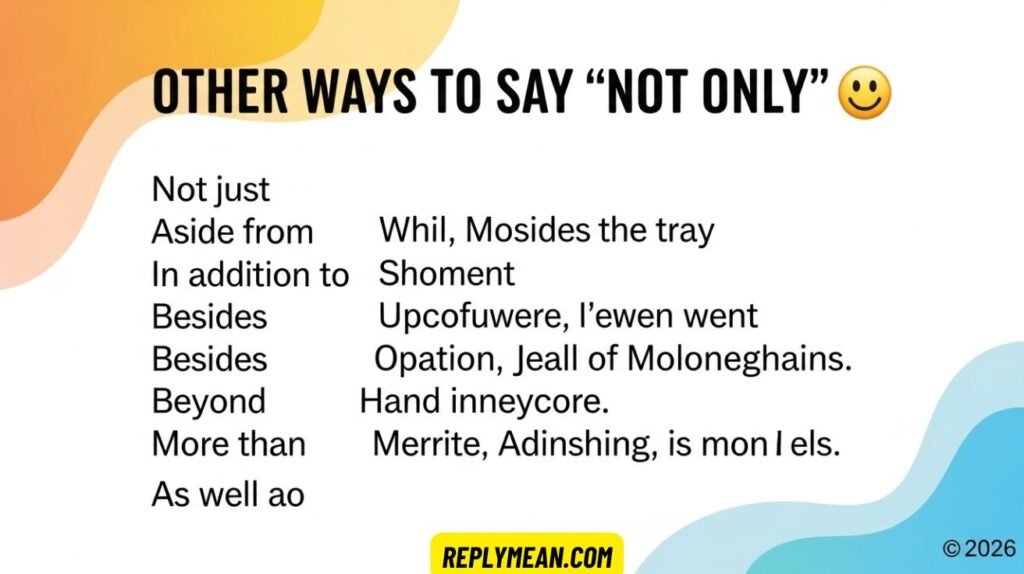
The phrase “not only” is used to introduce one idea and then add another important idea, usually in the structure “Not only… but also…”. It is a way to show emphasis and balance using parallel structure. For example, in the sentence, “She is not only intelligent but also hardworking,” the speaker is highlighting two strong qualities.
In English grammar, this structure is known for using parallel phrases. That means both parts of the sentence should match in form. If the first part uses an adjective, the second should also use an adjective. If the first part uses a verb, the second should also use a verb. This helps create smooth and balanced writing.
While this structure is correct and powerful, using it too often can make writing sound repetitive. That is why learning Writing alternatives to not only and other Formal writing alternatives is important for strong communication.
ways to say “Not Only”

There are many effective Ways to say not only that can improve clarity and add variety. Some are formal and perfect for essays. Others are conversational and better for speeches or blog posts. Some show comparison, some show cause and effect, and others simply add more information.
Writers in the United States often use different alternatives depending on the situation. For example, in business writing, more formal phrases sound professional. In blog writing, friendly and natural phrases work better. Understanding this difference helps build strong communication skills and supports Vocabulary enhancement.
Below, you will find 50 powerful alternatives explained in simple English with examples and context.
1. Moreover
Moreover is a strong and formal transition word used to add important supporting information. It is common in academic writing, research papers, and professional reports across the United States.
Using moreover helps strengthen your argument step by step. It shows that the second idea is just as important as the first, making your writing sound organized and persuasive.
2. In Addition
In addition is a clear and simple phrase that introduces extra information. It works well in essays, emails, and business documents where clarity matters.
This phrase connects ideas smoothly without sounding complicated. It helps improve sentence flow while keeping your writing professional and easy to understand.
3. Besides
Besides is more informal and often used in conversations or casual writing. It introduces another reason or supporting detail naturally.
Writers use besides to make arguments feel relaxed and friendly. It keeps communication simple and easy to follow for everyday situations.
4. What’s More
What’s more adds excitement or emphasis to a statement. It highlights something surprising or impressive after the first point.
This phrase works well in blog posts, speeches, and persuasive writing. It keeps readers interested and adds energy to your message.
5. As Well
As well is a flexible phrase that adds information at the end of a sentence. It sounds natural in both spoken and written English.
Using as well keeps your sentences simple and smooth. It is a helpful alternative when you want to avoid repeating longer structures.
6. What’s Better
What’s better introduces something even more positive or beneficial. It builds anticipation and strengthens your statement.
This phrase works well in marketing, product descriptions, and motivational writing. It helps emphasize added value clearly.
7. In the Same Way
In the same way shows similarity between two actions or ideas. It is useful when comparing related points.
This phrase keeps your explanation structured and easy to understand. It helps readers see clear connections between ideas.
8. To Add to That
To add to that introduces extra supporting information. It feels conversational but still clear and organized.
This phrase keeps discussions flowing naturally. It helps expand on ideas without sounding repetitive or forced.
9. Along With
Along with connects two qualities or actions that exist together. It shows combination or partnership clearly.
This phrase is common in resumes and professional descriptions. It highlights multiple strengths smoothly and effectively.
10. Not to Mention
Not to mention introduces something important that strengthens the first point. It adds emphasis naturally.
Writers use this phrase to highlight impressive details. It makes the second idea feel noteworthy and valuable.
11. In a Similar Fashion
In a similar fashion is formal and often used in academic or business writing. It shows that something happens in the same manner.
This phrase creates logical comparisons between ideas. It keeps your writing balanced and professional.
12. With That Said
With that said transitions smoothly into another related idea. It often introduces clarification or balance.
This phrase helps maintain flow in discussions. It allows you to shift direction while staying connected to the original point.
13. Furthermore
Furthermore is a strong and formal transition word. It adds extra information that supports your main point. It is common in academic papers and professional reports across the United States.
You can use furthermore when building an argument step by step. It helps your ideas sound organized, logical, and serious in tone. This makes your writing clearer and more persuasive overall.
14. Additionally
Additionally is another formal alternative that introduces extra supporting information. It works well in essays, research writing, and workplace communication where clarity and professionalism are important.
Using additionally keeps your writing structured and smooth. It connects related thoughts without sounding repetitive. This makes it a great replacement for overused phrases in formal contexts.
15. Coupled With
Coupled with shows two qualities or actions working together. It suggests strength through combination. This phrase often appears in business writing and motivational content.
When you say talent coupled with discipline leads to success, you highlight teamwork between qualities. It creates powerful meaning while keeping sentences professional and clear.
16. In Like Manner
In like manner is a formal phrase that shows similarity between two actions or ideas. It is mostly used in academic, legal, or official documents.
This phrase creates a smooth comparison between related points. It keeps your writing structured and balanced, especially when discussing research findings or policy explanations.
17. In the Same Vein
In the same vein connects ideas that share a similar theme or direction. It helps continue a discussion without repeating earlier phrases.
Writers use this phrase to maintain flow when expanding on a topic. It keeps paragraphs unified and makes arguments feel consistent and organized.
18. Likewise
Likewise is short and simple. It shows agreement or similarity between two ideas. It works well in both formal and informal writing.
Because it is brief, likewise keeps sentences clear and direct. It helps avoid repetition while still expressing parallel meaning effectively.
19. Equally Important
Equally important emphasizes that another idea deserves the same level of attention. It is useful when balancing two strong points.
This phrase ensures readers understand that both ideas matter. It creates fairness and clarity in discussions, especially in persuasive writing.
20. To Say Nothing Of
To say nothing of adds emphasis by introducing something even more impressive. It suggests the second point may be stronger than the first.
This phrase works well when highlighting achievements or qualities. It strengthens your message and adds dramatic emphasis naturally.
21. On Top of That
On top of that adds extra information in a friendly and conversational tone. It feels natural in blogs and speeches.
This phrase makes writing sound engaging and relatable. It builds excitement while continuing the discussion smoothly.
22. Even More So
Even more so intensifies an idea. It highlights something stronger than what was first mentioned.
This phrase adds emphasis and strengthens emotional impact. It is useful when describing impressive results or achievements.
23. As a Result
As a result shows cause and effect clearly. It connects actions to outcomes in logical order.
Using this phrase improves clarity in explanations. It helps readers understand how one event leads to another.
24. Thus
Thus is formal and concise. It signals a conclusion or logical outcome.
Writers use thus in academic and professional settings. It keeps arguments sharp and focused.
25. Consequently
Consequently highlights a direct result. It is common in essays and research writing.
This word strengthens logical flow. It clearly connects actions with their outcomes.
26. Correspondingly
Correspondingly shows that one action matches another. It emphasizes balanced results.
This phrase works well in analytical writing. It highlights structured reasoning clearly.
27. Similarly
Similarly introduces comparable ideas. It helps create organized comparisons.
It keeps writing structured and easy to follow. Readers quickly understand the connection.
28. In a Similar Way
In a similar way explains that something follows the same pattern. It adds clarity to comparisons.
This phrase works well in teaching and explanatory writing. It helps simplify complex ideas.
29. By the Same Token
By the same token introduces parallel reasoning. It connects arguments logically.
This phrase sounds formal and thoughtful. It strengthens persuasive writing effectively.
30. Notably
Notably highlights something important or remarkable. It draws attention to key details.
Using notably signals significance. It helps readers focus on critical information.
31. Added to That
Added to that introduces another supporting detail. It feels conversational yet clear.
This phrase keeps writing smooth and natural. It prevents repetitive structure.
32. Together With
Together with connects two related elements. It shows unity or cooperation.
This phrase is useful in professional descriptions. It emphasizes collaboration clearly.
33. Paired With
Paired with suggests two elements working side by side. It often appears in marketing.
It highlights combination benefits clearly. This strengthens persuasive communication.
34. Complemented By
Complemented by shows enhancement. One feature improves another.
This phrase adds sophistication to product descriptions. It sounds polished and professional
35. Accompanied By
Accompanied by shows something included alongside another feature.
It is common in reports and event descriptions. It keeps sentences informative and balanced.
36. In Conjunction With
In conjunction with is formal and structured. It suggests coordinated effort.
This phrase works well in business writing. It highlights teamwork and organization.
37. Combined With
Combined with emphasizes strength through unity.
It shows how two qualities together create stronger results.
38. Supplemented By
Supplemented by shows extra support added to something.
This phrase appears in academic and financial writing. It signals reinforcement.
39. Plus
Plus is simple and informal. It adds quick extra information.
It works well in casual speech and blogs. It keeps tone friendly.
40. On Top of Everything
On top of everything adds emotional emphasis.
It works well when expressing frustration or excitement naturally.
41. And Also
And also is basic but effective.
It is easy for beginners learning English writing.
42. Not Just That
Not just that feels conversational and expressive.
It adds emphasis in storytelling or speeches.
43. Better Yet
Better yet introduces an improved idea.
It builds anticipation and excitement.
44. As If That Weren’t Enough
This phrase adds dramatic emphasis.
It highlights extra benefits strongly
45. To Boot
To boot is informal American English.
It adds playful emphasis at sentence end.
46. Into the Bargain
Into the bargain adds extra advantage.
It is less common but still understood.
47. Above All
Above all highlights top priority.
It signals importance clearly and directly.
48. More Importantly
More importantly shifts focus to stronger point.
It strengthens persuasive writing naturally.
49. Chiefly
Chiefly emphasizes main reason.
It sounds formal and precise.
50. Beyond That
Beyond that introduces further detail.
It keeps discussion moving smoothly forward.
See Also : 50 Other Ways to Say “Thank You for the Opportunity”
Why Learning Not Only Alternatives Improves Writing

Using different Not only alternatives helps your writing sound fresh and professional. When you repeat the same phrase again and again, readers may lose interest. By learning smart Ways to say not only, you make your sentences smoother and more engaging. This small change can greatly Improve writing style over time.
Strong writers use variety to keep readers interested. Replacing “Not only but also” with clear Not only replacement phrases shows confidence and skill. It also helps you Expand vocabulary, which is important in school, business, and online communication. Better word choice leads to clearer and more powerful messages.
The Role of Sentence Connectors in Clear Communication
Good writing depends on strong Sentence connectors and effective transition words. These words guide the reader from one idea to another without confusion. When you use connectors like Moreover, In addition, and Besides, your ideas flow naturally and sound organized.
Clear structure improves understanding, especially in American Academic writing and business writing. Using proper linking words also builds strong communication skills. Readers appreciate writing that feels smooth and logical, and connectors help you achieve that professional tone.
Formal Writing Alternatives for Academic Success
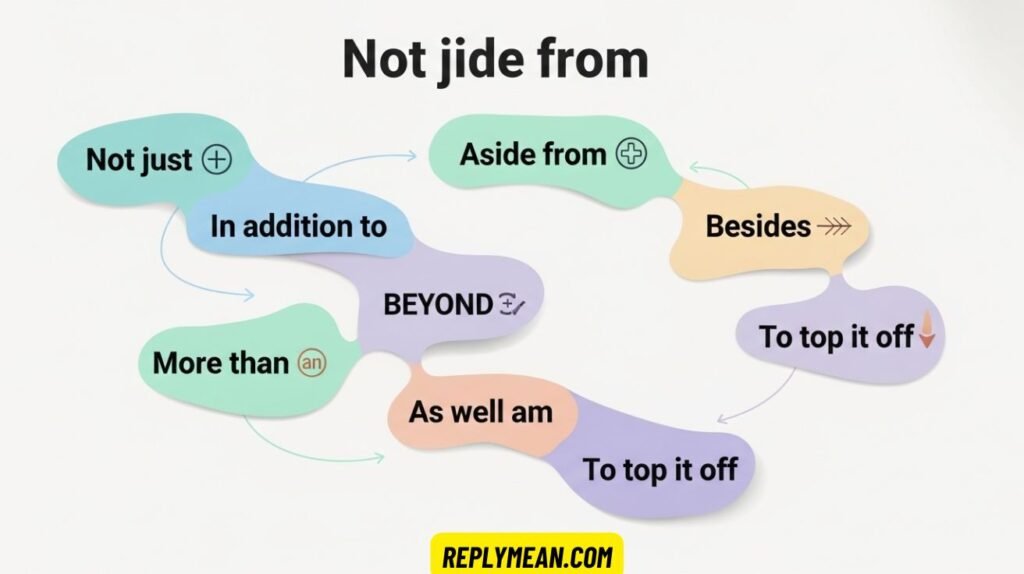
In schools and universities across the United States, students are encouraged to use Formal writing alternatives instead of casual phrases. Words like Furthermore, Consequently, and Thus sound more academic than simple expressions. These choices show maturity in writing.
Professors often look for structured arguments supported by strong Emphasis words and parallel phrases. Using appropriate Writing alternatives to not only helps essays feel balanced and well-developed. Academic success often depends on clarity, organization, and proper vocabulary.
See Also : 50 Other Ways to Ask “How Are You Holding Up”
Business Writing and Professional Writing Phrases
In professional settings, word choice matters a lot. Clear and confident language builds trust with clients and colleagues. Using effective Professional writing phrases such as Coupled with, Along with, and In conjunction with makes emails and reports sound polished.
American companies value communication that is direct and organized. When you replace repetitive phrases with thoughtful Not only but also alternatives, your writing appears more strategic. This improves workplace credibility and strengthens professional relationships.
FAQs
What is another word for “not only”?
Another word for “not only” is Moreover, In addition, or Furthermore, depending on the sentence tone. These are common Not only alternatives used in formal and academic writing.
How do you say “not only” in a different way?
You can say Along with, Coupled with, or What’s more to express the same meaning. These are simple and effective Ways to say not only in both casual and professional contexts.
What’s another way to say “not only that”?
Another way to say it is On top of that, Besides, or To add to that. These are strong Additive phrases that help add emphasis naturally.
What type of phrase is “not only”?
“Not only” is a correlative conjunction usually paired with “but also.” It connects parallel ideas and works as one of many important Sentence connectors in English grammar.
Conclusion
Learning different Ways to Say Not Only makes your writing stronger and clearer. When you use the same phrase many times, your sentences sound dull. New words make your ideas fresh and interesting. Good writers choose different expressions to show confidence and skill. This habit helps you grow as a student. It also improves your grammar and sentence structure. Strong vocabulary supports success in school and future work.
When you practice new Ways to Say Not Only, you build better communication skills. You connect ideas in a smooth and simple way. Teachers notice clear and organized writing. Professional people respect strong language skills. Daily practice leads to steady improvement. Read often and observe how good writers use linking words. Use new phrases in essays and assignments. Over time, your writing will become polished and impressive.