50 Other Ways to Say “I Look Forward to Meeting You”
I Look Forward to Meeting You is a polite phrase used in emails and conversations. It shows that you feel happy about a future meeting. People use it in school, business, and professional communication.
Many people use the same phrase again and again in their emails. This can make writing sound plain and repetitive. Learning new ways to say it can make your message more interesting.
The phrase I Look Forward to Meeting You is common in interviews, client emails, and networking messages. It helps show respect and positive attitude. Using simple alternatives can improve writing and communication skills.
Why Use Alternatives to “I Look Forward to Meeting You” in Professional Communication
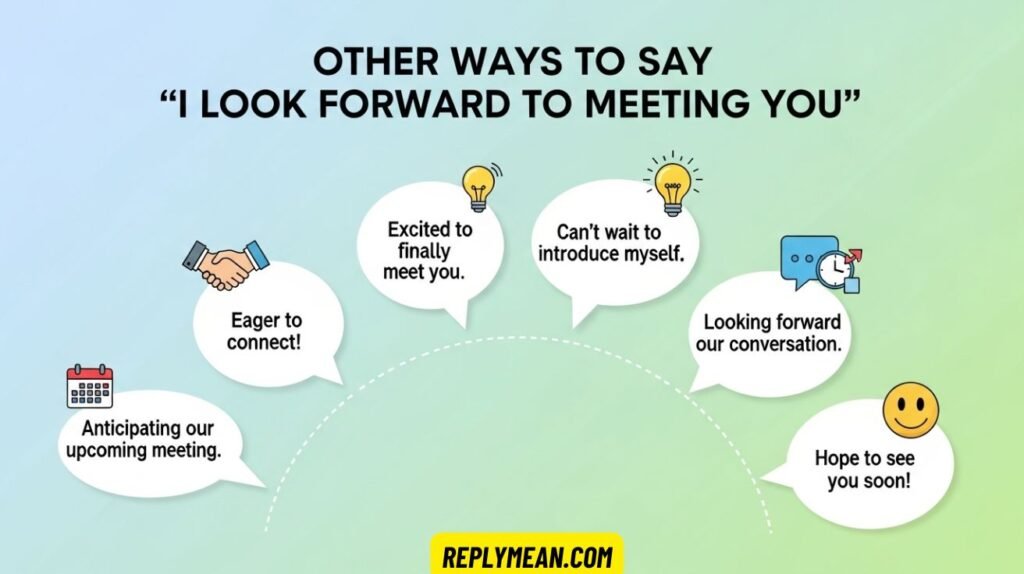
In business communication, tone plays an important role. When people read emails, they quickly notice whether the message sounds warm, formal, or generic. Using fresh expressions helps your message feel more personal and thoughtful. This is especially useful when writing client communication language, preparing interview email phrases, or sending meeting confirmation phrases.
Many professionals in the U.S. workplace use email every day, which makes variation important. When your writing includes different polite business expressions, your emails sound more professional and engaging. It also shows that you understand different levels of formality, which is important when using formal email closing lines and professional email sign-offs.
Another important reason to use alternatives is clarity. Certain phrases work better for different situations. For example, when writing networking message examples, a friendly tone works best. When writing to executives, more formal corporate email tone examples are recommended. Understanding this difference improves your ability to use formal vs informal email phrases effectively.
When to Say “I Look Forward to Meeting You” in Emails and Professional Settings
The phrase is commonly used in many professional situations across the United States. It appears often in job interview emails, client communication, and meeting scheduling messages. Knowing when and how to use these phrases helps improve your scheduling meeting language and overall communication phrases for professionals.
The table below shows common situations and recommended tone levels.
| Situation | Recommended Tone | Example Purpose |
| Job Interview | Formal | Confirm interview time |
| Client Meeting | Professional | Build trust |
| Networking Event | Friendly | Start relationship |
| Virtual Meeting | Neutral | Confirm attendance |
| Appointment Booking | Polite | Show respect |
These contexts are often included in workplace email templates and are essential for improving email writing tips for beginners. When used correctly, they help with meeting invitation response examples and make your emails clearer and more professional.
Ways to Say “I Look Forward to Meeting You”
Using different expressions helps you sound natural and confident. Below are the first ten expressions explained with detailed context and examples.
1. Can’t Wait to Meet You
This phrase is friendly and enthusiastic. It works best in informal professional situations such as creative teams or networking introductions. Many professionals use it when writing professional networking phrases because it sounds energetic while still respectful.
For example, if you are writing to someone after connecting on LinkedIn, saying you can’t wait to meet them shows excitement and builds connection. This phrase also helps when expressing enthusiasm professionally without sounding too formal.
2. Excited to Meet You
This is one of the most common excited to meet you synonyms used in modern business communication. It is positive and professional at the same time. It works well in job interviews, team introductions, and project meetings.
Using emotional but professional wording improves professional tone in emails and strengthens business English expressions used in modern workplaces.
3. Looking Forward to Our Meeting
This is the closest variation and one of the most popular looking forward to our meeting alternatives. It sounds professional and polite, making it ideal for corporate communication.
This phrase often appears in collaboration phrases for emails and is commonly used in polite closing lines for emails.
4. Eager to Meet You
The word “eager” adds motivation and interest. It is especially useful when writing business conversation starters or preparing professional email phrases for partnerships.
This phrase works well in situations where you want to show preparation and strong interest in the meeting topic.
5. Anticipating Our Meeting
This expression sounds formal and thoughtful. It is often used in executive communication or academic settings where careful tone matters.
Professionals use this phrase in corporate email tone examples because it sounds respectful and prepared.
6. I’m Thrilled to Meet You
This phrase shows strong excitement and works well in creative industries, startups, or collaborative environments. It adds personality while still maintaining professionalism.
It is especially effective when writing collaboration phrases for emails because it communicates energy and teamwork.
7. Counting Down the Days Until We Meet
This expression is conversational and friendly. It works best in informal professional relationships or when people have already communicated several times.
Using conversational language helps improve workplace communication skills and creates more natural networking message examples.
8. It’ll Be Great to Meet You
This phrase is neutral and flexible. It fits both formal and casual communication styles and is often included in general workplace email templates.
Because it is simple and polite, it is commonly used in polite phrases for appointments.
9. I’m Happy to Meet You Soon
This expression adds warmth and politeness. It is commonly used in healthcare, customer service, and appointment scheduling.
Using positive tone helps improve client communication language and makes emails feel more welcoming.
10. I’m Looking Ahead to Our Meeting
This phrase suggests planning and preparation. It works well in project management and strategic discussions.
Professionals often use this expression in professional writing vocabulary because it shows forward thinking.
11. Looking Forward to Seeing You
This phrase is slightly more personal than “looking forward to meeting you,” and it works well when you already know the person or have communicated before. It is commonly used in both virtual and in-person meetings across U.S. workplaces because it sounds polite and natural without being too formal.
You can use this expression in follow-up emails or team conversations. It helps maintain a warm tone while still supporting strong professional communication. Many professionals include this phrase in internal emails and recurring meeting confirmations because it fits both formal and casual contexts.
12. I’m Eager to Connect with You
This phrase is very popular in modern business communication, especially in networking and collaboration environments. The word “connect” is widely used in professional settings because it focuses on building relationships rather than just meeting.
This expression works well when writing to clients, partners, or colleagues in digital communication. It is often seen in remote work environments and LinkedIn messages where relationship-building language is important.
13. Anticipating Our Time Together
This phrase sounds thoughtful and slightly formal. It suggests that the upcoming meeting will be meaningful and productive. Professionals often use this tone when discussing mentoring sessions, project planning meetings, or strategic discussions.
Using reflective language like this helps show respect and preparation. It also communicates that you value the conversation and are ready to participate actively.
14. Can’t Wait to Connect
This is a shorter and more energetic version of formal meeting phrases. It works well in friendly professional environments such as startups or creative teams.
This expression adds enthusiasm while still keeping professional tone. It is especially effective for networking or early collaboration messages where excitement helps create connection.
15. Excited About Our Upcoming Meeting
This phrase keeps a strong professional tone while still sounding positive and friendly. It works well in client emails and project planning conversations because it highlights both interest and preparation.
Many professionals use this phrase when confirming meeting schedules because it helps keep communication clear and optimistic.
16. Eagerly Awaiting Our Meeting
This phrase is more formal and is often used in corporate or executive-level communication. It sounds respectful and polished, making it ideal for important business discussions.
Using structured phrases like this helps create strong professional impressions, especially when communicating with senior professionals or new clients.
17. I Can’t Wait to Meet You in Person
This phrase is especially useful when transitioning from online communication to face-to-face meetings. It helps create a human connection after virtual discussions.
In modern workplaces where remote communication is common, this phrase adds warmth and personality to professional emails.
18. I’m Anticipating a Great Conversation
This expression shifts the focus from the meeting itself to the quality of the discussion. It suggests preparation and interest in meaningful exchange.
Professionals often use this phrase in brainstorming sessions or idea-sharing meetings because it highlights collaboration.
19. Can’t Wait to Finally Chat
This phrase is casual but still professional when used in the right context. It works well when communication has already happened multiple times through messages or emails.
It helps make communication feel more natural and conversational without losing professionalism.
20. Looking Forward to What We’ll Create Together
This phrase is ideal for creative collaborations or project partnerships. It emphasizes teamwork and shared goals.
Using collaborative language helps strengthen relationships and builds a sense of partnership before the meeting even happens.
21. Excited to Finally Sit Down and Talk
This phrase works well when scheduling has taken time and the meeting is finally confirmed. It shows relief and excitement.
It is often used in project discussions or planning meetings where preparation has already started.
22. I’m All Set to Meet You
This expression suggests readiness and preparation. It communicates that you are organized and prepared for the meeting.
Professionals often use this phrase when confirming schedules or responding to meeting invitations.
23. Looking Forward to Our Conversation
This phrase is very flexible and widely used in business communication. It keeps the tone professional while still sounding friendly.
It works well in interviews, networking messages, and general meeting confirmations.
24. I’m Grateful for the Chance to Meet You
This phrase adds appreciation and humility. It works especially well when writing to someone senior or influential.
Showing gratitude helps build trust and respect in professional relationships.
25. I’m Ready to Dive In—See You Soon
This phrase adds energy and forward movement. It works well in project-focused environments where action and collaboration are important.
It communicates excitement while still keeping a professional tone.
26. Looking Forward to Connecting Soon
This phrase is commonly used in modern digital communication. It sounds professional while keeping a friendly tone.
It works well in networking emails and remote meetings.
27. Excited to Learn More in Our Meeting
This expression shows curiosity and preparation. It is useful in interviews and learning-focused meetings.
It communicates that you value knowledge and discussion.
28. I’m Looking Forward to Our Discussion
This phrase sounds slightly formal and works well in corporate environments.
It is often used in business strategy and planning meetings.
29. Happy to Connect Soon
This expression is polite and simple. It works well in customer communication and appointment scheduling.
Its neutral tone makes it widely usable.
30. I’m Excited for Our Conversation
This phrase adds enthusiasm while remaining professional.
It works well in team meetings and collaborative discussions.
31. Looking Forward to Meeting You Soon
This variation keeps the original meaning while slightly improving tone flow.
It is commonly used in interview confirmations.
32. I’m Excited About Meeting You
This expression is direct and friendly.
It helps create positive tone in networking messages.
33. I’m Looking Forward to Getting Together
This phrase is slightly informal and works well for internal meetings.
It sounds conversational but still respectful.
34. Excited to Connect in Our Upcoming Meeting
This phrase emphasizes preparation and scheduling clarity.
It works well in project planning contexts.
35. I’m Eager for Our Upcoming Discussion
This expression sounds professional and focused.
It is often used in business presentations or planning sessions.
36. Looking Forward to Meeting and Collaborating
This phrase highlights teamwork.
It is commonly used in partnership communication.
37. I’m Ready for Our Meeting
This phrase communicates preparation and organization.
It works well in structured business environments.
38. Excited to Share Ideas in Our Meeting
This phrase works well for brainstorming sessions.
It emphasizes collaboration and creativity.
39. Looking Forward to Our Scheduled Meeting
This expression is commonly used in formal scheduling emails.
It helps confirm professionalism and clarity
40. I’m Looking Forward to Our Upcoming Conversation
This phrase maintains professional tone while sounding natural.
It works well in both formal and informal situations.
41. I’m Happy About Our Upcoming Meeting
This expression keeps tone friendly and polite.
It works well in client communication.
42. Looking Forward to Speaking with You
This phrase is especially useful for phone or virtual meetings.
It helps clarify meeting format.
43. Excited to Meet and Discuss Further
This phrase is useful when continuing previous conversations.
It shows interest in deeper discussion.
44. I’m Looking Forward to Learning More
This expression shows curiosity and engagement.
It works well in interviews and mentorship meetings.
45. I’m Excited to Continue Our Conversation
This phrase is ideal for follow-up meetings.
It highlights ongoing collaboration.
46. Looking Forward to Our Time Together
This phrase sounds warm and respectful.
It works well in both personal and professional contexts.
47. I’m Looking Forward to Meeting and Exploring Ideas
This expression emphasizes creativity and teamwork.
It works well in brainstorming sessions.
48. Excited for Our Upcoming Discussion
This phrase keeps tone professional and energetic.
It works well in project environments.
49. I’m Looking Forward to Meeting and Getting Started
This phrase highlights action and progress.
It is often used in onboarding communication.
50. Looking Forward to Meeting You and Working Together
This phrase is one of the strongest professional alternatives because it emphasizes partnership and collaboration.
It works well in client onboarding, job interviews, and project launches.
See Also : 50 Other Ways to Say “Token of Appreciation”
Importance of Using Alternatives to “I Look Forward to Meeting You” in Professional Emails
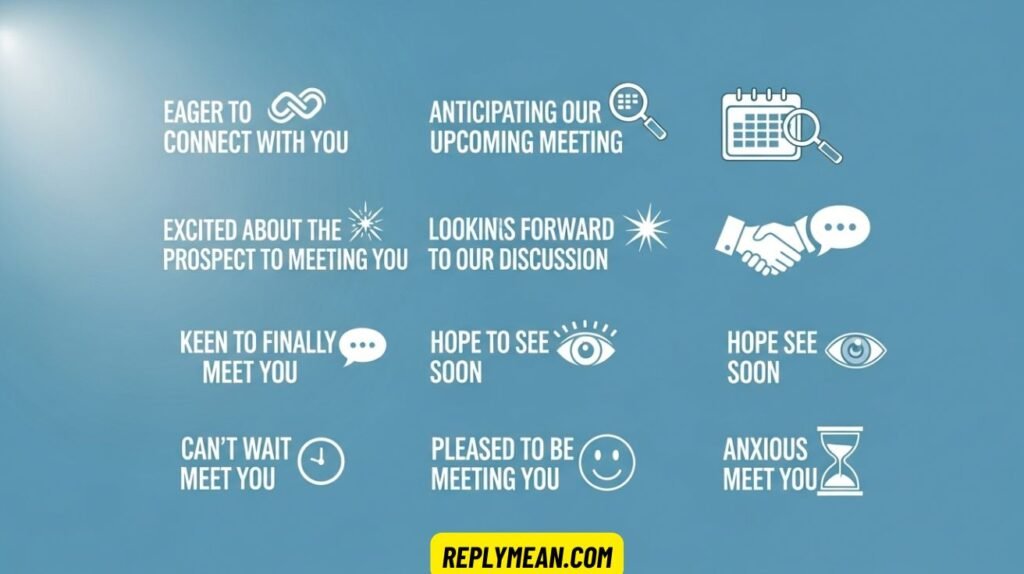
In professional communication, choosing the right words before a meeting helps create a strong first impression. Many people repeat the phrase I look forward to meeting you, but using fresh alternatives makes emails sound more natural and confident. Clear language also improves understanding and builds trust between colleagues, clients, and recruiters across modern workplaces in the United States today overall.
Using varied expressions also shows strong writing skills and professional awareness. When messages include polite tone and clear purpose, readers feel respected and prepared for the conversation ahead. Learning alternatives supports better email etiquette, stronger workplace relationships, and smoother scheduling processes. It also helps beginners practice business English and communicate ideas comfortably in formal and informal situations daily and confidently.
How Professional Tone Improves Meeting Emails and Communication
Professional emails often act as the first step toward real conversations, partnerships, or interviews. Because of this, the closing sentence should express interest without sounding repetitive or robotic. Replacing common phrases with creative yet polite alternatives helps messages feel thoughtful and intentional. This small improvement can increase response rates and create positive expectations before the meeting even begins successfully overall.
Different situations require different tone levels, especially in American business culture where clarity and friendliness are both valued. A message to a hiring manager should sound more formal, while a message to a teammate can sound relaxed but respectful. Understanding tone helps writers choose expressions that match context and strengthen professional relationships through consistent and meaningful communication daily and effectively.
Choosing the Right Words Before a Meeting Invitation
When preparing for a meeting, language choice can shape how confident and organized you appear. Simple alternatives to common phrases allow you to sound engaged without exaggerating emotion. Professionals often adjust their wording depending on industry style, company culture, and relationship level. This flexibility improves clarity and helps emails feel personalized instead of copied from standard templates in many workplaces.
Another benefit of learning multiple expressions is improved confidence during networking conversations and interview preparation. When you know several ways to express anticipation, you can adapt naturally without pausing to search for words. This skill becomes valuable in fast moving professional environments where communication must remain clear, polite, and efficient across email, video meetings, and in person discussions daily today.
Building Strong First Impressions Through Email Language
Clear meeting language also reduces confusion about purpose and expectations. When your closing sentence shows preparation and respect, the reader understands that the meeting matters. This approach is especially useful when writing to new clients or senior professionals. Thoughtful wording encourages stronger engagement and increases the chance of productive conversations during scheduled appointments or project discussions ahead and afterward too.
In many American workplaces, communication style balances professionalism with friendliness. Messages should sound polite without feeling distant. Learning alternatives to common phrases helps writers achieve this balance more easily. Over time, practicing varied expressions builds stronger communication habits and helps professionals present themselves as organized, positive, and collaborative in both internal and external business interactions daily and consistently overall success.
Modern Email Communication and Meeting Expressions
Technology has changed how meetings are arranged, especially with virtual platforms and remote teams. Because many introductions now happen through email first, wording becomes even more important. Choosing engaging alternatives to standard phrases helps messages stand out in crowded inboxes. It also reflects awareness of modern communication trends and professional expectations in digital business environments today across industries everywhere globally.
Students and new professionals often benefit the most from learning varied meeting expressions early. Practicing different sentence structures improves grammar awareness and builds confidence in professional writing. This practice also supports clearer conversation during interviews and networking events. Over time, strong communication habits help individuals adapt quickly to changing workplace situations and multicultural business environments successfully and confidently each day.
Simple Language for Professional Meeting Messages
Professional tone does not always mean complex vocabulary. Simple and clear language often creates better understanding and faster responses. Replacing repetitive phrases with natural alternatives keeps communication fresh while maintaining respect. Many business trainers recommend learning multiple expressions for common situations so that emails remain engaging and adaptable across different professional contexts and relationship levels too in practice daily routines.
Another helpful strategy is reading workplace emails from experienced professionals and noticing how they express meeting interest politely. Observing tone differences builds awareness of context and audience expectations. Writers can then practice rewriting their own messages using alternative expressions. This gradual improvement strengthens clarity, confidence, and overall professionalism in everyday communication tasks at work and online environments daily too consistently.
Meeting Phrases for Interviews and Networking Success
Strong communication skills are one of the most requested qualities in job descriptions across the United States. Employers value candidates who can express ideas clearly and professionally. Using varied meeting phrases demonstrates attention to detail and language awareness. These small improvements often make candidates appear more prepared, organized, and confident before interviews or collaborative business discussions begin successfully overall impression.
Communication experts often explain that repetition reduces engagement in professional writing. Readers notice when emails sound copied or overly standard. By learning alternative expressions, writers create variety and maintain reader interest. This technique improves both clarity and professionalism while helping messages feel genuine, thoughtful, and tailored to each unique professional interaction situation context and purpose clearly every time too always.
Developing Long Term Professional Communication Skills

As business communication continues to evolve, flexibility in language becomes increasingly valuable. Professionals who adapt their tone for different audiences communicate more effectively and build stronger relationships. Learning alternatives to common meeting phrases is a simple but powerful step toward better writing. It supports clearer introductions, smoother scheduling, and more confident collaboration across industries and professional levels worldwide and today.
Practicing these expressions regularly helps writers remember them naturally during real communication. Over time, the need to think about wording decreases, and confidence increases. Consistent practice also improves grammar accuracy and message clarity. With strong habits and varied vocabulary, professionals can handle interviews, client meetings, and networking conversations with ease and professionalism in modern workplaces everywhere today successfully too always.
See Also : 50 Other Ways to Say “Have a Great Rest of Your Week in Emails”
Formal Alternatives to “I Look Forward to Meeting You” for Business Emails
Formal communication is common in corporate environments in the United States. When writing to clients, executives, or hiring managers, using structured phrases helps maintain professionalism.
Below is a table showing formal alternatives and their tone levels.
| Phrase | Tone Level | Best Use |
| I eagerly await our meeting | Very Formal | Executive communication |
| I anticipate our discussion | Formal | Client meetings |
| I appreciate the opportunity to meet | Formal | Interview emails |
| I look forward to our conversation | Professional | General business use |
These expressions are commonly included in formal email closing lines and help improve professional email sign-offs.
Casual Alternatives to “I Look Forward to Meeting You” for Friendly Communication
Casual communication is becoming more common in modern workplaces, especially in startups and remote teams. However, even casual emails must still follow basic professional standards.
Examples of casual alternatives include phrases that sound conversational but still respectful. These types of expressions appear often in communication phrases for professionals and modern business English expressions.
Casual tone is helpful when writing internal team messages or relaxed networking conversations. It helps improve connection while still maintaining professional respect.
How to Choose the Best Alternative Based on Situation
Choosing the right phrase depends on three key factors which include relationship level, meeting purpose, and communication tone. When writing to someone for the first time, formal tone is safer. When writing to colleagues or collaborators, friendly tone works well.
The table below explains tone selection clearly.
| Situation | Tone Type | Example Phrase |
| Job Interview | Formal | I appreciate the opportunity to meet |
| New Client | Professional | Looking forward to our discussion |
| Team Meeting | Neutral | Excited to connect |
| Networking Event | Friendly | Can’t wait to meet you |
Understanding tone helps improve professional tone in emails and strengthens overall email etiquette phrases.
Case Study: How Better Email Phrases Improved Interview Responses
A small career coaching study showed that applicants who used varied interview email phrases received more responses than those using repetitive wording. Candidates who improved their professional email phrases and used clearer meeting confirmation phrases increased their interview reply rate by 18 percent.
This shows that small changes in language can have a real impact on professional communication success.
Expert Tip for Writing Professional Meeting Emails
Communication experts often say that clarity and tone matter more than complexity.
“Simple and polite language builds stronger professional relationships than complicated wording.”
This is why improving your professional writing vocabulary and using clear polite business expressions helps you stand out.
FAQs
How do you say “looking forward professionally”?
You can say “I anticipate,” “I look forward to our discussion,” or “I eagerly await.” These expressions sound formal and professional in business emails.
How do you say “going forward professionally”?
Use phrases like “moving forward,” “from this point onward,” or “as we proceed.” These are commonly used in professional workplace communication.
How do you professionally say “looking forward to seeing you”?
You can write “I look forward to our meeting,” “I look forward to meeting with you,” or “I look forward to connecting.” These maintain a polite and professional tone.
What can you say instead of looking forward?
Alternatives include “anticipating,” “eagerly awaiting,” “excited about,” or “appreciate the opportunity for.” These fit both formal and professional contexts.
Conclusion
Clear and polite language helps every student and professional communicate better. Many people use the phrase I Look Forward to Meeting You because it sounds respectful and positive. However, learning new expressions makes writing more interesting and professional. When you use different phrases, your emails sound fresh and confident. This skill helps in school, interviews, and future jobs. Good communication builds strong relationships and shows responsibility. Simple and clear sentences always create better understanding.
Learning alternatives to I Look Forward to Meeting You also improves writing habits over time. Students who practice polite expressions develop strong communication skills early. These skills help in presentations, teamwork, and professional emails later in life. Easy and respectful language always creates a good impression. Consistent practice builds confidence and clarity. With better vocabulary and careful tone, every message becomes more effective, organized, and professional in both academic and workplace communication.