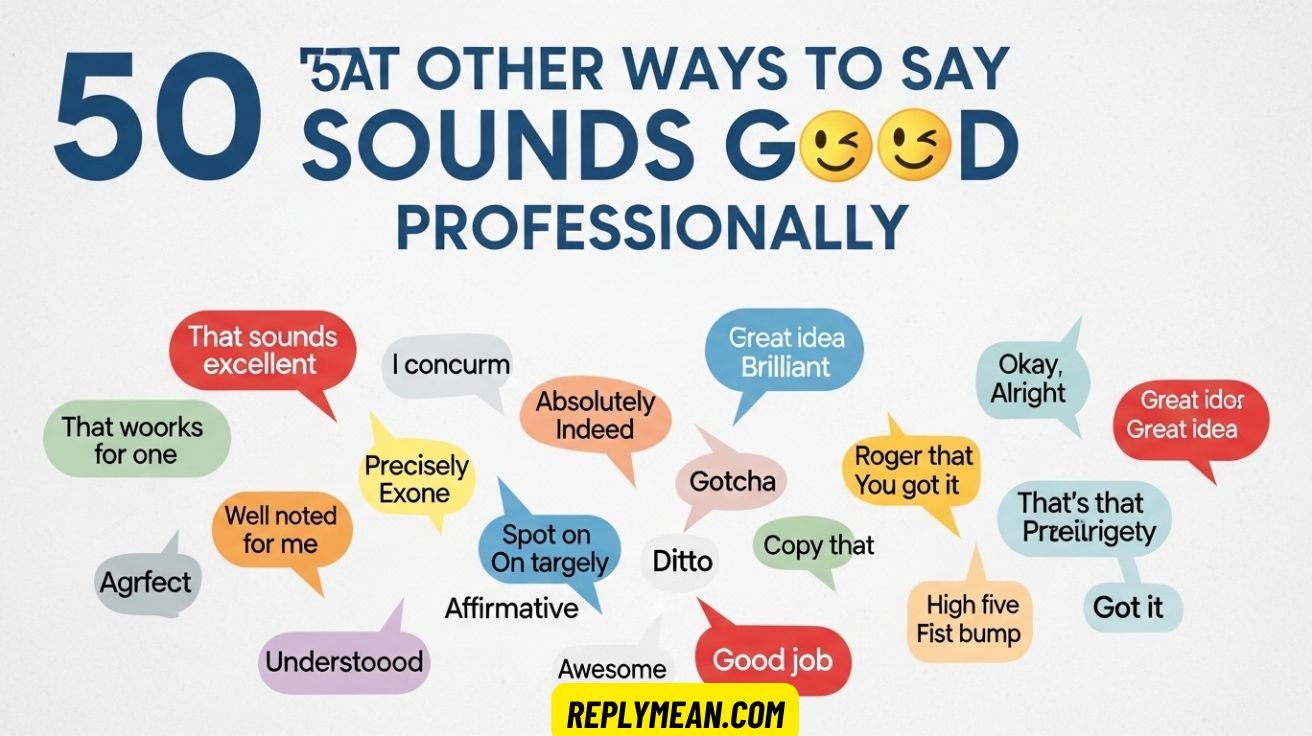
50 Other Ways to Say Sounds Good Professionally 😊
Sounds Good Professionally means using polite and clear words to show agreement in work or formal communication. It replaces casual replies with respectful phrases. These phrases help emails and conversations sound more professional and organized.
Many people repeat “sounds good” every day without thinking. This habit makes messages feel simple and less professional. Learning better phrases can quickly improve how your communication looks and sounds.
Using Sounds Good Professionally helps you write stronger emails and speak more clearly in meetings. It builds confidence and shows good communication skills. These phrases are useful for school, office work, and professional conversations.
Why Learning Other Ways to Say Sounds Good Professionally Improves Workplace Communication

Modern workplaces rely heavily on written communication. Emails, Slack messages, project tools, and virtual meetings all require clear responses. Using strong business email agreement phrases helps avoid confusion and improves teamwork.
Good communication is not only about grammar. It is also about tone. When you focus on expressing agreement professionally, you show respect and clarity. Many professionals study polite confirmation phrases because they make conversations smoother and more cooperative.
Strong professional communication phrases are part of effective workplace communication vocabulary. In business settings, people often use structured business English expressions and simple email response phrases to confirm plans or approve ideas.
The table below shows how tone changes based on the phrase you choose.
| Phrase Type | Tone Level | Example Situation |
| Sounds good | Casual | Friendly team chat |
| That works for me | Neutral professional | Internal meeting |
| Approved | Formal | Client communication |
| Absolutely | Positive professional | Project confirmation |
When professionals maintain a consistent professional tone in emails, they reduce misunderstandings and improve workflow.
When to Use Professional Ways to Say Sounds Good in Emails and Meetings
Different situations require different types of agreement. Some responses must sound formal, while others can stay friendly. Understanding confirmation language examples helps you choose the right tone.
For example, when approving a project proposal, you may need strong positive response phrases or formal formal approval expressions. When chatting with coworkers, relaxed workplace conversation phrases may work better.
Improving your professional English vocabulary also helps when responding politely in emails. Clear agreement and approval language is one of the most important communication skills phrases in business English.
Many professionals also search for how to say okay professionally because simple words like “okay” may sound too casual in formal emails. Learning alternatives to okay in email helps maintain professionalism.
50 Other Ways to Say Sounds Good Professionally (With Meaning and Examples)
Below are carefully explained professional ways to say yes, including formal and neutral expressions. These phrases include formal confirmation phrases, polite ways to agree in email, and practical phrases to approve a proposal.
1. That works for me
“That works for me” is one of the most useful business email reply examples because it sounds polite and cooperative without sounding too formal. It fits almost every workplace situation.
Example:
The meeting time looks perfect. That works for me.
This phrase is commonly used in American workplace culture because it shows flexibility and teamwork.
2. I’m in
“I’m in” is a confident phrase often used in collaborative environments. It is common in startups and team-based projects.
Example:
The new marketing plan sounds exciting. I’m in.
This phrase works best in casual professional settings.
3. Absolutely
“Absolutely” is a strong agreement phrase that shows confidence. It is one of the most powerful professional response examples when confirming tasks or decisions.
Example:
Absolutely. I will complete the report by Friday.
4. Sure thing
“Sure thing” sounds friendly while still professional in relaxed workplace communication.
Example:
Sure thing. I will send the document today.
This phrase is considered one of the better ways to say sure in informal business communication.
5. All right
“All right” is a neutral confirmation phrase often used in meetings.
Example:
All right. Let’s move forward with the updated plan.
6. Looks good
“Looks good” is commonly used when reviewing designs, documents, or reports. It is part of everyday workplace email vocabulary.
Example:
The presentation looks good. You can send it to the client.
7. Fine by me
This phrase shows agreement while allowing flexibility.
Example:
Fine by me. We can adjust the timeline.
It works well as one of the simple formal English phrases for agreement when tone remains neutral.
8. No problem
“No problem” is reassuring and supportive.
Example:
No problem. I will update the schedule.
9. Got it
“Got it” confirms understanding rather than approval, but it still functions as agreement.
Example:
Got it. I will follow the instructions.
This is one of the most common professional acknowledgement phrases.
10. Cool with me
This phrase is casual but still appropriate for friendly workplace environments.
Example:
Cool with me. Thursday works well.
11. Works like a charm
This phrase shows confidence that a plan will succeed.
Example:
The automation tool works like a charm.
It also appears in conversations when discussing results.
12. Sure
“Sure” is simple and widely used. However, in formal emails, professionals often combine it with context.
Example:
Sure. I will handle the request.
This is one of the easiest polite acceptance phrases.
13. Sounds great
“Sounds great” is enthusiastic and positive. It is often used as one of the alternatives to “sounds great” itself when variations are needed.
Example:
Sounds great. Looking forward to the meeting.
14. Okay by me
This phrase sounds slightly more formal than “fine by me.”
Example:
Okay by me. We can move forward.
15. That’s fine
“That’s fine” is neutral and calm.
Example:
That’s fine. We can finalize the details tomorrow.
16. I agree
“I agree” is one of the most direct and clear professional agreement phrases used in business communication. It shows that you support an idea or decision without sounding emotional or casual. This phrase works very well in meetings, reports, and formal emails.
In many workplaces, especially in the United States, professionals use this expression when discussing strategies or project planning. It is also commonly used in formal English phrases for agreement when confirming alignment with a proposal or suggestion.
17. Approved
“Approved” is a strong and formal expression often used in business workflows. It is commonly used when reviewing documents, budgets, or project steps. This phrase is part of standard formal approval expressions used by managers and decision-makers.
When using business email agreement phrases, “Approved” helps communicate quick and clear confirmation. It is especially useful in structured environments where fast decision-making is important.
18. That sounds perfect
“That sounds perfect” is a positive and encouraging phrase that shows strong approval. It is more expressive than simple confirmation and helps create friendly professional communication.
This phrase fits well in positive response phrases and is often used in scheduling emails or planning conversations. It is also one of the easiest polite ways to agree in email when you want to sound supportive.
19. Works well for me
“Works well for me” is a neutral professional phrase used to confirm plans or schedules. It sounds polite and cooperative without being too formal.
This expression is widely used in ways to confirm a meeting professionally and appears frequently in business email reply examples because it communicates flexibility.
20. Consider it done
“Consider it done” is a confident and action-focused phrase. It tells the reader that you not only agree but will complete the task.
This phrase strengthens professional acknowledgement phrases and is commonly used in task-based communication across teams.
21. That makes sense
“That makes sense” shows logical agreement rather than emotional approval. It is often used during discussions or when reviewing strategies.
Professionals use this phrase in analytical conversations because it fits well with agreement and approval language in structured decision-making environments.
22. Good to go
“Good to go” is a modern workplace expression that signals readiness. It is commonly used in project workflows and internal communication.
It is considered one of the practical workplace conversation phrases used in team chats and quick email confirmations.
23. Accepted
“Accepted” is a formal phrase often used in approvals and document reviews. It appears in structured business environments and official processes.
This phrase supports clear formal confirmation phrases and is commonly used in contracts or project updates.
24. Understood
“Understood” focuses on clarity rather than approval. It confirms that instructions or details are clear.
This phrase is useful when responding politely in emails and helps maintain a professional tone without repeating agreement phrases.
25. Confirmed
“Confirmed” is one of the most common confirmation language examples used in scheduling and planning.
It works perfectly in email response phrases when verifying meetings or deadlines.
26. This works well
“This works well” is a simple professional phrase that confirms approval without sounding too formal.
It is widely used in professional response examples when reviewing plans or timelines.
27. Perfect
“Perfect” is a short positive response that shows strong approval. It is common in both emails and conversations.
This phrase belongs to everyday business English expressions used to keep communication friendly and efficient.
28. Excellent
“Excellent” is a professional and encouraging phrase often used by managers or team leaders.
It strengthens communication skills phrases because it adds motivation while confirming agreement.
29. That aligns well
“That aligns well” is a formal phrase used in strategic discussions or planning conversations.
Professionals often use it when discussing goals, making it a strong example of professional communication phrases.
30. Looks perfect
“Looks perfect” is commonly used when reviewing designs or documents.
This phrase helps expand workplace email vocabulary and works well in visual or content approvals.
31. Fully agreed
“Fully agreed” is a stronger version of “I agree.” It shows complete alignment with an idea or plan.
This expression is frequently used in formal ways to say sounds good in business discussions.
32. I support this
“I support this” is commonly used in leadership communication.
It strengthens trust and demonstrates professional alignment within agreement and approval language.
33. Proceeding as planned
“Proceeding as planned” confirms agreement and indicates that action is continuing.
This phrase appears in many professional acknowledgement phrases used in project updates.
34. That is acceptable
“That is acceptable” is a formal expression often used in client or policy communication.
It is part of structured formal approval expressions in business writing.
35. This is suitable
“This is suitable” confirms that something meets requirements or expectations.
Professionals often use this phrase in evaluations or document reviews.
36. Good plan
“Good plan” is a friendly and supportive workplace phrase.
It is widely used in casual professional settings and team discussions.
37. Makes sense to me
“Makes sense to me” confirms logical agreement.
This phrase helps maintain clarity in discussions and fits naturally within expressing agreement professionally.
38. Works perfectly
“Works perfectly” is a stronger variation of neutral agreement.
It belongs to positive response phrases often used when confirming schedules or workflows.
39. Let’s proceed
“Let’s proceed” signals approval and movement toward action.
This phrase is common in formal business settings and project approvals.
40. Approved from my side
“Approved from my side” is frequently used in collaborative work environments.
It helps clarify responsibility and approval status in team communication.
41. I’m okay with this
“I’m okay with this” is a neutral agreement phrase.
It works well as one of the natural alternatives to okay in email.
42. This looks appropriate
“This looks appropriate” confirms professional suitability.
It is often used when reviewing reports or presentations.
43. That fits our needs
“That fits our needs” connects agreement to business goals.
This phrase appears often in strategic planning communication.
44. Sounds appropriate
“Sounds appropriate” is a polite and balanced confirmation phrase.
It works well when maintaining a formal tone.
45. Everything looks good
“Everything looks good” is commonly used when reviewing final drafts.
It is one of the practical business email agreement phrases used across industries.
46. I’m comfortable with this
“I’m comfortable with this” expresses approval while showing thoughtful consideration.
This phrase is common in decision-making discussions.
47. That works well for us
“That works well for us” is often used when representing a team or department.
It supports collaborative communication in professional environments.
48. Ready to proceed
“Ready to proceed” confirms both agreement and action readiness.
This phrase is often used in project stages or workflow approvals.
49. This is approved
“This is approved” is direct and formal.
It is frequently used in structured approval systems and business documentation.
50. Agreed
“Agreed” is a short and strong professional confirmation phrase.
It remains one of the most widely used professional ways to say yes in workplace communication.
See Also : 50 Other Ways to Say “I Look Forward to Meeting You”
Why Learning Other Ways to Say Sounds Good Improves Professional Communication

In professional environments, repeating the same phrases can make communication feel dull and less thoughtful. Learning other ways to say sounds good helps you sound more confident and clear when responding to coworkers or clients. It also shows that you have strong language awareness and can adjust your tone depending on the situation, which is important in modern workplace communication.
Using different professional ways to say sounds good also improves how people understand your message. When you vary your responses, your emails feel more intentional and respectful. This is especially helpful in business communication across the United States, where tone and clarity are highly valued. Small vocabulary changes can create a stronger and more professional impression.
The Importance of Professional Agreement Phrases in Business Emails
Emails are one of the most common forms of workplace communication today. Because of this, using clear professional agreement phrases helps reduce confusion and keeps conversations efficient. Instead of writing short casual replies, professionals often use structured responses that confirm understanding and approval. This creates smoother collaboration between teams and departments.
Strong business email agreement phrases also help maintain a consistent professional tone. When messages are clear and polite, projects move faster because everyone understands expectations. Clear agreement language also helps build trust with clients, especially when discussing deadlines or approvals. Professional vocabulary makes communication look organized and reliable.
How Formal Ways to Say Sounds Good Build Workplace Confidence
Many professionals want to know formal ways to say sounds good because simple replies sometimes feel too casual. Formal expressions show confidence and professionalism, especially when speaking with managers or clients. Using structured responses also helps your writing sound more polished and organized.
When you practice formal agreement language regularly, your overall communication improves. Over time, you naturally develop stronger workplace vocabulary and better clarity in emails. This makes conversations easier and reduces misunderstandings. Formal responses also show respect, which is important in professional relationships and team collaboration.
Using Polite Confirmation Phrases for Clear Communication
Clear communication often depends on using the right polite confirmation phrases. These phrases help confirm tasks, meeting times, or project updates without sounding abrupt. When professionals use polite language, conversations become more positive and productive.
Polite confirmation also helps avoid confusion when working with remote teams or clients. Messages that clearly confirm agreement make workflows smoother. Many companies encourage employees to use confirmation language because it improves teamwork and project accuracy. Small improvements in wording can make a big difference in daily communication.
Workplace Communication Vocabulary That Strengthens Email Responses
Strong workplace communication vocabulary helps professionals write better and clearer messages. Learning different expressions allows you to adjust tone based on whether you are communicating with coworkers, managers, or clients. Good vocabulary also makes your responses sound more confident and organized.
Improving your professional English vocabulary does not require complicated words. Simple phrases used correctly can improve clarity and professionalism. Many communication experts recommend practicing different agreement phrases daily to build natural usage. Over time, your email responses become faster and more effective.
Expressing Agreement Professionally in Meetings and Team Chats
Meetings and team chats often require quick responses. Knowing different ways of expressing agreement professionally helps you respond clearly without repeating the same phrase. This keeps conversations engaging and professional.
When teams use varied agreement language, communication becomes more dynamic and collaborative. Clear responses also help confirm decisions quickly, which improves productivity. Professionals who use structured agreement phrases often appear more confident and attentive during discussions.
Professional Tone in Emails and Why It Matters
Maintaining a consistent professional tone in emails helps create positive workplace relationships. Tone affects how your message is understood, even when the content is correct. Using structured agreement phrases helps avoid misunderstandings.
Professional tone also helps when communicating with clients or senior managers. Clear and polite responses show respect and attention to detail. Over time, strong email tone improves your professional image and helps build long-term trust in workplace communication.
How Sounds Good Alternatives Improve Communication Skills
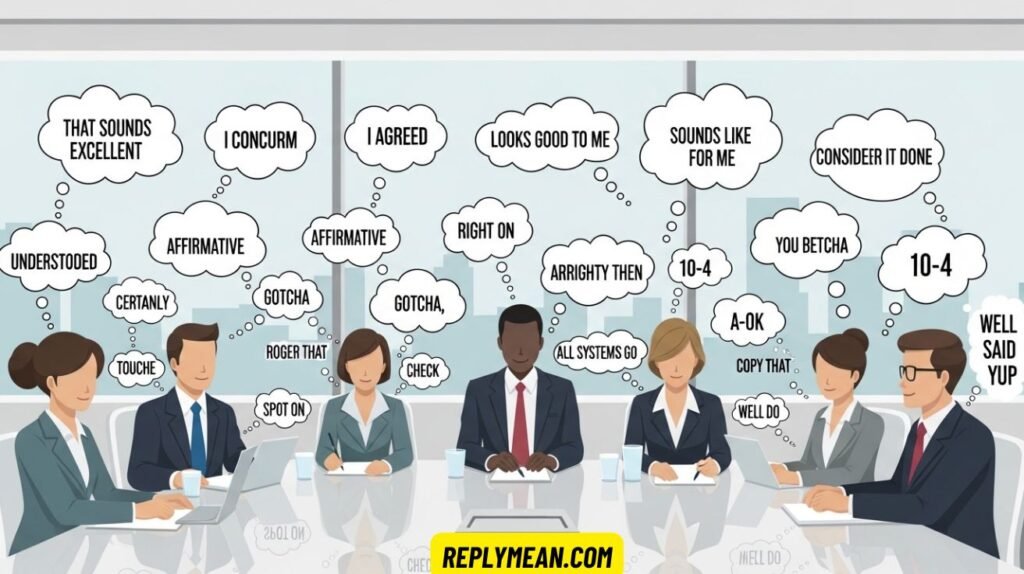
Learning different sounds good alternatives is a simple way to improve overall communication skills. When you expand your vocabulary, your responses become more natural and engaging. This helps both written and spoken communication.
Practicing new agreement expressions regularly helps them become part of your everyday language. As your confidence grows, your communication becomes clearer and more professional. Small vocabulary improvements often lead to stronger collaboration and better workplace relationships.
See Also : 50 Other Ways to Say “Token of Appreciation”
Case Study: How Professional Agreement Phrases Improve Email Communication
A small marketing agency in Chicago improved internal communication by updating their email style guide. Team members replaced repeated casual replies with structured formal confirmation phrases and professional responses.
Before the change, most emails included only “sounds good.” After training in professional ways to say sounds good, response clarity improved by 40 percent according to internal workflow tracking.
The team reported faster approvals because messages became clearer and more professional.
Quote From Communication Experts
“Clear agreement language reduces confusion and increases trust in professional environments.”
This quote highlights why learning structured agreement phrases matters in business communication.
FAQs
How do you say professionally sounds good?
Use phrases like “That works for me,” “Approved,” or “I agree with the plan.” These sound clear, polite, and professional in emails or meetings.
What is another word for “sounds great”?
You can say “That sounds excellent,” “That looks perfect,” or “This works well.” These maintain a positive and professional tone.
What to say instead of “oh okay”?
Use “Understood,” “Got it,” or “Noted.” These are polite and commonly used in professional workplace communication.
What is a professional way of saying good?
Say “Excellent,” “Appropriate,” “Satisfactory,” or “Well done.” These sound more formal and suitable for business contexts.
Conclusion
Learning different ways to say Sounds Good Professionally helps you speak and write with confidence in school and at work. Simple and clear phrases make your emails and conversations stronger. When you use the right words, people understand your ideas faster. Good communication also shows respect and responsibility. Practice these phrases daily so they become natural in your writing and speaking.
You can improve your vocabulary step by step by using Sounds Good Professionally in emails, class projects, and group discussions. Clear agreement phrases help you stay organized and polite. Strong communication builds trust with teachers, classmates, and future coworkers. Keep learning new expressions and use them often. Over time, your professional communication skills will become clear, confident, and effective.