Requester vs Requestor: Spelling, Use & Examples
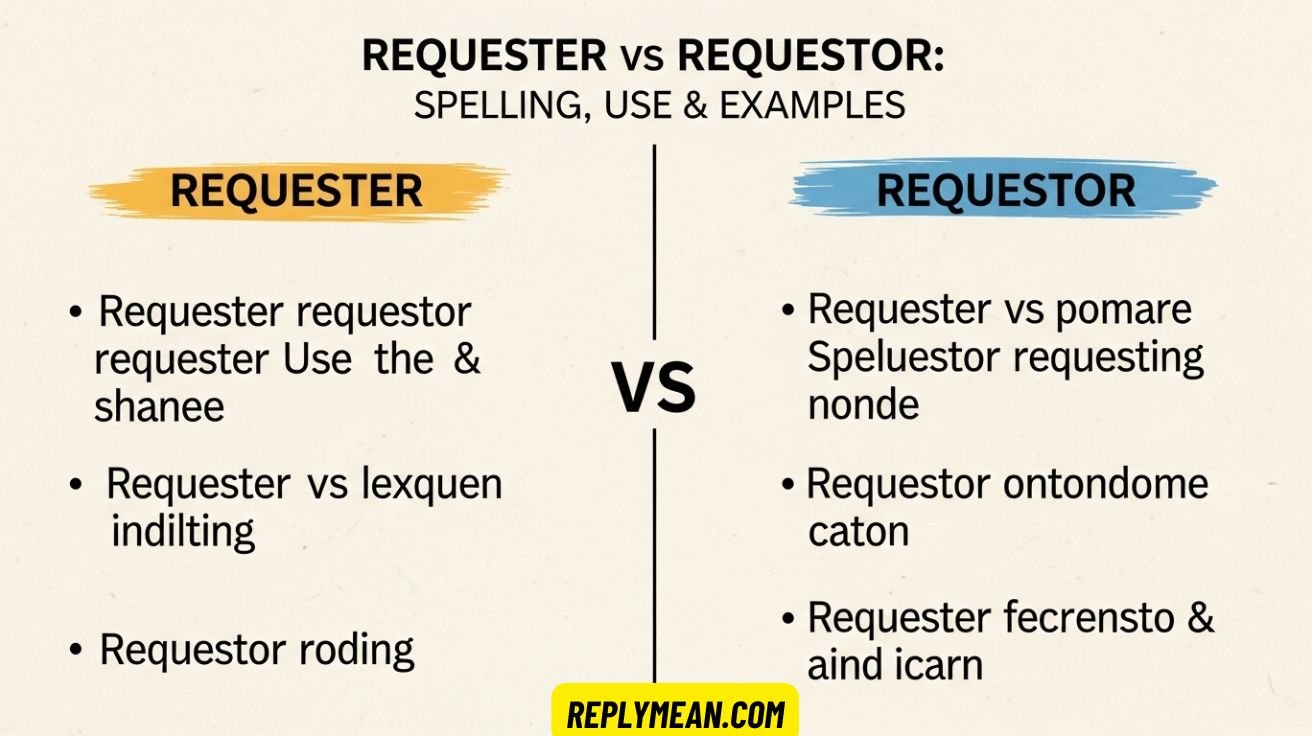
Requester vs Requestor are two spellings used for a person who asks for something formally. Both words come from the verb “request.” The meaning is the same, but the spelling changes by context.
Many writers feel confused when choosing between requester or requestor. Both appear in emails, forms, and legal documents. Using the wrong style can make writing look inconsistent.
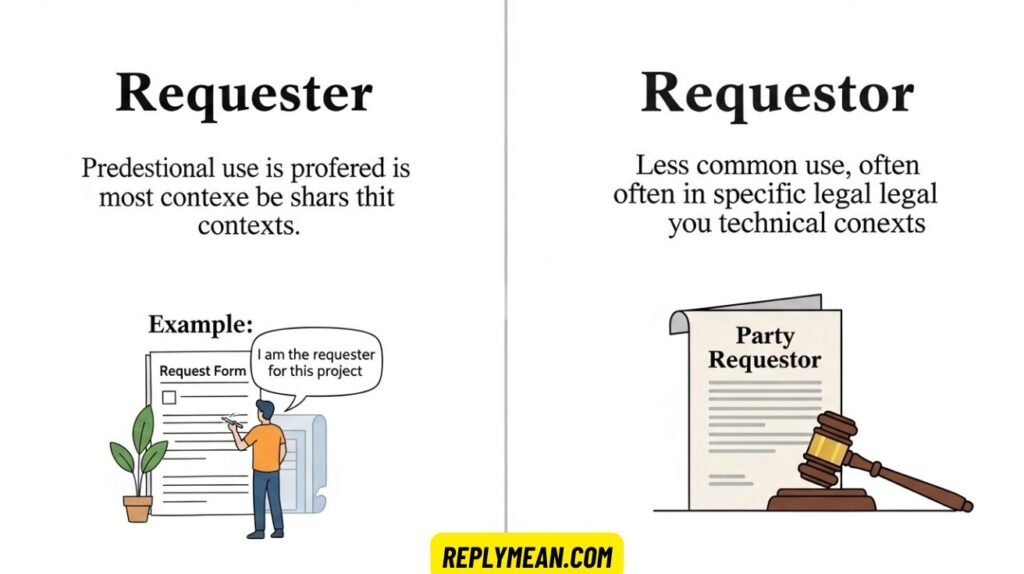
In modern English, requester is more common in business writing. Requestor is often seen in legal or technical systems. Understanding this small difference helps make your writing clear and professional.
What Do “Requester” and “Requestor” Mean?
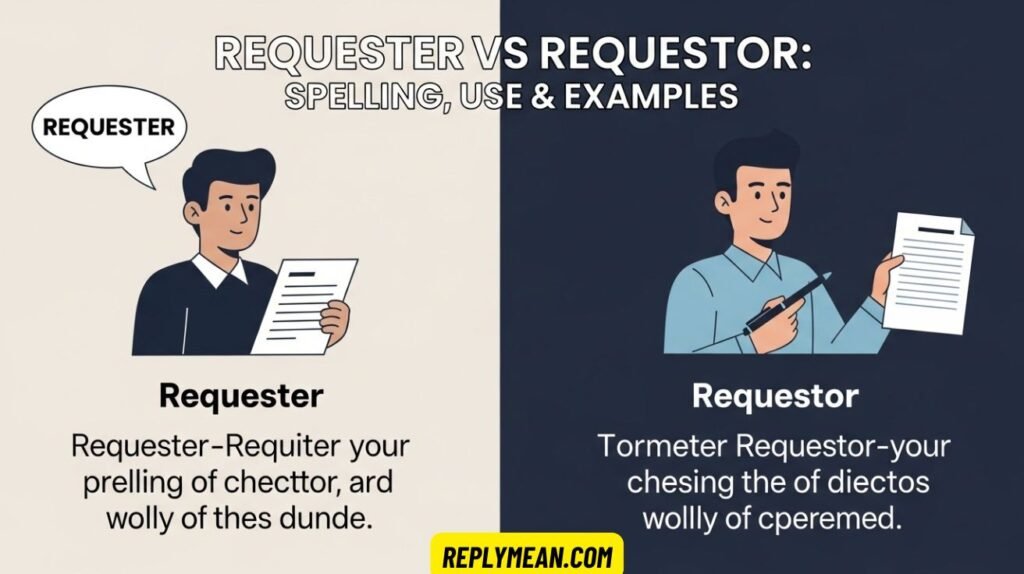
The words requester and requestor both refer to the same role: a person making a request. In general request terminology in English, these words are called agent nouns because they describe someone performing an action. The requester definition and the requestor definition both come from the verb “request,” which means to ask for something formally or politely.
In modern business writing vocabulary, the term requester is commonly used when someone submits a form, asks for approval, or sends a service ticket. The word requestor appears more often in official document terminology or technical documentation language, especially in structured systems or legal templates.
The main idea is simple. The request role meaning does not change. Only the spelling and tone change depending on context.
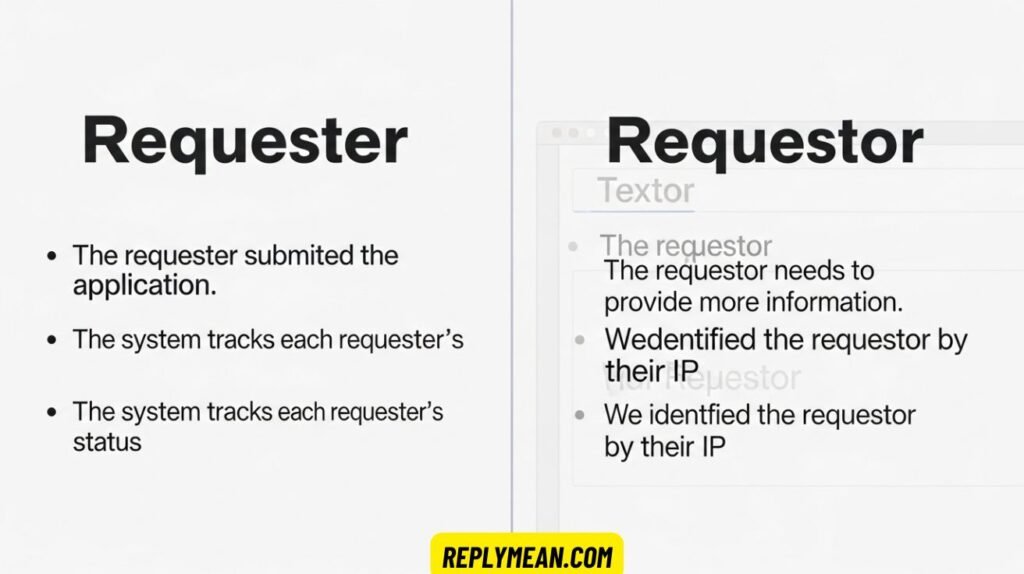
For example, in a workplace email the sentence might read that the requester asked for an update. In a legal template the sentence might say the requestor must provide identification.
“Requester” vs “Requestor”: What’s the Real Difference?
When comparing requester vs requestor, many writers expect a difference in meaning, but the real difference is about spelling preference and usage patterns. There is no difference in definition. Both words describe the same action and the same role.
The difference between requester and requestor comes from the structure of English word formation. English often creates agent nouns using the English suffix er vs or. Words ending in “-er” are more common in everyday language, while words ending in “-or” often appear in legal or technical contexts.
The table below shows how the usage differs.
| Feature | Requester | Requestor |
| Meaning | Person making a request | Person making a request |
| Tone | General and conversational | Formal and technical |
| Common usage | Business and workplace writing | Legal and technical systems |
| Frequency | Very common | Less common |
| Recommended default | Yes | Only when required |
In simple terms, the requestor vs requester grammar difference is not about correctness but about style and context.
Which One Is More Common: Requester or Requestor?
In modern American English, requester vs requestor usage clearly shows that requester is more common. Most business emails, internal communication documents, and customer support systems use requester because it looks natural and familiar.
Large dictionaries and style guides also show that the correct spelling requester appears more frequently in everyday writing. The word requestor still appears, but mainly in structured environments such as IT databases and legal templates.
In many companies, automated systems still use the alternative requestor spelling because it was built into older software structures. These technical environments follow fixed naming rules, which explains why the variation continues to exist.
This trend shows how language evolves toward clarity and readability in modern professional communication.
Is “Requestor” Correct English? Debunking the Myth
One of the most common questions writers ask is is requestor correct English. The answer is yes. The spelling requestor is grammatically correct, but it is less common.
Both requester spelling and requestor spelling are accepted by dictionaries, including Merriam-Webster. The difference comes from usage frequency rather than correctness.
The spelling requestor often appears in legal terminology requestor contexts because legal writing traditionally prefers Latin-influenced forms. Words such as creditor, grantor, and lessor follow similar patterns.
This does not mean requestor is better or more formal in all situations. It simply reflects a traditional pattern used in formal documentation.
Choosing the Right Term for Your Writing
Choosing between requester or requestor depends on your audience and writing purpose. In general formal request language, clarity is more important than tradition.
In everyday requester in business writing, the safer choice is requester because readers recognize it easily. In contrast, requestor in legal documents may be required if a contract or template already uses that spelling.
Consistency is the most important rule. Mixing both spellings in one document can reduce professionalism and confuse readers.
The table below shows recommended usage.
| Writing Context | Recommended Term |
| Business emails | Requester |
| Reports | Requester |
| Customer support systems | Requester |
| Legal contracts | Requestor |
| Technical databases | Requestor |
According to The Chicago Manual of Style, consistency in spelling improves readability and professionalism.
A useful rule many editors follow is simple.
“Choose one spelling and keep it consistent throughout the document.”
Examples in Context: Real-Life Usage
Understanding requester vs requestor examples helps clarify how context affects spelling choices. In real workplace writing, the choice often depends on the type of document rather than grammar rules.
In customer service communication, the requester typically receives updates about a service ticket. In legal agreements, the requestor may be responsible for submitting official documents.
This difference shows how technical documentation language and business writing vocabulary influence word choice.
Requester Examples:
The word requester appears frequently in modern workplace communication because it sounds natural and clear.
In an office environment, the requester submits a purchase request for approval. In a help desk environment, the requester reports a technical issue. In project communication, the requester asks for timeline updates.
These examples show how the term fits naturally into everyday professional writing.
Requestor Examples:
The word requestor appears more often in structured or regulated documentation.
In compliance documents, the requestor must verify identity before accessing records. In legal templates, the requestor agrees to the stated terms. In IT audit systems, the requestor ID is logged for tracking.
These examples demonstrate how official document terminology and system formatting influence spelling choice.
Can You Use “Requestor” in Business Communication?
Yes, requestor can appear in business communication, but it depends on tone and context. In most situations involving workplace communication terms, requester remains the clearer choice.
When internal systems already use requestor as a fixed field name, changing the spelling may create confusion. However, in external communication such as marketing emails or customer messaging, requester usually sounds more natural.
This difference shows how professional writing terms adapt based on audience expectations.
Origins of the Words “Requester” and “Requestor”
The words requester and requestor both come from the verb “request,” which entered English through Old French and Latin influences. Over time, English developed multiple ways to form agent nouns.
The English suffix er vs or pattern explains why both spellings exist. The suffix “-er” became more common in everyday English, while “-or” remained common in legal and formal contexts.
Examples of this pattern include words like actor, editor, and creator.
This linguistic pattern explains the modern coexistence of both spellings without changing the request role meaning.
Regional Differences: US vs UK vs International Use
Regional writing patterns also affect requester vs requestor usage. In American English, both spellings appear, but requester dominates business communication. In British English, requester is strongly preferred.
International organizations usually select requester because it is easier for global readers and non-native speakers.
This global preference shows how clarity drives modern language standards.
See Also : 50 Other Ways to Say Thank You for Your Quick Response
The Evolution of “Requester” and “Requestor” in Modern English
Language evolves with technology and communication trends. In early enterprise software systems built in the 1990s and early 2000s, requestor became a common database label. These systems influenced how technical teams used the word.
Over time, modern writing shifted toward requester because readability became more important in digital communication.
This shift shows how technical documentation language and usability trends influence grammar preferences.
How to Use “Requester” and “Requestor” in Formal Writing
Formal writing requires consistent terminology. In most cases, requester works well in reports, proposals, and internal documentation.
However, if a legal contract already uses requestor, it is best to keep that spelling throughout the document. Legal writing values consistency more than modernization.
Editors often follow a simple practice when working with formal request terminology.
Match the spelling to the document type and maintain consistency.
This approach improves clarity and professionalism.
Pronunciation and Spelling: Requester vs Requestor Explained
Although the requester vs requestor spelling looks different, both words are pronounced almost the same. The ending sound is typically “ter,” which explains why writers sometimes confuse the spellings.
Because pronunciation does not help distinguish the words, writers must rely on context and style guidelines. This is a common example of grammar spelling variations in English.
Understanding the difference between requester spelling and requestor spelling helps avoid inconsistency, especially in formal writing.
Understanding the Basic Idea of Requester vs Requestor
The topic requester vs requestor often confuses writers because both words look correct and appear in professional documents. In simple English, both terms describe a person who asks for something formally. This could include asking for approval, information, or services. The confusion happens because English allows multiple spelling patterns for similar roles.
In modern communication, context usually decides whether to use requester or requestor. Business writing commonly prefers requester because it feels more natural and readable. However, legal or technical environments sometimes keep requestor due to tradition or system structure. Learning this difference helps writers avoid mistakes and improve clarity in professional documents.
Why Requester Is More Common in Everyday Writing
In everyday emails and reports, the word requester appears more frequently because it follows standard English word formation rules. Many common agent nouns use the “-er” ending, such as teacher, manager, and writer. Because of this pattern, readers easily recognize requester without confusion.
Modern workplace communication focuses on clarity and simplicity. Companies often choose words that are easy to read quickly. Requester fits this style better than requestor in most situations. This is why customer support systems, internal workflows, and business messages commonly use requester instead of the less familiar spelling.
Where Requestor Is Still Used Today
Although requester is more common, requestor still appears in certain industries. Legal documents often use traditional language patterns that include the “-or” ending. This style comes from Latin-based legal terminology that has remained consistent for many years.
Technical systems also use requestor because database field names were created long ago and are rarely changed. In IT service platforms, labels like “Requestor ID” may remain for system consistency. These examples show that usage is sometimes influenced by structure rather than grammar preference.
How Context Affects Word Choice in Professional Writing
Choosing between requester and requestor depends largely on context. When writing business emails or reports, clarity should be the main goal. In these situations, requester works best because most readers recognize it immediately and understand the meaning without hesitation.
In contrast, formal contracts or compliance documents may already follow established templates. If a template uses requestor, it is important to keep the same spelling throughout the document. Consistency improves professionalism and prevents confusion, especially in official or legal communication.
The Role of English Suffix Patterns in Spelling Variations
English often forms nouns by adding suffixes such as “-er” or “-or” to verbs. Both endings describe a person performing an action. For example, the verb “request” can logically become requester or requestor because both endings are grammatically acceptable.
The “-er” ending is more common in everyday English, while “-or” appears more frequently in technical or legal language. This difference explains why both spellings exist. Understanding these suffix patterns helps writers recognize similar variations across many English words.
Common Mistakes Writers Make with Requester and Requestor
One common mistake is mixing both spellings within the same document. Even though both forms are correct, switching between them looks inconsistent and unprofessional. Readers may think the variation is accidental rather than intentional.
Another mistake is assuming requestor is always more formal. While it appears in legal contexts, it is not automatically better for professional writing. In many cases, requester is clearer and more modern. Writers should focus on readability instead of assuming that complexity improves professionalism.
Requester vs Requestor in Business Communication
Business communication usually values clarity, speed, and readability. Because of this, requester is commonly used in emails, reports, and workflow systems. The word feels natural and aligns with modern communication style used across many industries.
However, some organizations use internal tools that display requestor as a system label. In such cases, employees may continue using requestor to match the software terminology. The key idea is to follow organizational standards while keeping external communication simple and reader-friendly.
See Also : 50 Other Ways to Say “Sorry for the Short Notice in an Email”
Legal and Technical Influence on the Word Requestor
Legal writing often preserves traditional terminology for consistency across contracts and regulations. Words ending in “-or” appear frequently in legal language, including terms like grantor or lessor. This tradition explains why requestor appears in many legal documents.
Technical documentation also keeps fixed naming structures to avoid system errors. Changing a database field from requestor to requester could affect data tracking or automation. Because of these risks, technical environments often keep the original spelling even if general writing trends change.
Pronunciation Similarities That Cause Spelling Confusion
Requester and requestor sound almost identical when spoken. Both words usually end with a soft “ter” sound, which makes it difficult to distinguish the spelling through pronunciation alone. This similarity often leads to spelling mistakes, especially when using voice typing tools.
Because pronunciation does not help clarify the difference, writers must rely on context instead. Checking style guides or document standards can help maintain consistency. This small step prevents confusion and keeps professional documents clear and polished.
Practical Tips for Choosing the Correct Spelling
When deciding between requester and requestor, the simplest approach is to consider your audience. If you are writing for general business communication, requester is usually the best choice. It is widely recognized and easier for readers to understand quickly.
If you are working with legal forms or technical systems that already use requestor, follow the existing format. Consistency matters more than personal preference. By matching the spelling to the document type, writers can maintain clarity, professionalism, and accuracy in their work.
FAQs
Which is correct requester or requestor?
Both are correct, but requester is more common in modern business and general writing, while requestor is mostly used in legal or technical contexts.
What is the meaning of requestor?
A requestor is a person who formally asks for something, such as information, approval, or a service.
What do you call a person who requests something?
A person who requests something is called a requester, though terms like applicant or petitioner may also be used depending on the situation.
Who is considered a requestor?
A requestor is anyone who submits a formal request in official documents, systems, or structured processes.
Final Thoughts on Requester vs Requestor
The debate over requester vs requestor is not about right or wrong. It is about clarity, consistency, and context. Both words describe the same person making a request, and both are grammatically correct.
In most modern professional writing, requester is the safer choice because it is clearer and more widely used. Requestor still appears in technical systems and legal documentation, where traditional formatting rules remain important.
When writers understand the difference between requester and requestor, they can choose the correct spelling confidently and maintain strong, professional communication.