25 Funny Ways to Say Roasts for Skinny People (Playful, Light & Friendly)
The group chat finds the photo first, and the same two jokes about the tall, slim friend arrive on schedule — again. Anyone searching skinny people jokes is usually hunting funny roasts for skinny people with a longer shelf life: nicknames that tease the outline, land kindly, and survive being repeated at the next gathering.
Underneath every roast sits one act of drawing. Each nickname redraws the same friend’s silhouette as something else — bones, weather gear, a desk object, a sheet of paper, a menu, a headline name — and the twenty-five below are sorted by the silhouette test: what is the new outline made of?
Each entry carries a grade, one worked example and a plain note on where the nickname belongs — and where it misfires: a bone joke told to a near-stranger, a menu joke told on the wrong week. Start with the shelf, and the teasing usually follows.
Sorting the Twenty-Five by the Silhouette Test
Quick answer: funny roasts for skinny people sort by the silhouette test — what each nickname redraws the friend as. Some draw bones, some blame the weather, some reach for a desk object, some flatten him onto paper, some blame the menu, and some crown him with a headline name.
Read in one pass, the twenty-five blur into a single skinny joke. Read one at a time, they separate by material: five draw the bones, four blame the weather, four reach for a desk object, three flatten him onto paper, three blame the menu, and six hand him a title instead.
Families repeat. The skeleton four — 3, 8, 14 and 20 — are one skeleton, four finishes: connected, chic, deluxe, supreme; 1 collects the bones and 25 prices the calcium. The wind four — 2, 9, 13, 18 — are one gust, four settings. The diet pair, 5 and 12, is one diet, two name tags: Deluxe and Dreams.
The Bone Shelf First, the Weather Shelf Second
Bone roasts draw the frame itself: “Bone Collector Banter”, the keeper of the set, “Skeleton with WiFi”, the connected one, “Skeleton Chic”, the runway finish, “Skeleton Deluxe Edition”, the premium trim, and “Skeleton Supreme”, the flagship. The outline is the skeleton, dressed five ways.
Weather roasts measure the friend against moving air: “Air-Resistant Roast”, the drag claim, “Wind-Proof Wonder”, the forecast defied, “Windbreaker Warrior”, the armoured one, and “Breeze Magnet”, the gust’s favourite target. Nothing about the body is described at all — only what the wind supposedly does to it.
Nine entries, one shared mercy: bone and weather roasts both joke about a picture, not a person. The bones are a costume and the wind is a situation, which is why both shelves stay sayable in friendly rooms — the laugh lands on the drawing, not on the friend.
The Object Shelf Third, the Paper Shelf Fourth
Object roasts swap the friend for a long, thin, handheld thing: “Walking Pencil Roast”, the draughtsman, “Human Toothpick Talk”, the table prop, “Walking Ruler”, the straight edge, and “Matchstick Marvel”, the pocket version. The joke is a swap — person out, desk drawer in.
Paper roasts flatten him to two dimensions: “Paper-Thin Punchline”, the sheet itself, “Stick Figure Superstar”, the doodle, and “Cardboard Cutout”, the standee. Side-on, the friend supposedly vanishes; face-on, he is all outline and no depth.
Seven entries, one shared limit: object and paper roasts both depend on the friend being in on the drawing. A swap heard literally sounds like a verdict on a body, so these shelves belong to friends who answer back with a drawing of their own.
The Menu Shelf Fifth, the Title Shelf to Finish
Menu roasts blame the plate: “Diet Mode Deluxe”, the permanent setting, “Protein Deficit Prodigy”, the gym’s missing regular, and “Diet of Dreams”, the imaginary meal plan. The friend is not drawn at all — the friend’s supposed eating is, which is what makes this shelf the warmest and the riskiest at once.
Title roasts crown him instead: “Featherweight Legend”, the billing, “Mr. Invisible Frame”, the formal vanishing act, “Slim Shady 2.0”, the borrowed name, “Calorie-Free King”, the throne, “Shadow Champ”, the titleholder, and “Calcium-Free Comedian”, the stage name. Each arrives like an announcement, not a description.
Nine entries, one shared engine: menu and title roasts both run on exaggeration about status — what he supposedly eats, or what he is supposedly called. Aimed at a friend who loves the spotlight, they flatter; aimed at a private friend on a hard week, they single him out.
The Check Every Roast Has to Pass
One discipline runs through every nickname here, borrowed from our guide to other ways to say see you tomorrow. That guide sorts farewells by what each one rests on while it crosses the night; a roast deserves the same audit, aimed at what each nickname redraws.
The audit is one question. If this nickname were the whole joke, what is the friend drawn as — bones, weather gear, an object, a sheet of paper, a menu, a headline — and is that a drawing this friend, on this day, would happily sign?
“Diet of Dreams” sent the week a friend mentions skipping lunch is the classic mismatch: a menu joke heard as a report. The sender meant a daydream; the reader hears a diagnosis, and every later nickname from that sender gets read as one too.
25 Funny Ways to Say “Roasts for Skinny Peoples”
1. Bone Collector Banter
The keeper form: bone collector banter casts the friend as the curator of the whole collection — the bones are the exhibits, and he is proudly in charge of them. It presumes a friend who enjoys being the exhibit.
Its collecting is its fence. Collector makes the bones sound gathered on purpose; told to someone who never chose the frame, the curating reads as a charge sheet. Grade: B+ — bone-led, collector ground.
- “Bone Collector Banter over here, arranging himself for the group photo again.”
- Best for: old friends, photo threads and fancy-dress nights
- Skip it: new acquaintances, where the collection sounds like an accusation
2. Air-Resistant Roast
The drag form: air-resistant roast claims the friend offers the wind nothing to push against — he slips through weather the rest of the group has to lean into. It presumes a breezy day and a friend who likes a physics joke.
Its science is its fence. Resistance is a compliment in engineering and a tease in a chat; a reader who hears only the roast half misses the part where slipping through is a talent. Grade: A− — weather-led, headwind ground.
- “Air-Resistant Roast just crossed the car park without a hair moving. The rest of us fought for our lives.”
- Best for: windy days, cyclists and group walks
- Skip it: anyone mid-complaint about the weather, where it sounds like gloating
3. Skeleton with WiFi
The connected form: skeleton with WiFi gives the classic skeleton a signal — bones, but online, streaming, fully reachable. It presumes a meme-fluent friend and a chat that lives on its phones.
Its modernity is its fence. WiFi dates the joke to this decade’s slang; a reader outside meme culture hears a skeleton and a router and waits for the rest of the sentence. Grade: B+ — bone-led, signal ground.
- “Skeleton with WiFi is in the chat — full signal, zero padding, instant replies.”
- Best for: group chats, meme threads and online friends
- Skip it: older relatives, where the signal needs explaining
4. Paper-Thin Punchline
The sheet form: paper-thin punchline turns the friend into the joke’s own material — one sheet, all surface, nothing behind it. It presumes a reader who enjoys wordplay and a friend happy to be the page.
Its thinness is its fence. Paper-thin is also how people describe weak excuses and bad walls; a reader in a literal mood hears the insult sense first and the punchline second. Grade: B+ — paper-led, sheet ground.
- “Paper-Thin Punchline just turned sideways and the whole table lost him.”
- Best for: wordplay fans, caption writers and drama-club friends
- Skip it: formal settings, where paper-thin means inadequate
5. Diet Mode Deluxe
The setting form: diet mode deluxe claims the friend’s eating runs on a permanent mode, premium tier — as if slimness were a feature he switched on and upgraded. It presumes a friend who jokes about their own appetite first.
Its menu is its fence. Mode jokes sit one step from real eating talk; sent in a week when food is a sore subject, the deluxe trim stops sounding like a setting and starts sounding like a summary. Grade: B — menu-led, setting ground.
- “Diet Mode Deluxe is still running — three years, no updates, works perfectly.”
- Best for: close friends who joke about their own plates first
- Skip it: any week where eating is already a difficult subject
6. Walking Pencil Roast
The draughtsman form: walking pencil roast swaps the friend for the longest, thinnest thing in the desk drawer — upright, sharpened, always on point. It presumes a tall friend and a room that draws its jokes quickly.
Its height is its fence. Pencil works because it is about length; aimed at a friend whose height is the one thing he likes, the roast steals the friend’s best feature and hands it back as a prop. Grade: A− — object-led, pencil ground.
- “Walking Pencil Roast just signed the card — tallest signature we’ve got, in every sense.”
- Best for: tall friends, art rooms and back-to-school threads
- Skip it: friends proud of their height, where the swap feels like theft
7. Human Toothpick Talk
The table form: human toothpick talk shrinks the pencil joke to pocket size — the friend as the smallest useful sliver on the table. It presumes a very close friend and a table full of people already laughing.
Its size is its fence. Toothpick is the sharpest of the object swaps — small, pointed, disposable — so outside a tight circle it lands as dismissal rather than drawing. Grade: B — object-led, toothpick ground.
- “Human Toothpick Talk at the buffet again — first in line, last to block anyone’s view.”
- Best for: very close friends and family tables
- Skip it: colleagues and acquaintances, where small and sharp reads cold
8. Skeleton Chic
The runway form: skeleton chic dresses the bones as a fashion choice — the frame as this season’s look, worn deliberately and worn well. It presumes a stylish friend who treats the nickname as a compliment with a wink.
Its fashion is its fence. Chic only works where style is genuinely the friend’s territory; told to someone who dresses for comfort and hates the spotlight, the runway reads as sarcasm. Grade: A — bone-led, runway ground.
- “Skeleton Chic just arrived — the rest of us are dressed, he’s curated.”
- Best for: stylish friends, fashion threads and photo shoots
- Skip it: spotlight-shy friends, where chic sounds like a verdict
9. Wind-Proof Wonder
The forecast form: wind-proof wonder marvels that the friend survives weather at all — a wonder of engineering, still standing after every gust. It presumes a stormy day, a shared umbrella shortage, and a friend who likes being marvelled at.
Its wonder is its fence. Proof jokes praise and tease in the same breath; a reader having a genuinely miserable day hears the tease and files the praise under weather talk. Grade: A− — weather-led, forecast ground.
- “Wind-Proof Wonder crossed the bridge in that storm and arrived looking pressed. A wonder, honestly.”
- Best for: stormy days, hikers and commute threads
- Skip it: anyone actually caught in the storm, where wonder sounds smug
10. Stick Figure Superstar
The doodle form: stick figure superstar promotes the simplest drawing in the world to celebrity — five lines and a circle, famous anyway. It presumes a friend who doodles, teaches, or happily signs himself with a stick man.
Its simplicity is its fence. Stick figure is also what people call a bad drawing; sent about a friend’s actual artwork or actual photo, the superstar trim has to work twice as hard. Grade: A− — paper-led, doodle ground.
- “Stick Figure Superstar just signed my notebook — five lines, one circle, pure fame.”
- Best for: doodlers, teachers and notebook owners
- Skip it: a friend’s real artwork, where the drawing joke turns on the artist
11. Protein Deficit Prodigy
The gym form: protein deficit prodigy casts the friend as a marvel of the weights room running on empty — a prodigy precisely because the expected fuel never shows. It presumes a gym-going friend who treats shakes as a personality.
Its gym is its fence. Deficit is a word with a medical echo; the prodigy trim keeps it playful, but only just — outside gym banter, the ear keeps the deficit and drops the prodigy. Grade: B — menu-led, gym ground.
- “Protein Deficit Prodigy out-lifted the whole group again. Nobody can explain it. Least of all the protein.”
- Best for: gym friends and training threads
- Skip it: anyone with health worries, where deficit stops being a joke
12. Diet of Dreams
The daydream form: diet of dreams claims the friend’s meal plan exists mainly in imagination — a menu of wishes rather than plates. It presumes a friend famous for ordering big and eating like a bird at the shared table.
Its dreaming is its fence. Dreams make the joke soft, but the diet half still points at a real plate; a reader who has gone quiet about food hears the pointing, not the softness. Grade: B — menu-led, daydream ground.
- “Still on the Diet of Dreams — ordered for six, ate for one, described it for twenty minutes.”
- Best for: restaurant tables and foodie friends
- Skip it: quiet eaters, where the plate is not a public topic
13. Windbreaker Warrior
The armour form: windbreaker warrior dresses the weather joke as a battle kit — the lightest jacket worn like plate mail against a heroic breeze. It presumes a friend who actually owns the jacket and a group that hikes, rides or commutes together.
Its armour is its fence. Warrior flatters and mocks in one word; a reader who takes the outdoor gear seriously hears the mockery at full volume and the flattery at half. Grade: B+ — weather-led, armour ground.
- “Windbreaker Warrior is suiting up — there’s a breeze alert and he’s taking it personally.”
- Best for: hikers, cyclists and jacket owners
- Skip it: serious outdoors friends, where the kit is not a costume
14. Skeleton Deluxe Edition
The premium form: skeleton deluxe edition reissues the classic skeleton with the trim level raised — same bones, better packaging, limited run. It presumes a friend who enjoys being the upgraded version of anything.
Its edition is its fence. Deluxe is the set’s most repeated trim — it also finishes item 5 — so spent twice in one thread, the premium joke starts to sound like the only joke in stock. Grade: B+ — bone-led, premium ground.
- “Skeleton Deluxe Edition just dropped — same classic, shinier box, no extra contents.”
- Best for: collectors, gamers and upgrade jokes
- Skip it: the same thread as Diet Mode Deluxe, where the trim repeats
15. Featherweight Legend
The billing form: featherweight legend announces the friend like a fighter entering under lights — the lightest class there is, carrying the biggest word in sport. It presumes a friend who likes an entrance and a group that applauds on cue.
Its legend is its fence. Legend is a large crown for a small joke; spent on a shy friend in a public caption, the billing outs him instead of honouring him, and the applause becomes an audience. Grade: A− — title-led, legend ground.
- “Featherweight Legend is in the building — lightest entrance of the night, loudest cheer.”
- Best for: birthdays, sports threads and grand entrances
- Skip it: public captions about shy friends, where billing becomes exposure
16. Mr. Invisible Frame
The formal form: Mr. Invisible Frame gives the vanishing joke a title and a surname’s manners — the friend so slim the room must be told he is in it. It presumes a playful group and a friend who enjoys being conjured rather than described.
Its invisibility is its fence. Invisible is the one claim here that can echo a real feeling — being overlooked — so on a day when the friend already feels ignored, the frame joke stops being about outlines. Grade: B — title-led, vanishing ground.
- “Mr. Invisible Frame has joined the meeting — agenda item one: confirming he’s actually here.”
- Best for: playful groups, video calls and photo hunts
- Skip it: a friend feeling overlooked, where invisible is not a drawing
17. Slim Shady 2.0
The borrowed form: slim shady 2.0 rents the most famous slim name in pop and upgrades it — the friend as the sequel, slimmer than the original. It presumes a reader who knows the reference and a friend happy to be a remix.
Its borrowing is its fence. The name belongs to somebody else’s fame; a reader who misses the reference hears a stranger’s name, and a reader who loves the original hears an insult aimed the wrong way. Grade: B+ — title-led, remix ground.
- “Slim Shady 2.0 just walked in — the sequel nobody ordered, slimmer than the original.”
- Best for: music fans, meme threads and fancy-dress nights
- Skip it: readers who would need the name explained
18. Breeze Magnet
The target form: breeze magnet claims the weather itself seeks the friend out — every small wind in the county finds him first and personally. It presumes a friend who is always cold, always windblown, and first to say so.
Its magnetism is its fence. Magnet jokes need the friend to agree the wind picks on him; told to someone who has never noticed, the joke invents a feud between him and the weather. Grade: A− — weather-led, magnet ground.
- “Breeze Magnet stepped outside for one minute and came back with three new hairstyles.”
- Best for: windy climates, dog walkers and commute chats
- Skip it: calm-day threads, where the magnet has nothing to attract
19. Walking Ruler
The straight-edge form: walking ruler swaps the friend for the draughtsman’s other tool — not the pencil that draws the line but the edge that keeps it honest. It presumes a tall, straight-backed friend and a room fond of geometry jokes.
Its straightness is its fence. Ruler also means a person who governs; a literal reader hears authority instead of length, and the drawing joke arrives as a comment about character. Grade: A− — object-led, ruler ground.
- “Walking Ruler just stood up — the whole room’s posture improved out of shame.”
- Best for: tall friends, maths jokes and design threads
- Skip it: anyone actually in charge, where ruler reads as rank
20. Skeleton Supreme
The flagship form: skeleton supreme tops the skeleton range — the deluxe edition’s bigger sibling, first among bones, the one the others are trims of. It presumes a friend who collects superlatives and a group happy to keep awarding them.
Its supremacy is its fence. Supreme is the loudest word on the bone shelf; saved for the closest friend it crowns him, but spent on a new acquaintance it sounds like a ranking nobody asked for. Grade: B+ — bone-led, flagship ground.
- “Skeleton Supreme presides over the group photo — all rise, carefully, in case of wind.”
- Best for: closest friends and long-running group jokes
- Skip it: new acquaintances, where supreme sounds like a league table
21. Calorie-Free King
The throne form: calorie-free king crowns the friend for the oldest envy at the table — he eats like royalty and stays a rumour. It presumes a friend whose appetite is famous and whose frame never files the paperwork.
Its envy is its fence. King only works as admiration wearing a tease; a reader who is struggling with a plate of their own hears the crown as a comparison, and the joke stops being about the king. Grade: A− — title-led, throne ground.
- “Calorie-Free King has finished a third helping. The crown remains secure. Science remains baffled.”
- Best for: big eaters, family dinners and buffet threads
- Skip it: anyone watching their own plate, where envy curdles
22. Shadow Champ
The titleholder form: shadow champ awards the belt to the friend’s outline — the shadow shows up thicker, darker and more present than the man casting it. It presumes sunshine, a pavement, and a friend who enjoys being upstaged by himself.
Its shadow is its fence. Champ keeps the joke a contest, but the shadow half needs daylight to make sense; sent at night or in winter, the reader is left holding a title with no picture attached. Grade: B+ — title-led, shadow ground.
- “Shadow Champ retains the title — the man arrived at six, the outline arrived at five-thirty.”
- Best for: sunny days, photographers and walking threads
- Skip it: night threads, where there is no shadow to crown
23. Matchstick Marvel
The pocket form: matchstick marvel shrinks the object swap to its smallest edition — one strike of a thing, bright head and all. It presumes an old-school joking circle where the classic comparisons are worn smooth with use.
Its classicism is its fence. Matchstick is the oldest joke on the object shelf; a young reader may find it charming, or may find it is the joke a grandfather already told at this exact table. Grade: B+ — object-led, matchstick ground.
- “Matchstick Marvel lit up the room — briefly, brightly, and mostly from the neck up.”
- Best for: family tables and classic-joke circles
- Skip it: meme-first chats, where the classic reads as a rerun
24. Cardboard Cutout
The standee form: cardboard cutout flattens the friend into a promotional prop — full height, no depth, liable to be stored behind a door. It presumes a friend who poses for photos and a group that treats flatness as stagecraft.
Its flatness is its fence. Cutout also describes a person with no personality in ordinary speech; a reader in the wrong mood hears the character sense, and the paper joke needs a paragraph of rescue. Grade: B — paper-led, cutout ground.
- “Cardboard Cutout is by the door again — greeters keep shaking the hand and reporting him missing.”
- Best for: photo poses, shop floors and party props
- Skip it: anyone sensitive about being called dull, where cutout changes meaning
25. Calcium-Free Comedian
The stage form: calcium-free comedian closes the set by handing the bones a microphone — the frame as a working act, all punchlines and no padding. It presumes a funny friend, because this nickname only fits the one who would use it on himself.
Its stage is its fence. Comedian promises laughs the nickname alone cannot deliver; pinned on the quiet friend of the group, it sets a stage he never auditioned for. Grade: B+ — title-led, stage ground.
- “Calcium-Free Comedian closed the night — ten minutes of material, zero visible means of support.”
- Best for: the group’s actual joker and open-mic friends
- Skip it: the quiet friend, where the stage becomes a spotlight he dodged

Complete Lines: The Roast in a Finished Sentence
A bare nickname still needs its sentence around it before it can be sent. The ten lines here are finished — the name, the scene and the warmth in one — ready for the chat, the card or the caption the friend has agreed to.
- For the group chat, on a windy day: “Hold on to something, Breeze Magnet — the forecast says gusts and you’ve been claimed by all of them.”
- For the tall friend, at the café: “Walking Ruler over here, making the rest of us look badly measured since forever.”
- For the gym thread: “Protein Deficit Prodigy just out-lifted the group chat. The protein has filed a missing persons report.”
- For the birthday card: “To the Featherweight Legend — may your year be as light as your luggage and twice as celebrated.”
- For the selfie caption: “Skeleton Chic: bones, confidence, and not one filter consulted.”
- For the friend in the new jacket: “Windbreaker Warrior reporting for duty — the armour fits, the breeze has been warned.”
- For the kitchen photo: “Calorie-Free King has eaten the whole cake and remains, legally speaking, a rumour.”
- For the notebook doodle: “Stick Figure Superstar — the only portrait that has ever done him justice.”
- For the friend who turned sideways: “Cardboard Cutout vanished behind the door frame again. Third time this week. We applauded.”
- For the stage photo: “Calcium-Free Comedian — all punchlines, no padding, structural engineers baffled.”
When the Roast Lands Wrong
Roasts rarely fail while you say them — they fail in the reading afterwards, when the drawing gets weighed as a description. Four repairs follow, each one a change of shelf rather than a change of friendship.
“Diet of Dreams” Sent the Week Food Went Quiet
A friend stops joking about lunch, goes quiet at the table, and receives the daydream form from the group chat. The sender meant an imaginary menu; the reader hears the real plate being discussed by people who were not invited to discuss it.
The repair leaves the menu shelf entirely. “Breeze Magnet” jokes about the weather’s opinion of him, not the friend’s own — the laugh moves from what he eats to what the sky does, and the table talk can go quiet again in peace.
“Skeleton Supreme” Pinned on a New Acquaintance
A new colleague joins the team chat and is awarded the flagship of the bone shelf by Friday. The sender meant a crown; the reader, who has not yet been given a friendly nickname of any kind, hears a ranking of the body by strangers.
The repair waits, then starts smaller. A doodle — “Stick Figure Superstar” — is a drawing before it is a description, and even that waits until the colleague has roasted somebody else first and set the exchange rate himself.
“Human Toothpick Talk” Posted About a Coworker
A caption under an office photo names the toothpick form for everyone the coworker has ever worked with to read. In the chat it was licensed; on the record it is a small, sharp object attached to a name by a colleague, permanently searchable.
The repair keeps public words on the title shelf or off him entirely. “Featherweight Legend” in a caption reads as an honour the crowd bestows; the object swaps stay in the private chat where the licence lives.
“Mr. Invisible Frame” Sent on a Rough Week
A friend having the kind of week where nobody answers the messages receives the formal vanishing act. The sender meant an outline joke; the reader, already feeling overlooked by the whole week, hears the outline of exactly that.
The repair crowns instead of vanishing him. “Shadow Champ” gives him a title and a win — the outline out-arriving the man is a presence joke, not an absence one — and the week gets one message that counts him in.
Short Forms for Texts and Captions
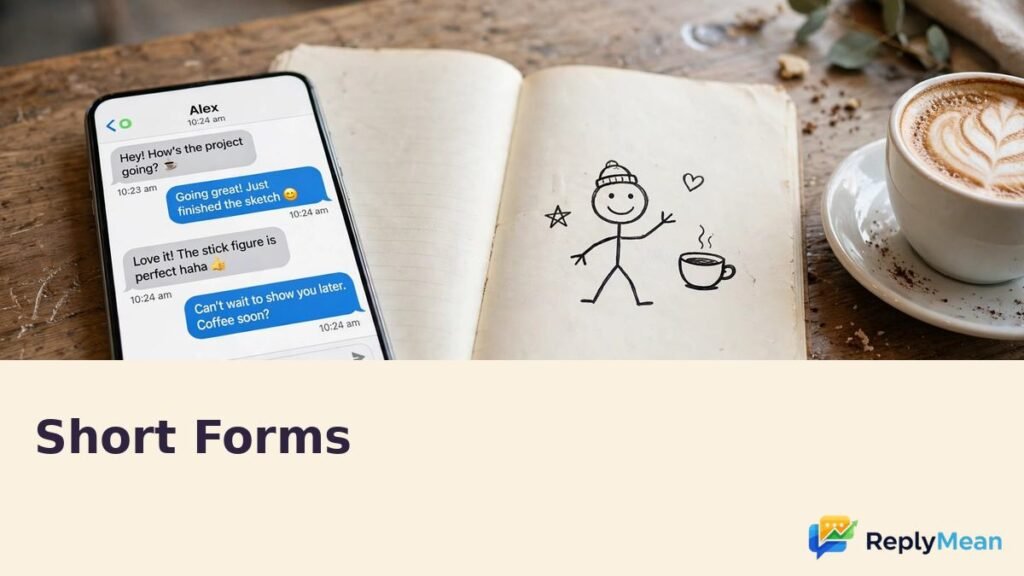
Most roasts are typed in small spaces — the last line of a chat, a caption, a nickname field already full. The short forms keep the drawing and drop the ceremony — small enough for the box, sized right for the friend.
- “Bone Collector” — the frame kept shortest: for photo threads.
- “Breeze Magnet” — the weather kept whole: for windy-day chats.
- “Walking Pencil” — the draughtsman kept plain: for tall friends.
- “Stick Figure” — the doodle kept short: for notebook people.
- “Featherweight” — the billing kept light: for entrances.
- “Slim Shady 2.0” — the remix kept whole: for music threads.
- “Paper-Thin” — the sheet kept short: for sideways jokes.
- “Shadow Champ” — the title kept whole: for sunny captions.
- “Matchstick” — the classic kept pocket-sized: for family chats.
- “Mr. Invisible” — the vanishing kept formal: for video calls.
Frequently Asked Questions
Are these roasts okay to say to any slim friend?
No — a roast runs on a licence the friendship issues. The friend who roasts himself, answers back and sets nicknames of their own has issued one. A friend who has never joked about the frame has not, whatever the shelf.
Which shelf is safest with someone new?
Weather and paper. A gust or a doodle is a situation, not a body report, so both can be tried gently and dropped without a mark. Bones wait for history, the menu waits for an invitation, and titles wait for applause.
What makes a roast land as affection instead of insult?
The drawing stays a drawing. Exaggerate a picture — wind, paper, a crown — and the friend laughs at the picture with you. Report a flaw in level words and the same line becomes a description he has to carry home.
Can I use these as public captions?
Only about yourself, or about a friend who has seen the caption and laughed first. A nickname in a private chat is a gift with one reader; the same words under a public photo are a label with an audience.
Where is the line between a roast and a comment on someone’s health?
A roast never needs the friend’s body to be evidence — it works from weather, paper and crowns. The moment a line only lands if something is actually wrong with him, it has left the shelves and should not be sent.
Conclusion
The twenty-five are one friend wearing twenty-five outlines. Sort funny roasts for skinny people by the silhouette test — the bones, the weather, the object, the paper, the menu, the title — and the teasing stops being a reflex and starts being a drawing he would sign.
Underneath every outline sits the same small courtesy: the joke is aimed at the picture, never at the person inside it. The dictionary defines slim as attractively thin — a compliment folded inside the word itself, and the best nickname on this page is simply that compliment, drawn larger.