25 Funny Ways to Say “Sex” (Comic Euphemisms, Graded)
Every language keeps a comic drawer for the subject it cannot name at the dinner table, and English’s is centuries deep. Funny ways to say sex run from Shakespearean insult to chart-pop innuendo — and the twenty-five below are graded by the only test that matters: the room they can survive.
A euphemism is a trade: the audience gets a laugh and an alibi, the speaker gets to say the unsayable, and nobody has to pretend not to understand. The entries below are sorted by that trade — how much cover each one really gives, and where it can actually be said.
Two warnings before the list. A few entries are the same phrase twice in different costumes, and two are not jokes at all — both are flagged where they sit. Everything is graded as a euphemism first and a joke second.
The Wink Is the Point: How Comic Euphemisms Work
Quick answer: the strongest funny ways to say sex are the ones where the wink is shared — the audience decodes it instantly, the speaker keeps an alibi, and the room stays comfortable. Three checks sort the wardrobe. Mechanism: is the joke in the image (10, 15), the sound (17, 21), the era (5, 23) or the vagueness itself (1, 9)? Register: could it survive a family newspaper (1, 5, 10), or does it need a friends-only room (13, 20)? Era: is it current (the modern natives in the extra-names section), period charm (4, 5), or a time capsule (23)? Keep two, if two is all you keep: doing the deed (1) for print, getting it on (9) for speech. Nearly every weak entry below fails one check cleanly — it is either not understood, not funny, or not sayable where it is sent.
A euphemism is a trade: the speaker gives up precision, the listener gives up the right to be shocked, and both sides pretend the bargain is about politeness. The comic entries earn their keep by making the trade visible — the metaphor is the performance, and the laugh is the receipt. That is why the same phrase can be treasure in one room and trouble in another: the bargain only holds where both parties know the script. A phrase understood by nobody (22) is not a euphemism at all; a phrase understood by everybody and deniable by nobody (20) is barely one.
The room decides, and the room is a clock as much as a place. A phrase cut for the group chat at midnight curdles in the boardroom at nine, and the reverse journey is just as fatal — boardroom diction at a party reads as a costume. Register control of exactly this kind is the whole craft of the offer formula too: our guide to other ways to say please let me know if you need anything grades twenty-five ways of offering help by the room each one survives. The discipline is identical — choose the phrase the room can hold, and let the cheaper laugh go.
Synonyms List: 25 Funny Ways to Say Sex
The twenty-five follow below — the duplicates, the sincere entries and the invented one kept in their places. Under every heading: its mechanism, its era, and three fresh lines.
1. Doing the Deed
The default euphemism of modern English — the phrase other entries on this list keep returning to as their base form. “The deed” names nothing, which is exactly the point: the vagueness is the veil, and everybody over the age of twelve decodes it instantly. It is often called “the most common and popular,” and for once the superlative is earned. It needs no costume, no era and no explanation, which is why fiction reaches for it first and why it survives every room on the ladder below. Grade: the standard — sayable almost anywhere jokes are allowed.
- “Three seasons of will-they-won’t-they, and the finale finally had them doing the deed. The fan forums melted down.”
- “He couldn’t even say it — he just mouthed ‘they did the deed’ and pointed at the door.”
- “In this novel, everyone talks around it for two hundred pages before anyone does the deed.”
2. Bumping Uglies
The cartoon-physics entry: two bodies reduced to a collision, with a playground insult for a name. Notice whose expense the joke is at — “uglies” mocks the couple, not the act, which is what separates it from the warmer entries. Among friends retelling a story it is affectionate; aimed at anyone present, it curdles. It gets called “cheeky,” which is fair, and it is also the whole of its range. Grade: friends and fiction — never about anyone in the room.
- “The sitcom cut away just as the couple started bumping uglies — the laugh track did the rest.”
- “According to the group chat, the neighbours were bumping uglies by chapter two. The group chat exaggerates.”
- “It’s the phrase a twelve-year-old would invent, which is exactly why adults keep it.”
3. Getting Busy
The first ambiguity trap. This phrase’s dominant meaning, by a wide margin, is being occupied with work — it is what people say about spreadsheets. As a euphemism it survives only where the context is already unmistakable, usually with a raised eyebrow doing half the work. It gets called “informal and direct,” but direct is the one thing it is not: out of context, nine readers in ten will hear a deadline. Grade: context or nothing — unusable in a bare sentence.
- “‘Can’t talk, getting busy,’ he texted — and meant the tax return. That is the phrase’s whole problem.”
- “The song’s hook only works because the singer winks through ‘getting busy’; on paper it reads like overtime.”
- “Tell the office you’re getting busy and they will simply believe you.”
4. Knockin’ Boots
The regional classic: footwear as the whole metaphor, with the dropped “g” doing the accent work. It is often called “Southern-flavored,” and it also carries a hip-hop era echo — it belongs to a specific sound, somewhere between country radio and nineties R&B. That rootedness is its charm and its limit: in the right voice it is warm and funny; in the wrong one it is a costume. Grade: period and regional charm — voice required.
- “The country song had them knockin’ boots by the second verse — subtlety was never the genre’s plan.”
- “He said it with the full accent, knockin’ boots, like he’d rehearsed the twang.”
- “Some phrases you can borrow; this one you have to be able to carry.”
5. Making Whoopee
The vintage entry, and the only one with a hit song for a birth certificate: “Makin’ Whoopee” was written by Walter Donaldson and Gus Kahn for the 1928 musical Whoopee! and popularised by Eddie Cantor — a cautionary tale about marriage whose title phrase became the joke word itself. Nobody under retirement age says it unironically, which is now its function: it signals deliberate, winking retro, the verbal equivalent of a feather boa. Grade: charming antique — say it like you know it’s old.
- “My grandfather still calls it making whoopee, and at ninety he has earned the anachronism.”
- “The jazz standard turned making whoopee into the politest scandal of 1928.”
- “Use it in a period drama and it lands; use it in a text message and it lands as a joke about you.”
6. Rolling in the Hay
The rustic entry: the hayloft does all the work, and the picture it paints — farm, barn, mischief — is the entire joke. It has been theatrical for a century; nobody has ever used it as a plain report, only as a performance of one. It is praised for its “rustic, cheeky appeal,” which is accurate, and the rusticity is now mostly nostalgia for a world of actual haylofts. Grade: pastoral cartoon — knowingly old-fashioned.
- “The village comedy had the squire and the milkmaid rolling in the hay by act two; the hay was a prop and so was the subtlety.”
- “A roll in the hay is the phrase’s shorter cousin — same barn, quicker joke.”
- “It survives in period novels and fancy-dress humour, and nowhere near a real farm.”
7. Shagging
The British blunt entry — and the list’s register trap, because it means different strengths on different sides of the Atlantic. In Britain it is plain, crude-adjacent slang that a tabloid can print and a pub can shout. To American ears, largely thanks to the Austin Powers films, it sounds like a comedy word, cheeky and harmless — which is how Americans end up saying it in Britain at twice its intended strength. Grade: UK blunt, US costume — know which ocean you’re on.
- “The British review called the film’s couple ‘shagging in a caravan,’ and meant it far more plainly than an American reader would hear.”
- “Austin Powers turned shagging into a catchphrase in America — in Britain it never needed the help.”
- “It is the only word on this list that can get you in more trouble abroad than at home.”
8. Hitting the Sack
The second ambiguity trap, and the weaker of the two. The entry itself concedes the problem in its first breath: the phrase “often means going to sleep.” Often is generous — sleep is not its second meaning but its first, and the sexual reading is a distant, joking extension that most listeners will simply never reach. A euphemism that the audience decodes as bedtime has failed at the only job it had. Grade: broken as a euphemism — works only as a deliberate double meaning, set up in advance.
- “‘Early night, we’re just hitting the sack,’ she said, and both meanings got a laugh — that’s the only way it works.”
- “Tell your grandmother you’re hitting the sack and she will wish you pleasant dreams, correctly.”
- “A phrase that needs a wink, a nudge and a footnote is not a phrase; it’s a riddle.”
9. Getting It On
The durable one. Marvin Gaye gave it its permanent soundtrack in 1973, and the phrase has been coasting on that confidence ever since — clear without being crude, casual without being silly. Of the six “getting” headings on this list, it is the one that needs no costume, no era and no explanation. It gets called “simple and versatile,” which for once undersells it: it is the closest thing here to a standard term. Grade: the list’s centre of gravity — almost any informal room.
- “The DJ played ‘Let’s Get It On’ and the whole wedding understood the assignment.”
- “Fifty years on, getting it on is still the phrase other phrases are measured against.”
- “It’s the rare entry you could say to friends, in a story, or in a song, unchanged.”
10. Doing the Horizontal Tango
The head of the dance family, and the geometry is the joke: take a vertical, formal, public dance and rotate it ninety degrees. The tango’s built-in drama does the rest. It is the most broadcast-safe of the comic entries — a family sitcom can air it at seven in the evening — and its very safety makes it a little toothless among adults, a dad-joke register. Grade: sitcom gold — funny everywhere, dangerous nowhere.
- “The recap put it delicately: by episode six, the detectives were doing the horizontal tango.”
- “Horizontal tango is what a newspaper writes when its style guide has a heartbeat.”
- “It is the phrase equivalent of a raised eyebrow — everyone decodes it, nobody can object to it.”
11. Making the Beast with Two Backs
The literary entry, and the oldest thing on the list by centuries. It is Iago’s line in the first scene of Shakespeare’s Othello — “your daughter and the Moor are now making the beast with two backs” — itself adapted from Rabelais. In the play it is not a wink but a weapon, an insult meant to disgust a father; its modern comedy comes entirely from the register clash of quoting a tragedy’s villain at a dinner party. Grade: the clever one — devastating with a reading audience, dead air without one.
- “He announced the engagement news by declaring the couple were ‘making the beast with two backs,’ and half the table reached for their phones to check.”
- “Four hundred years old and still the only entry here that can raise your apparent IQ while lowering the tone.”
- “Shakespeare’s version was meant to horrify. Ours is meant to get a laugh in a book club. Both work.”
12. Getting Freaky
The intensity entry. “Freaky” does not name the act at all — it grades it, promising the adventurous end of the scale — which makes this the one heading about style rather than fact. Its register is nineties R&B, confident and unbothered, and like most era slang it now reads as a quotation of that confidence rather than the thing itself. It gets called “bold, fun, and modern”; the modernity is thirty years old, which is part of the charm. Grade: era-stamped swagger — best in retrospect.
- “The playlist went from slow jams to getting freaky in three tracks; the host knew exactly what she was doing.”
- “Say getting freaky in 2026 and you’re quoting the nineties — quote it knowingly and it still lands.”
- “It’s a promise about style, not a report about events, which is why fiction loves it.”
13. Playing Hide the Salami
The ceiling of the list’s rudeness, and the mechanism is a children’s game welded to a delicatessen. It is the only entry whose imagery is genuinely graphic-adjacent — the joke requires you to picture the metaphor — which is why it has the narrowest room of all twenty-five: close friends, in speech, in a story being told for laughs. In writing, at work, or near anyone’s parents, it is not a euphemism but an incident. Grade: friends-only, spoken-only — the list’s outer limit.
- “The best man’s speech reportedly included ‘hide the Salami’ — reportedly, because the video was deleted.”
- “Some phrases veil the act. This one draws you a diagram and dares you to laugh.”
- “It is very funny exactly once per friendship group, and then it is retired by common consent.”
14. Getting Your Groove On
The dance family again, in its smoothest costume — and the loosest fit on the list. The phrase’s centre of gravity is confidence and dancing (the groove you get back, in the famous film title, is a life, not a partner), so as a name for sex it is mostly atmosphere: it suggests the mood and leaves the event to inference. It is said to make sex “sound like a dance — literally and metaphorically,” which is precisely the problem; it is all metaphor. Grade: flirtation, not report — atmosphere only.
- “‘Someone’s getting their groove on,’ she said, watching the dance floor — and meant the dancing.”
- “As a euphemism it’s a trailer, not the film: all mood, no event.”
- “It works best as a tease between people who already know what it doesn’t quite say.”
15. Dancing the Mattress Mambo
The dance family’s most theatrical member: alliteration, furniture, and a second Latin dance pressed into service because the tango was taken. It feels manufactured — phrases like this are born on lists as often as in speech — but it circulates, and its very excess is the joke: nobody could say it with a straight face, so nobody has to. Grade: deliberate silliness — a phrase you perform rather than use.
- “The mattress mambo is the tango’s louder cousin — same joke, bigger hat.”
- “Nobody has ever whispered it. It exists to be announced.”
- “In a farce, it’s a punchline. In a message, it’s a cry for help. Context is everything.”
16. Knockin’ the Boots
The same purchase, second receipt. The entry opens by conceding it: “Similar to #4 but with a sharper twist.” The twist is the word “the.” One phrase has been given two headings, two explanations and ten example sentences, and the list’s count of twenty-five quietly becomes twenty-four. The phrase itself is graded at 4; what is graded here is the padding. Grade: item 4 again — the list counting a costume change as a new entry.
- “Read 4 and 16 back to back and you can watch a list run out of material in real time.”
- “The boots are the same boots. The ‘the’ is doing no work at all.”
- “Every long list has a seam where the entries start repeating themselves. This is the seam.”
17. Bonking
The British tabloid entry, powered by sound: “bonk” is a cartoon noise, and the comedy is that a thud is doing the work of a description. In Britain it is cheeky, printable, and understood by everyone. Export it carelessly, though, and it collides with the American “bonk” — hitting your head, or an endurance athlete running out of fuel — which produces sentences no one intended. Grade: UK printable cheek — a transatlantic trap in the US.
- “British tabloids built a whole vocabulary on bonking; it let them print the story and keep the giggle.”
- “Tell an American marathoner about bonking and you will get a lecture on glycogen.”
- “Short, blunt and funny — provided the room shares the same dictionary.”
18. Making Love
Not a funny phrase, and its presence is the strangest inclusion on the list. This is the sincere register — the phrase people use precisely when they want no joke, no veil and no wink — and the entry itself concedes the mismatch, praising it for “connection over comedy” on a page that promised comedy. Graded as a euphemism it is excellent; graded as what this list claims to sell, it is a different shop’s goods entirely. Grade: a fine phrase in the wrong list — the romantic register, filed under jokes.
- “Nobody has ever said making love as a punchline; it is the phrase you choose when the joking stops.”
- “It belongs on a list of tender synonyms, where it would win. Here it just proves the list ran broad.”
- “If 1 through 17 are ways of not saying it, this is a way of meaning it.”
19. Doing the Nasty
The mock-disapproval entry. “Nasty” performs a scandalised judgment that nobody in the conversation actually holds — the grin is the point — and the phrase rides the register Janet Jackson made famous in the eighties, when “nasty” became a boast wearing a scolding. It is bolder than the dance family and cruder than the vagueness family, and it knows it. Grade: attitude entry — say it like you’re quoting a song, because you are.
- “‘They were doing the nasty,’ she reported, in the tone of a headmistress who was clearly delighted.”
- “The joke only works if your disapproval is obviously fake; real disapproval kills it and the mood.”
- “It’s the eighties entry: big hair, big chorus, zero actual shock.”
20. Getting It In
The bluntest of the “getting” frame — a euphemism with almost no veil left. Where 9 wraps the same claim in a song and a smile, this one is slang doing the minimum: it is understood instantly, which is its function, and it offers the speaker no deniability at all. It gets called “trendy and straightforward,” and straightforward is the honest half of that. Grade: barely a euphemism — hip-hop register, zero cover.
- “There’s no wink in getting it in; it’s the list’s entry for people who weren’t hiding anything anyway.”
- “As cover, it’s tissue paper. As a register marker, it’s unmistakable.”
- “Fiction uses it to characterise a speaker in four words. Real rooms use it less.”
21. Makin’ Bacon
The food family, rhyming division. Strip the rhyme away and very little remains — this is a phrase that lives on synonym lists and in deliberate silliness far more than in unselfconscious speech, and it also has to fight the literal reading: in most kitchens, makin’ bacon is breakfast. It gets called “harmless, friendly,” which is true, and harmless is also its ceiling. Grade: list-born silliness — a rhyme in search of a usage.
- “Say makin’ bacon at brunch and you will be handed a menu. The collision is fatal.”
- “It survives because it rhymes, the way most novelty phrases do — sound first, sense second.”
- “Children’s-show energy aimed at an adult subject; the mismatch is the entire joke.”
22. Throwing the Sheets Party
The list’s one apparent invention. A euphemism has a single non-negotiable requirement — the audience must already understand it — and this phrase fails it outright: it appears on lists like this one and essentially nowhere in speech, its grammar is off (a party is thrown; the sheets are not), and a listener hearing it fresh would need it explained, at which point it has stopped being a euphemism and become homework. Grade: the invented one — recognition zero, usability zero.
- “Try throwing the sheets party in conversation and watch three people ask you to repeat yourself.”
- “Every generated list has one phrase that exists only on generated lists. This is that phrase.”
- “The sheets deserved better. So did slot twenty-two.”
23. Getting Jiggy
The time capsule. Will Smith carried “jiggy” into the mainstream with Big Willie Style in 1997 (the single followed in early 1998), and the word’s meaning slid as it travelled — from stylish, to dancing, to the sexual reading this list needs. That drift is the grading problem: of its three meanings, the one on this page is the least secure, and the phrase now dates the speaker to a very specific pop moment. It gets called “a great modern way to say sex”; the modernity is old enough to rent a car. Grade: 1997, preserved in amber — fun as a quotation, risky as a report.
- “Getting jiggy survives as a fancy-dress phrase — everyone recognises it, nobody reaches for it first.”
- “Smith meant stylish, the clubs heard dancing, and the lists heard this. Meanings drift; lists freeze them.”
- “Deploy it at a nineties night and it’s perfect. Deploy it anywhere else and it’s a costume.”
24. Doing the Deedie
Item 1 with a suffix. The entry concedes the whole case in its first four words — “a playful remix of ‘doing the deed’” — because a diminutive is not a new phrase; it is the old phrase in baby talk. Between this and 16, the list’s twenty-five contains at least two costumes for earlier entries, and the honest count of distinct phrases drops again. As a joke between people with a shared sense of the ridiculous it can raise a smile; as an entry in a reference list it is padding. Grade: item 1 in a smaller hat — the second double sale.
- “Deedie is what happens when a twenty-fourth entry is needed and the first one is a favourite.”
- “Between close friends, the baby talk is the joke. In a list, it’s a confession.”
- “If you already have doing the deed, you have this. You always had this.”
25. Love-Making Session
The romantic register again, this time with a scheduling noun attached — and “session” is an accidental gift, because it makes the whole thing sound bookable, like a tutorial or a therapy hour. It gets called “a more modern spin on making love,” but a spin that adds a timetable is not a spin, and like 18 it is not attempting to be funny. As the list’s closing entry it quietly admits the premise ran out: the last two slots belong to sincerity. Grade: item 18 with a calendar invite — sincere, duplicated, and not a joke.
- “‘Love-making session’ sounds like something with a waiting room and a feedback form.”
- “It is 18 wearing a lanyard. The list ends by repeating its one sincere idea.”
- “Romance deserves better than a slot-filler, and so does the reader who counted to twenty-five.”
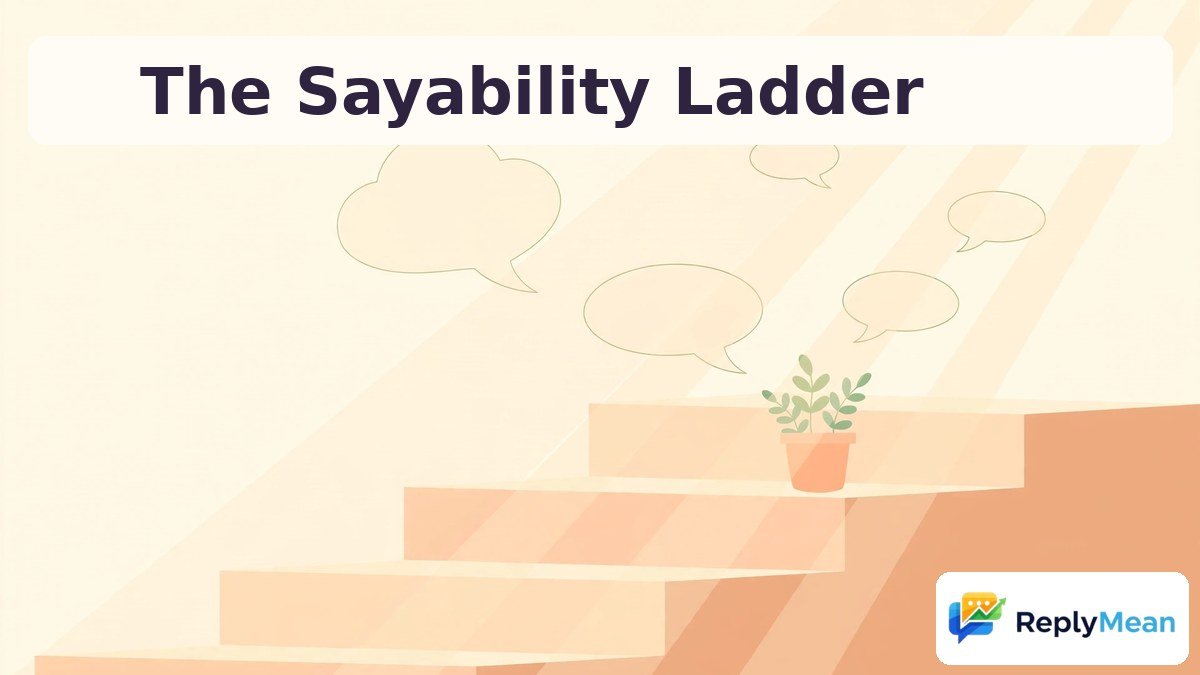
The Sayability Ladder: Where Each Phrase Can Actually Land
A euphemism is only as good as the room it survives. Sorted by where they can actually be said — not by how funny they are in the abstract — the twenty-five arrange themselves into three tiers and one odd remainder.
Top tier — broadcast-safe. These can be said on television, in a family newspaper, or in front of anyone’s grandmother, and they still register as jokes: doing the deed (1), making whoopee (5), rolling in the hay (6), getting it on (9) and doing the horizontal tango (10). Their shared trait is distance — vagueness, vintage, or a metaphor polite enough to print.
Middle tier — friends, fiction and group chats. The natural home of most of the list: bumping uglies (2), knockin’ boots (4), shagging (7, with the Atlantic warning), the beast with two backs (11, with a reading audience), getting freaky (12), getting your groove on (14), the mattress mambo (15), knockin’ the boots (16, once), bonking (17, in Britain), doing the nasty (19), getting jiggy (23, as a quotation) and the deedie (24, between the right friends). Funny, understood, and one notch too knowing for formal print.
Bottom tier — handle with care. Playing hide the salami (13) is too graphic-adjacent for most rooms; getting it in (20) barely pretends to veil anything; makin’ bacon (21) will be misread as breakfast; throwing the sheets party (22) will not be read at all. And three entries change tier with their context: getting busy (3) and hitting the sack (8) are top-tier sentences that usually mean something else, and bonking (17) drops a tier the moment it crosses the Atlantic westward.
Off the ladder entirely: making love (18) and love-making session (25). They are not failed jokes; they are not jokes. Any ladder of comic euphemisms that includes them has quietly changed its subject.
Ten More Funny Names the List Never Reached
The twenty-five above are not the whole shelf — the wardrobe of comic names is older and wider than one list, and some of its best-known occupants never made the cut. Ten more, each attested in the wild rather than invented for this page, graded the same way:
- Hanky-panky. The all-purpose British-American standby: part euphemism, part accusation, usable for anything from an affair to a rigged raffle — which is exactly why it survives. “The neighbours suspected hanky-panky long before the divorce made it official.”
- Nookie. Mid-century American, cheerful and slightly seedy, now mostly retro. “The novel’s subplot is ninety percent nookie and ten percent inheritance law.”
- Rumpy-pumpy. British humorous register at its most harmless — a phrase that sounds like a nursery rhyme and means anything but. “The tabloid reported ‘rumpy-pumpy in a layby’ and somehow made it sound like a village fête.”
- Slap and tickle. Older British, and pitched at the flirtatious end of the scale — more canoodle than consummation, which is its safety. “A bit of slap and tickle behind the bike sheds is as far as the memoir ever gets.”
- How’s your father. The British catchphrase entry: a fragment of a music-hall exchange that became a name for the whole subject, understood by everyone and explaining nothing. “Less of the how’s-your-father, you two — this is a family campsite.”
- Netflix and chill. The modern native: an invitation whose literal meaning (streaming, relaxing) was entirely consumed by its coded one within a few years — the fastest euphemism takeover on record. “By 2016, ‘Netflix and chill’ in a message meant the films were a formality.”
- Afternoon delight. Carried into the language by the Starland Vocal Band’s 1976 hit of that name — the rare euphemism with a melody, and a time-of-day specificity none of the twenty-five above attempts. “He requested ‘Afternoon Delight’ at the karaoke and the whole bar understood him perfectly.”
- Hooking up. The current default among the young, and deliberately the vaguest phrase in modern English — it can mean anything from a kiss to the full act, and that engineered ambiguity is its entire function. “They’ve been ‘hooking up’ for months, a phrase doing more diplomatic work than any other in this article.”
- Canoodling. The mild end of the entire shelf — kissing and cuddling in public, more than holding hands and less than everything else on this page. “The photo showed the couple canoodling in a pedalo, which is the most printable sentence in celebrity journalism.”
- Getting some. The minimalist’s entry: two words, no metaphor, total deniability, understood by every English speaker alive. “‘Someone got some,’ he announced to the group chat, contributing nothing else whatsoever.”
Lines for the Group Chat, the Caption and the Story
Knowing the phrases is half the craft; deploying them at the right weight is the other half. Ten lines that use the list’s material the way people actually use it — about fictional couples, celebrity news and each other, never as reports:
In the group chat:
- “Episode four and the detectives are already doing the horizontal tango. The case can wait, apparently.”
- “They disappeared from the party at ten. Doing the deed has been entered into the record.”
- “Two hundred pages of longing and the book calls it ‘making the beast with two backs.’ Respect the commitment.”
- “He’s getting his groove on in every photo from that wedding. Every single one.”
Under a photo:
- “Married ten years and still knockin’ boots like the rent depends on it.”
- “Afternoon delight o’clock, apparently. The curtains have been drawn since lunch.”
- “Season three energy: less solving crimes, more getting it on.”
In a story:
- “‘We were just talking,’ she said, in the tone of a woman whose hair suggested an hour of rolling in the hay.”
- “The whole village called it hanky-panky, because the whole village had been young once too.”
- “‘Making whoopee,’ grandad said, delighted with himself. ‘That’s what we called it.’”
Frequently Asked Questions
What are the best funny ways to say sex in polite company?
The broadcast-safe tier: doing the deed, making whoopee, rolling in the hay, getting it on and doing the horizontal tango. Each is understood instantly, none makes the listener picture anything, and all five survive a family newspaper, sitcom script or a speech with relatives present.
Which entries on this list were never jokes in the first place?
Two of them: making love (18) and love-making session (25). Both belong to the sincere romantic register — phrases people choose when they want no joke at all. Good phrases, simply filed in the wrong list.
Why does the list contain the same phrase twice?
Twice. Knockin’ boots (4) returns as knockin’ the boots (16) — its description begins “Similar to #4” — and doing the deed (1) returns as doing the deedie (24), a playful remix of the original. Count phrases, not headings, and the twenty-five shrinks to twenty-three.
What is the oldest phrase on the list?
Making the beast with two backs (11), by several centuries. It is Iago’s line in the opening scene of Shakespeare’s Othello, adapted from Rabelais — so the most literary entry here began life as an insult shouted in the street, not as a wink.
Which of these phrases are safe to use at work or in print?
Only the top tier, in light contexts only — a humorous column, a recap, a caption. Even there, getting busy (3) and hitting the sack (8) are traps: most readers take them as work and sleep. In formal documents, the number of euphemisms is zero.
What funny names for sex did the standard list miss?
Several of the most durable ones: hanky-panky, nookie, rumpy-pumpy, how’s your father, and the modern native Netflix and chill, among others. The ten-name section above covers them with the same grading — the list’s twenty-five are a starting shelf, not the whole wardrobe.
Final Thoughts
Counted honestly, funny ways to say sex fill a smaller wardrobe than the numbers suggest: twenty-five headings, about twenty distinct phrases, four of them the same dance, two not jokes at all. Yet the wardrobe is real and centuries deep — a Shakespearean insult, a 1928 show tune, a Marvin Gaye record and a Will Smith single hang in it.
Cambridge defines a euphemism as a word or phrase used to avoid saying an unpleasant or offensive word — and the entries here are that mechanism with the volume up. Choose by the room, respect the era: the best never hid anything. They were performing the hiding, by everyone’s consent.