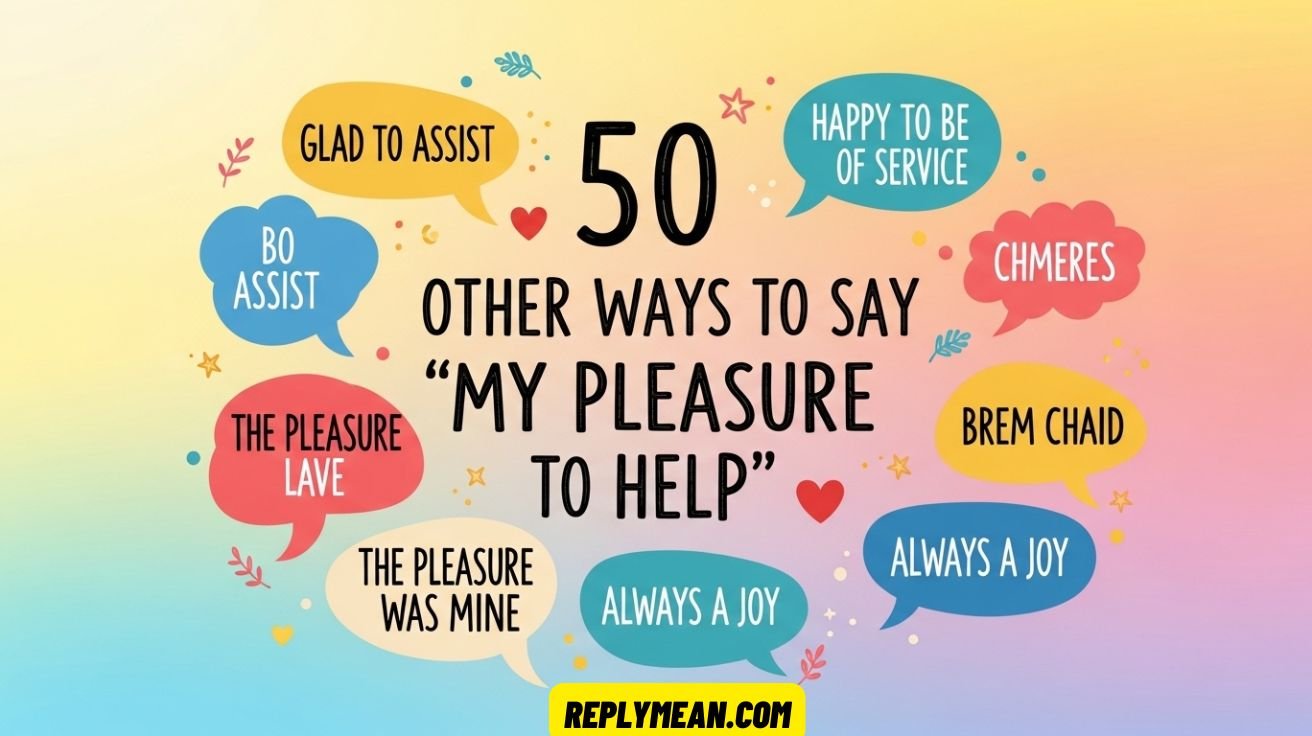
50 Other Ways to Say “My Pleasure to Help” 😊 (Professional & Friendly Alternatives for Every Situation)
“My Pleasure to Help” means you feel happy and willing to assist someone. It shows that helping was not a burden. The phrase expresses kindness and a positive attitude.
Many people use “My Pleasure to Help” every day in emails and conversations. But using the same words again and again can sound repetitive. Learning new ways to say it can make your speech more natural and warm.
“My Pleasure to Help” is common in schools, offices, and customer service. It sounds polite and respectful in professional settings. Choosing the right words can improve your communication and build better relationships.
Why You Should Use Alternatives to “My Pleasure to Help” in Professional Communication
In today’s fast-moving business world, communication matters more than ever. Whether you are replying to a client, coworker, or customer, the way you respond can shape your professional image. Using the same phrase repeatedly can make your message feel less genuine.
Learning polite responses to thank you and understanding how to respond to thank you properly shows strong professional communication skills. In the United States, communication is often direct, warm, and friendly. That means people appreciate natural language over stiff or overly formal wording.
When you explore alternative phrases for my pleasure, you improve your business communication phrases and strengthen your workplace professionalism. This helps in building professional relationships, especially in client-facing roles.
Research in workplace psychology shows that personalized responses increase trust. Using thoughtful gratitude responses instead of robotic replies creates stronger emotional connections.
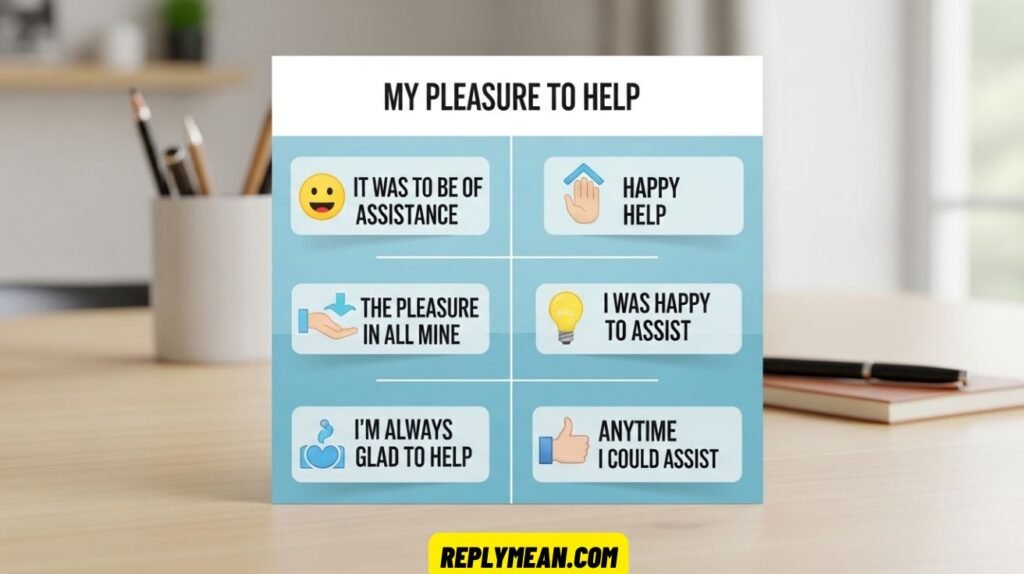
Here is a simple comparison table that shows how tone can change perception:
| Phrase | Tone | Best For |
| My pleasure | Polite but formal | Customer service |
| Happy to help | Warm and friendly | Workplace chats |
| Glad I could assist | Professional | Client emails |
| Anytime | Casual | Text or team chat |
When to Say “My Pleasure to Help” (And When to Choose a Better Alternative)
There are moments when “My pleasure” works well. In hospitality, banking, healthcare, and corporate support roles, it still sounds professional. But in casual American office culture, a more relaxed tone is often preferred.
In corporate emails, using professional email closing lines such as “Glad I could assist” or “Happy to support” may sound more natural. These are strong email response alternatives and fit well within business email etiquette.
In customer service, your brand voice matters. Many companies train employees to use warm and natural customer service response phrases. These phrases improve customer support language and encourage loyalty.
In friendly conversations, people prefer conversational tone examples. Saying “No worries” or “I’ve got your back” can feel more personal. Choosing the right phrase shows emotional intelligence and strong positive communication skills.
Alternatives to Say “My Pleasure to Help”
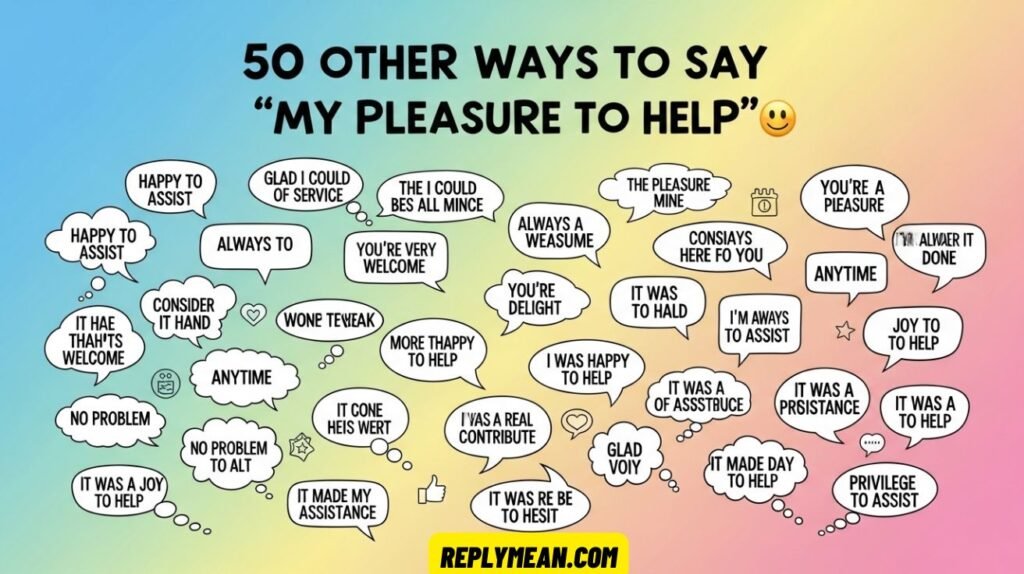
The following sections explore the first 12 required alternatives in depth, with examples and guidance for American audiences.
1. Happy to help
“Happy to help” is one of the most common and natural helpful reply phrases in the USA. It feels friendly without being too casual. It works in emails, Slack messages, and face-to-face conversations.
It fits well in workplace communication examples because it sounds positive and approachable. It also works as one of the best casual ways to say happy to help.
Example in email:
“I’ve attached the updated file. Happy to help if you need anything else.”
This phrase expresses expressing willingness to assist while maintaining professionalism.
2. Always glad to support
This phrase is slightly more formal and works well in management or leadership roles. It sounds dependable and reliable.
It fits into supportive response phrases and shows long-term commitment. It is commonly used in client communication phrases.
Example:
“Always glad to support your team’s success.”
This wording shows service-oriented language and strengthens trust.
3. Don’t mention it
This phrase is casual and friendly. It works best in relaxed environments.
It is one of the classic polite conversation phrases used in everyday American speech. However, avoid it in highly formal emails.
Example:
“Don’t mention it. I was happy to step in.”
It works well as a friendly reply to appreciation.
4. Anytime!
This short response is energetic and positive. It is popular in remote work chats.
It is among the simplest phrases to show support and works well in quick responses.
Example:
“Anytime! Just let me know.”
This is perfect for quick responding to thank you messages.
5. I’m here for you
This phrase adds emotional support. It is ideal for mentorship, HR roles, or personal support situations.
It reflects empathetic communication and strengthens relationships.
Example:
“I’m here for you if you need anything.”
It shows genuine care beyond just task completion.
6. It was nothing
This phrase shows humility. It downplays your effort and makes the other person feel comfortable.
It fits into courteous expressions and relaxed friendly workplace phrases.
Example:
“It was nothing, I’m glad it worked out.”
7. Glad I could assist
This is one of the strongest formal alternatives to my pleasure. It sounds professional and polished.
It works especially well in official emails and fits perfectly within professional ways to say my pleasure.
Example:
“Glad I could assist. Please reach out if you need more support.”
This also works as a closing line in warm email responses.
8. You’re very welcome
This phrase is timeless and respectful. It works in nearly every setting.
It is one of the safest kind ways to reply to thanks and can be used in both casual and formal settings.
9. No trouble at all
This phrase removes any feeling of burden.
It fits well among helpful reply phrases and creates ease in conversation.
Example:
“No trouble at all, happy to help again.”
10. That’s what I’m here for
This phrase works especially well in customer-facing roles.
It reflects customer service response phrases and emphasizes your role and purpose.
Example:
“That’s what I’m here for. Let me know if you need anything else.”
11. I’ve got your back
This is a strong, supportive phrase often used in team settings.
It builds camaraderie and reflects friendly workplace phrases.
Example:
“I’ve got your back on this project.”
12. Anything for you
This phrase is warm and personal. Use it carefully in professional settings.
It is best suited for close colleagues or trusted clients.
Example:
“Anything for you. Happy to help anytime.”
13. More than happy to help
This phrase adds extra warmth and enthusiasm. It feels stronger than simply saying “happy to help” and shows genuine excitement about supporting someone. It works well in both professional and friendly settings.
Example:
“I’m more than happy to help with the next phase of the project.”
This option fits perfectly among better ways to say my pleasure because it sounds sincere and positive.
14. You can count on me
This phrase builds trust and reliability. It reassures the other person that you are dependable. It works very well in team environments and leadership roles.
Example:
“You can count on me to handle the client follow-up.”
It strengthens long-term relationships and supports building professional relationships.
15. Not a problem at all
This is a calm and reassuring response. It removes any feeling of inconvenience. Americans often use this in casual and semi-professional settings.
Example:
“Not a problem at all. I’m glad we resolved it.”
It works well in everyday responding to thank you messages.
16. My pleasure
This is the shorter version of “My pleasure to help.” It remains polished and professional, especially in hospitality and service industries.
Example:
“My pleasure. Let us know if you need anything else.”
It remains one of the most recognized formal alternatives to my pleasure.
17. Delighted to assist
This phrase sounds polished and slightly elevated. It works well in corporate settings, consulting, or high-level client communication.
Example:
“I’m delighted to assist with your expansion plans.”
This reflects strong workplace professionalism.
18. At your service
This phrase sounds service-oriented and confident. It is common in hospitality, luxury brands, and customer-facing roles.
Example:
“At your service whenever you need support.”
It clearly expresses expressing willingness to assist.
19. I’m glad to be of help
This phrase is humble and sincere. It fits nicely in professional emails.
Example:
“I’m glad to be of help. Please feel free to reach out again.”
It works well as one of many email response alternatives.
20. It’s my honor
This phrase carries respect and appreciation. It is often used in meaningful collaborations or when helping someone important to you.
Example:
“It’s my honor to support your initiative.”
It conveys strong courteous expressions.
21. Happy to assist further
This phrase extends the offer of help beyond the current task. It is excellent in professional email threads.
Example:
“Happy to assist further if you need additional clarification.”
It strengthens your professional email closing lines.
22. Always at your service
This phrase shows ongoing support. It works best in customer service or client-based businesses.
Example:
“Always at your service for any future needs.”
It highlights service-oriented language.
23. No worries
This casual American phrase is widely used in relaxed environments. It keeps the tone light and friendly.
Example:
“No worries. Glad it worked out.”
It fits well among casual ways to say happy to help.
24. Sure thing
This phrase is confident and quick. It works well in team chats or informal workplace settings.
Example:
“Sure thing. I’ll send it over right away.”
It feels natural in modern American offices.
25. Of course
This simple phrase shows that helping was expected and welcome.
Example:
“Of course. I’m happy to support.”
It remains one of the most common polite responses to thank you.
26. Absolutely
This word sounds confident and enthusiastic. It works well in sales and leadership roles.
Example:
“Absolutely. I’m glad I could help.”
It communicates positivity and strong positive communication skills.
27. You bet
This phrase is friendly and informal. It is common in American speech but best avoided in formal emails.
Example:
“You bet. Anytime you need support.”
It is ideal as a friendly reply to appreciation.
28. Anytime at all
This phrase emphasizes availability. It is warm and reassuring.
Example:
“Anytime at all. I’m always here to help.”
It supports ongoing communication.
29. No big deal
This casual phrase downplays the effort. It is best used with coworkers or friends.
Example:
“No big deal. Glad it worked out.”
It keeps conversations relaxed and human.
30. Happy to jump in
This phrase suggests initiative and teamwork.
Example:
“I’m happy to jump in whenever needed.”
It reflects strong professional communication skills.
31. I’m glad it worked out
This phrase focuses on the positive result rather than the effort.
Example:
“I’m glad it worked out for your presentation.”
It shows attention and care.
32. Just doing my part
This phrase sounds humble and team-oriented.
Example:
“Just doing my part to support the team.”
It supports strong workplace communication examples.
33. It truly made my day
This heartfelt phrase shows emotional warmth.
Example:
“It truly made my day to help you succeed.”
It is ideal for meaningful collaborations.
34. I’m grateful I could help
This phrase flips the appreciation back to you.
Example:
“I’m grateful I could help with your project.”
It builds mutual respect.
35. Always here if you need me
This phrase emphasizes availability and trust.
Example:
“Always here if you need me in the future.”
It strengthens long-term support.
36. It means a lot to help
This phrase shows emotional connection.
Example:
“It means a lot to help your team grow.”
It deepens relationships.
37. I’m honored to help
This phrase sounds respectful and appreciative.
Example:
“I’m honored to help with this opportunity.”
It works well in mentorship roles.
38. That’s what friends are for
This phrase is best used in personal relationships.
Example:
“That’s what friends are for.”
It creates emotional closeness.
39. It was my joy
This phrase closely connects to the original meaning but sounds warmer.
Example:
“It was my joy to support your idea.”
It fits among warm response phrases.
40. Count me in anytime
This phrase shows commitment and enthusiasm.
Example:
“Count me in anytime you need backup.”
It promotes teamwork.
41. I appreciate the opportunity to help
This professional phrase shows gratitude and humility.
Example:
“I appreciate the opportunity to help your organization.”
It enhances business email etiquette.
42. It’s the least I could do
This phrase expresses modesty.
Example:
“It’s the least I could do after your support.”
It works well in mutual relationships.
43. I’m always just a call away
This phrase emphasizes accessibility.
Example:
“I’m always just a call away if anything comes up.”
It builds confidence and reassurance.
44. Let me know anytime
This is simple and open-ended.
Example:
“Let me know anytime you need clarification.”
It works in emails and chats.
45. Proud to support you
This phrase expresses pride and loyalty.
Example:
“Proud to support your mission.”
It shows strong commitment.
46. I’m glad to be part of this
This phrase shows involvement and teamwork.
Example:
“I’m glad to be part of this exciting project.”
It strengthens collaboration.
47. Always happy to step in
This phrase shows readiness.
Example:
“Always happy to step in when needed.”
It signals dependability.
48. Here whenever you need
This is a shorter supportive phrase.
Example:
“Here whenever you need support.”
It is reassuring and direct.
49. Happy to lend a hand
This phrase sounds friendly and cooperative.
Example:
“Happy to lend a hand anytime.”
It reflects teamwork and kindness.
50. It was a pleasure
This phrase is polished and professional. It is especially strong in formal communication.
Example:
“It was a pleasure working with you.”
It remains one of the most respected and widely accepted alternatives in American business culture.
See Also : 50 Other Ways to Say “Welcome Back” – Creative, Professional
Why Saying “My Pleasure to Help” Still Matters in 2026
Even though many new phrases exist, “My pleasure to help” remains a strong and respectful response in American workplaces. It communicates kindness, professionalism, and willingness. In customer service and corporate settings, it still carries a polished tone that shows appreciation without sounding overly casual or dismissive in serious business conversations.
However, language continues to evolve. In modern offices and remote teams, people often prefer warmer, more natural responses. While the phrase is still correct, using fresh alternatives can make you sound more authentic and approachable. Balance tradition with personality to create stronger, more meaningful communication every day.
How Tone Changes the Meaning of Your Response
The tone you use when replying to “thank you” can completely change how your message feels. A formal reply may sound respectful but distant, while a casual one may sound friendly yet less professional. Understanding tone helps you choose the right words for each specific situation or audience.
In American business culture, tone often depends on context. A manager emailing a client may choose a polished response, while teammates chatting on Slack might use something shorter and warmer. Paying attention to tone improves clarity, strengthens relationships, and helps you avoid misunderstandings in daily communication.
Professional Alternatives for Corporate Emails
In formal business settings, it’s important to maintain credibility and clarity. Responses like “Glad I could assist” or “Happy to support your team” sound professional and confident. These phrases fit well in structured email conversations and align with modern corporate communication standards in the United States.
Professional alternatives also show reliability. They communicate that helping is part of your responsibility, not a burden. When used consistently, they enhance your image as dependable and respectful. Choosing refined wording in business emails can leave a lasting positive impression on clients and colleagues alike.
Friendly Responses for Casual Conversations
Not every situation requires formal language. In casual settings, simple responses like “Anytime!” or “No worries” feel natural and relaxed. These phrases are common in American culture and work especially well among coworkers, friends, or peers in informal discussions.
Using friendly responses builds comfort and openness. It signals that helping was easy and enjoyable. In team environments, casual replies can strengthen trust and teamwork. Just remember to match your tone to the situation so your response feels appropriate and genuine.
Supportive Phrases That Build Trust
Sometimes people need more than help with a task. They need reassurance. Phrases such as “I’m here for you” or “You can count on me” go beyond simple politeness. They communicate emotional support and reliability, which strengthens professional and personal relationships over time.
Supportive responses are especially valuable in leadership roles. Managers who express encouragement create a safe and positive environment. These phrases build confidence and loyalty because they show consistent availability. Over time, supportive language fosters deeper trust within teams and organizations.
Customer Service Language That Creates Loyalty
In customer service roles, the right response can influence satisfaction and retention. Saying “That’s what I’m here for” or “Always happy to help” reinforces a service mindset. Customers appreciate language that feels attentive, respectful, and solution-focused rather than scripted.
American consumers value efficiency and warmth. When responses sound human and caring, customers feel respected. Consistent, positive replies build brand trust and encourage repeat business. Simple wording choices can directly impact how customers view your professionalism and reliability.
See Also : 50 Other Ways to Say “Hope All Is Well”
How to Sound More Genuine When Responding to “Thank You”
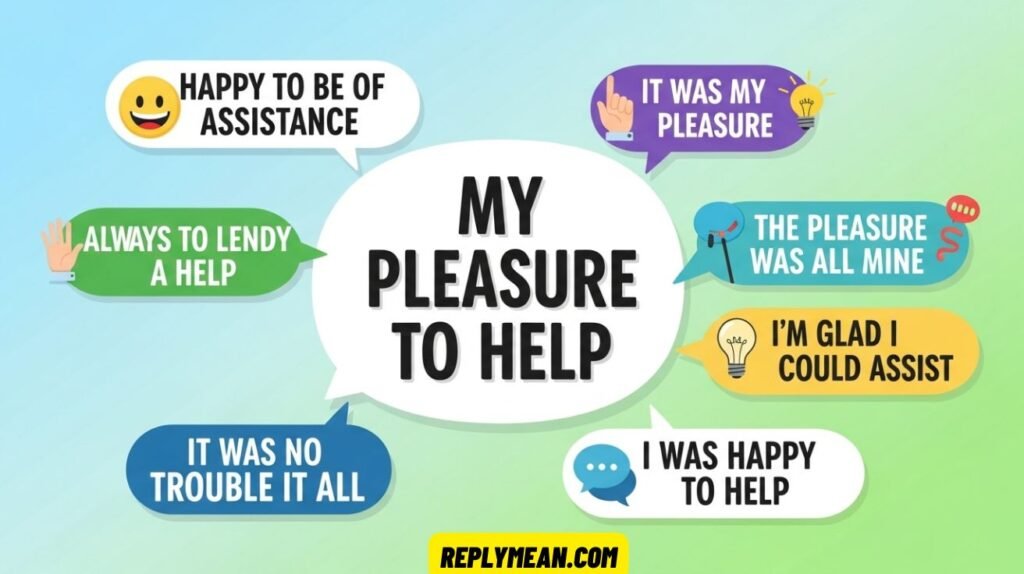
If you want your message to feel real, follow these simple principles.
First, match your tone to the relationship. Second, avoid repeating the same phrase daily. Third, personalize when possible. Adding a short sentence like “I’m glad it helped your presentation succeed” shows effort.
Strong communication uses appreciation reply examples that feel human. Whether you choose formal or casual wording, always focus on sincerity.
As communication expert Dale Carnegie once said, “People rarely succeed unless they have fun in what they are doing.” When your response sounds warm and natural, people feel your positive energy.
FAQs
How do I say it’s my pleasure to help?
You can say, “I’m glad I could assist” or “It was truly my pleasure.”
Both sound warm, professional, and sincere in emails or conversations.
What does pleasure to help mean?
It means you enjoyed helping and did not see it as a burden.
The phrase shows kindness, willingness, and a positive attitude.
How do I say “my pleasure” in a formal way?
You can say, “I was delighted to assist” or “It was an honor to help.”
These sound polished and suitable for professional settings.
What to say instead of “happy to help”?
Try “Always glad to support” or “More than happy to assist.”
These alternatives feel fresh while still sounding friendly and professional.
Final Thought
Using different ways to say “My Pleasure to Help” makes your speech and writing stronger. Words show your character and attitude. When you choose kind and clear phrases, people respect you more. Good communication builds trust in school, work, and daily life. Simple changes in language can make you sound more confident and sincere. Strong vocabulary also helps you grow.
You can still use “My Pleasure to Help” when it fits the situation. The phrase sounds polite and respectful. However, you should also learn other expressions. This skill improves your communication and helps you connect with others. Clear and warm responses create better relationships. When you speak with care, your message feels honest and meaningful.