25 Other Ways to Say Safe Travels (Warm, Smooth & Sincere)
“Safe travels” gets said at every door, gate and driveway until it stops sounding like a wish. Anyone looking up safe travels meaning is looking for what the phrase promises — and for a fresher way to promise it. The twenty-five Other Ways to Say Safe Travels here are sorted by the compass test: which direction each wish points.
Point a wish at the danger and it guards. Point it at the road and it smooths. Point it at the fun, the discovery or the bond between you, and the same goodbye changes errand entirely — which is why one phrase can comfort a nervous flyer and bore a honeymooner in the same airport.
Each entry carries a grade, one worked example and a plain note on where the phrase belongs — and where it points wrong: a blessing spent on a bus ride, a party wish sent to a worried parent. Start with the shelf, and the right send-off is usually obvious.

Sorting the Twenty-Five by the Compass Test
Quick answer: other ways to say safe travels sort by the compass test — which direction the wish points. Guard forms point at the danger, glide forms at an easy road, glow forms at the fun, quest forms at the discovery, and grace forms at the bond.
Read in one pass, the twenty-five blur into a single kind goodbye. Read one at a time, they separate by a plainer question: what is the wish actually aimed at — the risk, the road, the pleasure, the unknown, or the person?
Five guard the traveller, five smooth the road, five wish the fun, five wish the discovery, and five bless the parting itself. The grade under each entry names its shelf before anything else.
The Guard Shelf First, the Glide Shelf Second
Guard forms point at the danger — safety named outright: “Safe Journeys”, “Take Care on the Road”, “Safe Journey Ahead”, “Wishing You Safe Passage” and “Travel Safe and Have Fun”. These five speak to the worry in the room, which is why they suit nervous flyers, long drives and anyone travelling alone.
Glide forms point at the road itself — ease wished over every mile: “Travel Well”, “Smooth Sailing”, “Wishing You a Smooth Journey”, “May Your Path Be Clear” and “Go Well”. These five promise no drama: no delays, no trouble, nothing to report but arrival.
Ten forms, one shared rule: a wish aimed at the danger comforts, and a wish aimed at the road reassures. Spend the guard forms where worry is real and the glide forms where it is not, and neither sounds like more than it means.
The Glow Shelf Third, the Quest Shelf Fourth
Glow forms point at the fun — pleasure wished first and loudest: “Have a Great Trip”, “Enjoy Your Travels”, “Happy Travels”, “Wishing You Joyful Travels” and “Enjoy the Ride”. These five belong to holidays and honeymoons, where safety goes without saying and joy is the whole assignment.
Quest forms point at the discovery — the trip wished large: “Journey On”, “Have an Amazing Journey”, “Don’t Forget to Breathe and Explore”, “Wishing You Great Adventures” and “Enjoy the Journey Ahead”. These five treat the road as the prize, sized for gap years, first solos and one-way tickets.
The Grace Shelf to Finish
Grace forms point at the parting itself — the goodbye blessed, or bridged: “Bon Voyage”, “Godspeed”, “Catch You on the Flip Side”, “See You Soon” and “Onward with Courage”. These five do ceremony or promise: they dress the farewell up, or reach across it to the reunion waiting at the far end.
The Check Every Send-Off Has to Pass
One discipline runs through every note here, borrowed from our guide to a funny reply when someone says busy. That guide sorts replies by the depth each word claims; a send-off deserves the same audit, pointed at where the wish aims.
The audit is one question. Which direction does this phrase point — guard, glide, glow, quest or grace — and is that the direction this traveller, on this trip, actually needs wished at? A wish matched to the journey lands as care; a wish pointed elsewhere lands as noise.
“Onward with courage” is the classic mis-pointing: a grace form spent on a routine commute, in a thread where its battlefield music reads as melodrama instead of love. The trip is small; the wish marches it to war.
Alternatives to “Safe Travels”
1. Travel Well
The glide entry: the whole journey wished well in two words — road, weather, timing and traveller folded into one quiet hope. It presumes an ordinary trip done ordinarily well: no adventure promised, no danger named, just everything behaving.
Its quietness is its fence. The form blesses without picturing anything, so a reader hunting for warmth gets good manners instead; in a tender goodbye it can sound like a card signed by a colleague. Grade: A — glide-led, quiet ground.
- “Travel well — window seat, good book, and home by Sunday, please.”
- Best for: colleagues, neighbours and every unremarkable, welcome trip
- Skip it: tender goodbyes, where quiet reads as distance
2. Bon Voyage
The ceremony entry: a borrowed French blessing that dresses a departure like an occasion — the gangway, the confetti, the long trip properly launched. It presumes scale: a voyage, a honeymoon, a move abroad, a journey with a before and an after.
Its ceremony is its fence. Spent on a two-stop train ride, the confetti lands on a commute and the blessing curdles into sarcasm; the phrase needs a trip large enough to carry its hat. Grade: A — grace-led, ceremony ground.
- “Bon voyage! Three countries, one backpack — write to us from every one.”
- Best for: honeymoons, big voyages and departures with an audience
- Skip it: commutes and errands, where the ceremony mocks the trip
3. Have a Great Trip
The glow entry: enjoyment wished in plain clothes — no safety, no ceremony, just the hope that the trip is great. It presumes a trip taken for pleasure: a holiday, a visit, a weekend with a plan and a camera.
Its plainness is its fence. Aimed at a worried traveller, the fun-first wish skips the fear entirely and can sound careless; where nerves are the news, greatness is the second wish, not the first. Grade: A− — glow-led, plain ground.
- “Have a great trip — eat everything, photograph everything, rest on the plane home.”
- Best for: holidays and visits, where pleasure is the plan
- Skip it: anxious departures, where the fear needs naming first
4. Journey On
The quest entry: travel wished as a continuing story — two words that treat the trip as one chapter in a longer wandering. It presumes a traveller who collects places: the gap-year student, the slow tourist, the friend who never quite unpacks.
Its poetry is its fence. The form speaks in chapter headings, and a colleague catching a work flight hears a greeting card where a goodbye should be; poetry needs a reader who collects it. Grade: B+ — quest-led, poetry ground.
- “Journey on — new city, new chapter; send the highlights when you land.”
- Best for: wanderers, gap years and slow, open-ended travel
- Skip it: work flights, where the poetry floats past the reader
5. Godspeed
The blessing entry: an old, formal charge that wishes the traveller speed and safety under one solemn word. It presumes weight: a deployment, a mission, a move with no return date, a departure the whole family has gathered for.
Its solemnity is its fence. The word carries a church and a parade ground inside it; spent on a beach holiday it lands like a speech at a picnic, and the traveller laughs at the wrong moment. Grade: A — grace-led, blessing ground.
- “Godspeed — go well, go safely, and come back to a house that missed you.”
- Best for: weighty departures, missions and moves without a return date
- Skip it: beach holidays, where the solemnity becomes a joke
6. Enjoy Your Travels
The glow entry: the plural wished a good time — travels, not a trip, the whole season of moving around blessed at once. It presumes duration: a tour, a sabbatical, a summer of trains, more than one bed and one border.
Its breadth is its fence. Aimed at a single overnight trip, the plural overshoots and the wish sounds copied from a longer goodbye; one night does not need a season wished over it. Grade: A− — glow-led, breadth ground.
- “Enjoy your travels — every train, every town, every terrible hostel breakfast.”
- Best for: tours, sabbaticals and summers spent moving
- Skip it: single overnight trips, where the plural overshoots
7. Safe Journeys
The guard entry: the replaced phrase with its shoulders straightened — safety wished in the plural, formal enough for a card, plain enough for a text. It presumes more than one leg: out, around and home again, each stretch covered.
Its formality is its fence. Between close friends the plural can read as distance, a greeting-card voice where a hug was expected; intimacy sometimes wants the worry said messier. Grade: A — guard-led, formal ground.
- “Safe journeys, both ways — out into the adventure and home to us.”
- Best for: cards, colleagues and multi-leg trips
- Skip it: the closest goodbyes, where formality reads as distance
8. Smooth Sailing
The glide entry: the trip wished free of friction in a sailor’s picture — calm water, fair wind, nothing snagging. It presumes a route that could snag: connections, weather, paperwork, the usual places a journey catches.
Its picture is its fence. The sea lives inside the phrase, so a traveller driving through a desert hears a borrowed metaphor; pictures persuade only when the reader can stand inside them. Grade: A — glide-led, picture ground.
- “Smooth sailing all the way — no queues, no delays, just the good seats.”
- Best for: cruises, ferries and any trip with connections to survive
- Skip it: literal desert drives, if borrowed pictures bother the reader
9. Catch You on the Flip Side
The bridge entry: no wish for the road at all — the goodbye is skipped clean over, and the reunion does the talking. It presumes closeness and a return: mates, siblings, anyone whose absence is measured in days.
Its breeziness is its fence. The flip side presumes a flip side; sent to someone emigrating, the promised reunion is a fiction both sides can hear, and the joke lands on the sore spot. Grade: B+ — grace-led, bridge ground.
- “Catch you on the flip side — trip of a lifetime, then straight back to us.”
- Best for: close friends and short, certain absences
- Skip it: emigrations and open-ended leaves, where no return is promised
10. Have an Amazing Journey
The quest entry: the journey wished not just good but amazing — size and wonder turned up in one adjective. It presumes a trip with wonder available: new countries, first mountains, a route planned around looking at things.
Its size is its fence. Amazing is a large promise to pin on a work trip to a conference centre; spent on the ordinary, the adjective inflates and the next real adventure gets small change. Grade: A− — quest-led, wonder ground.
- “Have an amazing journey — first passport stamp, first mountain, all of it.”
- Best for: first big trips, honeymoons and wonder-heavy routes
- Skip it: routine work trips, where amazing inflates the currency
11. Take Care on the Road
The guard entry: care wished where care is actually practised — on the road, in the driving, mile by mile. It presumes wheels: a road trip, a long drive home, a traveller whose hands, not a pilot’s, hold the journey together.
Its literalness is its fence. Aimed at a flyer, the road is the wrong element and the care sounds unbriefed; the phrase protects drivers, and passengers need a wish built for cabins. Grade: A — guard-led, road ground.
- “Take care on the road — breaks every two hours, and text me at the motel.”
- Best for: road trips and long drives home
- Skip it: flights, where the road is the wrong element
12. Happy Travels
The glow entry: happiness wished over the whole moving season — bright, brief and entirely unbothered by risk. It presumes goodwill and a leisure frame: the phrase is a smile in word form, built for cards, captions and doorways.
Its brightness is its fence. Sent to a traveller flying home for a funeral, the cheer arrives tone-deaf; the glow shelf assumes a trip nobody is dreading, and dread changes the lighting. Grade: A — glow-led, bright ground.
- “Happy travels! May every delay be short and every café be excellent.”
- Best for: holiday cards, captions and cheerful doorways
- Skip it: sad journeys, where the cheer lands tone-deaf
13. Safe Journey Ahead
The guard entry: safety wished forward, at the road still to come — the journey named as a stretch lying in front of the traveller. It presumes a departure about to happen: bags packed, engine running, the wish timed for the threshold.
Its timing is its fence. The ahead expires once the trip is under way; sent mid-journey it wishes at a road already travelled, and the traveller hears a card that missed its moment. Grade: A — guard-led, threshold ground.
- “Safe journey ahead — the hard part is the packing, and that is done.”
- Best for: doorsteps, departures and the night before travel
- Skip it: mid-journey messages, where the ahead has already passed
14. Wishing You Safe Passage
The guard entry: passage wished safe in older, weightier words — the traveller imagined crossing something: water, borders, weather, distance itself. It presumes a crossing with stakes: a sea voyage, a winter route, a journey people once wrote letters about.
Its weight is its fence. The old words creak on a budget flight; spent on a ninety-minute hop, the passage sounds like a novel chapter and the traveller checks for irony. Grade: A− — guard-led, crossing ground.
- “Wishing you safe passage — calm seas, clear skies, and a warm welcome waiting.”
- Best for: sea crossings, winter routes and journeys with real stakes
- Skip it: short hops, where the old weight creaks
15. Don’t Forget to Breathe and Explore
The quest entry: not a wish but a gentle instruction — presence ordered kindly, the traveller told to slow down inside the trip. It presumes a rushed or anxious traveller: someone likely to sprint past the very places they travelled to see.
Its bossiness is its fence. The phrase gives homework inside a goodbye; a confident traveller hears a lecture wearing a wish’s coat, and the coat fits only where worry is visible. Grade: B+ — quest-led, instruction ground.
- “Don’t forget to breathe and explore — sunsets first, schedules second, always.”
- Best for: rushed, anxious travellers who sprint past places
- Skip it: confident travellers, where the advice sounds like a lecture
16. See You Soon
The bridge entry: the shortest promise in the set — the trip skipped, the return dated with a single warm word, soon. It presumes a return that is genuinely soon: a weekend away, a short course, a visit with a booked train home.
Its promise is its fence. Soon is a claim about the calendar; stretched over a year abroad it becomes a polite fiction, and both sides hear the stretch every time it is repeated. Grade: A — grace-led, promise ground.
- “See you soon — go, glow, and be back at this table by Friday.”
- Best for: weekends away and absences with a booked return
- Skip it: year-long leaves, where soon becomes a fiction
17. Wishing You a Smooth Journey
The glide entry: smoothness wished in full sentence dress — formal, complete and calm, the wish with its tie straightened. It presumes a formal reader: a client, a senior colleague, a family elder, anyone who reads care in completeness.
Its dress is its fence. In a group chat the full sentence arrives overdressed, a suit at a barbecue; close friends read ceremony where a two-word wish would have hugged them. Grade: A — glide-led, formal ground.
- “Wishing you a smooth journey — and an even smoother welcome when you arrive.”
- Best for: clients, elders and formal cards
- Skip it: group chats, where the full dress reads as ceremony
18. May Your Path Be Clear
The glide entry: the road wished clear in blessing language — obstacles lifted, weather kind, the way opened ahead. It presumes a traveller facing unknowns: a new country, a mountain route, a journey whose map has blank edges.
Its blessing is its fence. The raised, prayer-shaped phrasing suits readers who welcome blessings; to a brisk, secular colleague it can arrive as incense in an inbox, sincere and slightly scented. Grade: B+ — glide-led, blessing ground.
- “May your path be clear — green lights, open roads, and kind strangers.”
- Best for: uncertain routes and travellers who welcome a blessing
- Skip it: brisk formal threads, where the incense over-perfumes
19. Onward with Courage
The grace entry: a charge, not a comfort — the traveller sent forward like a soldier or a pioneer, chin up, into something hard. It presumes hardship worth honouring: a move for treatment, a posting, a journey taken because staying was worse.
Its drama is its fence. Spent on a holiday, the charge salutes a sunbather; the phrase needs real weight ahead, and pointed at a beach it becomes a costume the trip never asked for. Grade: B+ — grace-led, charge ground.
- “Onward with courage — the hard journey, the brave traveller, our whole hearts behind you.”
- Best for: brave departures, postings and journeys into hardship
- Skip it: holidays, where the salute lands on a sunbather
20. Travel Safe and Have Fun
The guard entry: both wishes in one breath, safety named first and fun riding second — the whole doorway covered in six words. It presumes a trip where both are live: teenagers travelling, friends on a first road trip, fun planned inside real risk.
Its doubleness is its fence. The fun half can undercut the guard half for a worried reader, who hears permission where they wanted protection; order matters, and safety must stay first. Grade: A — guard-led, double ground.
- “Travel safe and have fun — in that order, and text me from both halves.”
- Best for: young travellers and first independent trips
- Skip it: solemn departures, where the fun half undercuts the care
21. Wishing You Great Adventures
The quest entry: adventures wished in the plural — not one highlight but a run of them, the trip imagined as a string of stories. It presumes time and appetite: a backpacker, a sabbatical, a traveller whose plan is deliberately half empty.
Its appetite is its fence. Aimed at a traveller who wants rest, the plural adventures sound like a schedule; some trips are taken to recover, and adventure is the thing being rested from. Grade: A− — quest-led, appetite ground.
- “Wishing you great adventures — plural, unplanned, and retold at this table for years.”
- Best for: backpackers, sabbaticals and half-empty itineraries
- Skip it: rest trips, where adventure is what is being rested from
22. Enjoy the Journey Ahead
The quest entry: the travelling itself, not the arrival, wished enjoyable — the miles reframed as part of the holiday. It presumes a long way to go: a rail crossing, a road trip, a journey long enough to be an experience rather than a transfer.
Its patience is its fence. On a forty-minute hop there is barely a journey to enjoy, and the reframing lands on a transfer; the phrase needs miles before it can make a virtue of them. Grade: A — quest-led, miles ground.
- “Enjoy the journey ahead — the train window is half the holiday, watch it properly.”
- Best for: rail crossings, road trips and long scenic routes
- Skip it: short hops, where there is no journey to reframe
23. Wishing You Joyful Travels
The glow entry: joy wished formally, in full — the travels plural, the joy named outright, the sentence dressed for a card. It presumes a celebratory trip and a reader who likes warmth written out: retirees touring, newlyweds, families reuniting.
Its fullness is its fence. The complete, card-shaped sentence can swamp a quick text thread, where joy in two words hugs faster than joy in a paragraph of good tailoring. Grade: A− — glow-led, card ground.
- “Wishing you joyful travels — may the whole map treat you like a celebration.”
- Best for: cards for newlyweds, retirees and family reunions
- Skip it: quick text threads, where the full dress slows the hug
24. Enjoy the Ride
The glow entry: the ride wished fun in the language of fairs and front seats — casual, quick and slightly grinning. It presumes a ride worth grinning about: a road trip with friends, a scenic drive, a traveller who treats transport as entertainment.
Its grin is its fence. Ride language shrinks serious journeys; aimed at a medical trip or a move abroad, the grin miniaturises the moment and the traveller feels unseen inside it. Grade: B+ — glow-led, grin ground.
- “Enjoy the ride — shotgun rules apply: your playlist, my snacks, no complaints.”
- Best for: friend road trips and scenic drives
- Skip it: serious journeys, where the grin shrinks the moment
25. Go Well
The glide entry: two words carrying the whole wish — go, and go well; the road, the weather and the return folded into the smallest blessing in the set. It presumes a reader who trusts brevity: family shorthand, old friends, goodbyes said often and meant every time.
Its brevity is its fence. In a once-a-decade farewell the two words can look underfed, a postcard where a letter was owed; rare goodbyes need the wish written at full length. Grade: A — glide-led, brevity ground.
- “Go well — and come back well; that is the whole wish, both directions.”
- Best for: family shorthand and frequent, familiar goodbyes
- Skip it: rare, weighty farewells, where brevity looks underfed
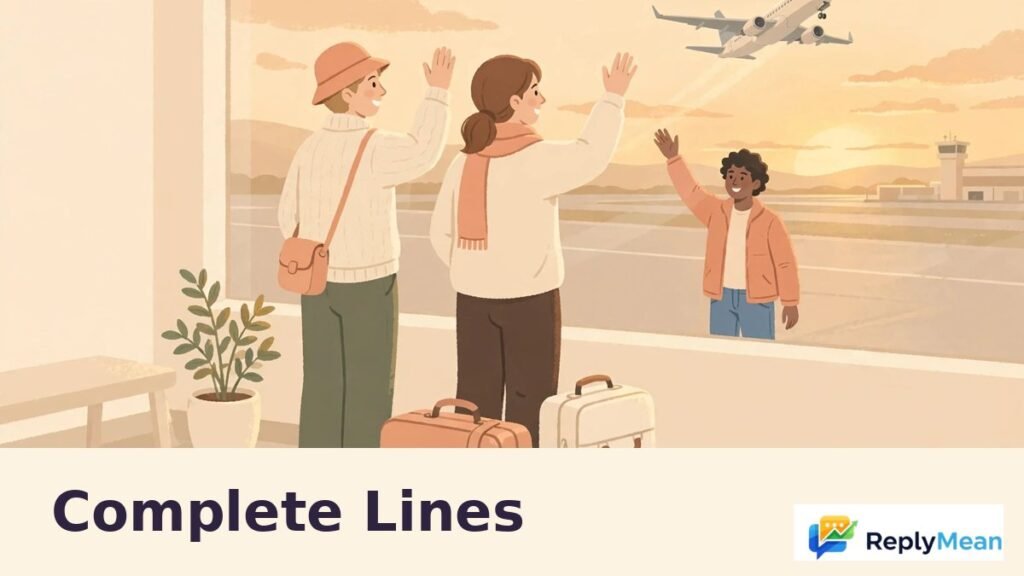
Complete Lines: The Send-Off in a Finished Sentence
A phrase still needs its sentence around it before it can travel. The ten lines here are finished — wish, trip and a door left open — ready for the card, the doorstep and the last text before the phone goes dark.
- For the nervous first-time flyer: “Safe journeys — window or aisle, you have got this, and I will be tracking snacks-side.”
- For the daughter driving through the night: “Take care on the road — breaks, fuel, phone charged; text me at every stop, no exceptions.”
- For the honeymoon couple at the gate: “Bon voyage, you two — may the trip be half as good as the marriage already is.”
- For the colleague flying to the conference: “Travel well — land sharp, present sharper, and bring back the good coffee story.”
- For the friend starting a gap year: “Wishing you great adventures — plural, unplanned, and at least one that scares you kindly.”
- For the parent touring by train: “Enjoy the journey ahead — window seat, slow miles, and ring me from somewhere beautiful.”
- For the soldier leaving on posting: “Godspeed — go steady, stay safe, and know this house counts the days with pride.”
- For the neighbour off on a cruise: “Smooth sailing, literally this time — calm seas and a captain who tells good stories.”
- For the sister moving abroad: “Go well, love — new city, brave heart, and my sofa permanently reserved for your visits.”
- For the mate back next weekend: “See you soon — have the trip, take the photos, be at ours Sunday for the full report.”
When the Send-Off Lands Wrong
A wish pointed the wrong way rarely sounds wrong while you say it — it sounds wrong in the doorway, in the half-second after it lands. Four repairs follow, each one a move from the wrong shelf to the right one.
“Bon Voyage” for the School Run
A parent waves off a child on a forty-minute school trip and reaches for the ceremony form out of habit. The confetti lands on a bus ride, the child grins at the wrong thing, and the blessing becomes the joke of the journey.
The repair steps down from grace to glide. “Go well” wishes the same road at the right size — two words, no hat, no gangway — and the child hears love instead of theatre.
“Happy Travels” for the Funeral Flight
A friend is flying home for a parent’s funeral and receives the brightest form in the set. The cheer arrives dressed for a holiday the traveller is not taking, and the glow reads as not having listened at all.
The repair steps across to the guard shelf and lowers its voice. “Safe journeys” wishes the only thing that matters on such a trip — arrival, held together — and leaves joy for a kinder season.
“Enjoy the Ride” for the Medical Trip
A colleague travelling for surgery is sent the grin form by a well-meaning team channel. The ride language shrinks a frightening journey into a fairground turn, and the colleague feels the whole room misunderstand the trip at once.
The repair steps up to grace and says the serious thing plainly. “Godspeed” honours the weight, wishes protection over it, and trusts the traveller to feel accompanied rather than entertained.
“Onward with Courage” for the Beach Week
A friend heading for seven days of deliberate idleness receives the battlefield charge as a joke that keeps going. The salute salutes a sunbather, the courage is invoiced to a deckchair, and the wish becomes fancy dress.
The repair steps across to the glow shelf and lets the trip be small on purpose. “Have a great trip” wishes exactly the pleasure that was booked — no drums, no banners, just greatness at beach scale.

Short Forms for Texts & Messages
Most send-offs are not delivered in speeches at all; they are typed one-handed into chats, captions and comment threads. The short forms keep the direction and drop the sentence — small enough for a status line, clear enough to be placed.
- “Safe journeys ✈️” — the guard form: safety, in a card voice.
- “Travel well 🌍” — the glide form: the whole road, wished well.
- “Bon voyage 🛳️” — the ceremony form: confetti, in two words.
- “Smooth sailing ⛵” — the picture form: no snags, fair wind.
- “Happy travels ☀️” — the glow form: sunshine, no worries attached.
- “Go well 👋” — the brevity form: the whole wish, folded small.
- “See you soon 🏠” — the promise form: the return, dated warmly.
- “Godspeed 🙏” — the blessing form: solemn, in a single word.
- “Enjoy the ride 🚗” — the grin form: front-seat energy.
- “Journey on 🧭” — the story form: the chapter, still open.
Frequently Asked Questions
What does “safe travels” mean?
It is a parting wish for an unharmed, untroubled trip: safety on the road out, ease along the way, and a sound arrival — with the return quietly included whenever the traveller is coming home again.
What can I say instead of “safe travels”?
Match the direction to the trip. Worry takes the guard forms — “safe journeys”, “safe journey ahead” — holidays take the glow forms, long routes take the glide forms, and big leavings take “bon voyage” or “godspeed”.
Is “bon voyage” only for boat trips?
No. The French blessing began around voyages by sea, but modern use covers any long or special journey — flights, honeymoons and moves abroad included. Save it for trips with scale; a commute cannot carry the ceremony.
Is “safe travels” correct, or should it be “travel safe”?
Both live happily in modern use. “Safe travels” wishes over the whole journey as a noun phrase, while “travel safe” instructs the travelling itself as a verb phrase — the first suits cards, the second suits doorsteps and drivers.
How do I wish a colleague a safe trip professionally?
Stay on the glide and guard shelves in full dress: “wishing you a smooth journey” or “safe journey ahead”. Each sounds complete in an email, wishes protection without familiarity, and closes the thread with care intact.
Conclusion
The twenty-five are one wish pointing five ways. Sort other ways to say safe travels by the compass test — guard, glide, glow, quest or grace — and the worn doorway phrase stops being a reflex.
Underneath every shelf sits the same small discipline: point the wish at what the trip actually holds — danger, road, pleasure, discovery or parting. The dictionary keeps a plain little entry for journey — the travelling every one of the twenty-five is wishing over — and the send-offs worth saying respect the direction and the traveller alike.