25 Other Ways to Say “Thank You for Your Understanding” (For Work Emails)
Some sentences get typed so often they stop being chosen. “Thank you for your understanding” thanks the reader for a patience they may not feel, in words they have read a hundred times. People look for other ways to say thank you for your understanding when the phrase starts apologising without apologising — and presuming agreement not yet given.
The twenty-five entries cluster tightly: seven thank the reader for patience in seven frames, four keep the word “understanding” itself, and one swaps in open-mindedness — a different virtue altogether. The last entry is not a thank-you at all, just a fragment with no act of thanking in it.
Each entry below gets the treatment that matters: what the line presumes about the reader, the register it carries, the messages it belongs in — plus three fresh lines. After the list: complete sign-offs, the cases where the standard phrase backfires, and short forms for chat. Ninety-five sendable lines in all.
Say What They Waited For, Not Just Thanks
Quick answer: the best other ways to say thank you for your understanding name the specific thing the reader did — waited, adapted, held a slot, read a long thread — instead of thanking them for a general attitude. Three checks sort the list. Presumption: does the line thank them for something they actually did, or for agreement they have not given? Fit: is the virtue named the one they showed — patience for a wait, flexibility for a change, kindness for an act? Register: could you say it to your largest client and your closest colleague without editing? A line that names the deed, fits the virtue and survives both readers will land; the bare phrase survives on habit alone.
Grouped by those checks, the twenty-five entries fall into three families. The patience family (1, 5, 6, 9, 15, 17, 20) is stocked seven deep because waiting is the commonest case — but the seven are not interchangeable: some are formal, one is a fragment, and one (“continued”) confesses how long the wait has been. The adaptation family (3, 13, 21, 22) belongs to changed plans, not delays, and misfires when nothing was rearranged. And the character family (11, 12, 14, 18) thanks the reader for a quality — grace, kindness, compassion, open-mindedness — which warms the line and risks overshooting, because each quality claims more about the reader than a delay usually earns.
One more check belongs to timing: this thank-you usually travels with an apology and a new date, and it is the last of the three the reader believes. It shares that Friday-email fragility with the send-off — the two lines that close a working week are this one and the weekend wish, and our guide to other ways to say have a great weekend makes the same point from the other side: a line typed on autopilot stops carrying meaning. Name the wait, give the new date, then thank — in that order the thanks reads as a record of what happened, not a form letter’s tail.
Alternatives to “Thank You for Your Understanding”
Here is the list itself — twenty-five entries, the patience family seven deep. Each entry is graded on what it presumes and where it belongs, then given three fresh lines.
1. I truly appreciate your patience
The benchmark of the list, and the entry the others are variations on. It names the actual virtue — patience — and “truly” does honest work, marking the thanks as meant rather than procedural. Its only weakness is popularity: readers have seen it often, though unlike the phrase it replaces, it at least says what is being thanked. Grade: the safe default — delays of any size.
- “The migration ran a day over. I truly appreciate your patience.”
- “I truly appreciate your patience — the revised draft is attached, and it is final.”
- “Sorry this took until Thursday. I truly appreciate your patience.”
2. Thank you for bearing with me
The endurance entry. “Bear with me” asks the reader to put up with the writer, which makes it warmer and more personal than the patience family — and more confessional: it admits the fault sits with you. Handle the spelling with care in writing: the phrase is “bear with me” (endure), and “bare with me” is a different and embarrassing sentence. Grade: spoken warmth, careful writing — one reader at a time.
- “Thank you for bearing with me while the figures were checked twice.”
- “One more form to sign — thank you for bearing with me.”
- “Thank you for bearing with me through the reschedule; Friday is confirmed.”
3. I’m grateful for your flexibility
The adaptation family’s lead entry. Flexibility is about changed plans — moved meetings, swapped deadlines, revised scope — not about waiting, and the line lands precisely when something was rearranged and lands oddly when the reader simply waited. “Grateful” runs a half-step warmer than “appreciate”. Grade: reschedules and scope changes — not plain delays.
- “I’m grateful for your flexibility on the new start date.”
- “Swapping the workshops around was a lot to ask — I’m grateful for your flexibility.”
- “I’m grateful for your flexibility while we re-cut the schedule.”
4. Thanks for being so understanding
The first of the four entries that keep the word “understanding” — so as an alternative it changes the music rather than the words. What it does add is “being so”: the thanks is aimed at the person’s manner, not the transaction, which makes it warmer and more personal than the original. Grade: warm and safe — but know it is a restyle, not a replacement.
- “Thanks for being so understanding about the late invoice.”
- “The venue fell through at the last minute — thanks for being so understanding.”
- “Thanks for being so understanding; the new date is locked in now.”
5. I value your patience
The formal patience entry. “Value” is the language of appraisals and HR letters, and it gives the line a corporate coolness: correct, respectful, and a little distant. Aimed at a long-standing contact it can read as downgrading the relationship to a transaction. Grade: formal and external — first contacts, official letters.
- “I value your patience while your application is reviewed.”
- “The decision sits with the panel until Monday; I value your patience.”
- “I value your patience during this busy period for the whole team.”
6. Your patience means a lot
A fragment — there is no “I” in it — and the missing subject is its character: it reads as a note slipped inside the message rather than the message itself, which suits a mid-email aside after the news has been delivered. On its own as a whole reply it feels unfinished. Grade: warm aside — pair it with the update itself.
- “Your patience means a lot — the parts arrive tomorrow.”
- “Still with the courier, I’m afraid. Your patience means a lot.”
- “Your patience means a lot to the whole support team.”
7. Appreciate you working with me on this
The collaboration entry, in the verbless casual American pattern. Its strength is “working with me”: it credits the reader as a partner in the fix, not a bystander to the delay, which makes it the right shape for joint problems. Its register is the limit — in a formal letter the missing “I” and the dropped “thank you” read as haste. Grade: internal and ongoing work — not formal letters.
- “Appreciate you working with me on this — your edits fixed the hard part.”
- “Appreciate you working with me on this timeline; we land Friday.”
- “Appreciate you working with me on this. The client signed off today.”
8. Thanks for your support on this
The drift entry: support is a bigger claim than patience. The reader may only have waited, and thanking them for support they did not actively give can read as either flattery or presumption. Where they did help — supplied figures, covered a call, defended the delay upward — it is the most accurate line on the list. Grade: when they actually helped — not when they merely waited.
- “Thanks for your support on this — your numbers carried the meeting.”
- “Thanks for your support on this; the board approved the extension.”
- “Thanks for your support on this. I know it meant extra work at your end.”
9. Thank you for your continued patience
The honest marathon entry. “Continued” tells the truth — this has gone on a while — and that truth is both its value and its cost: it reminds the reader exactly how long they have been waiting. Use it when the duration is already the subject of the conversation; avoid it when you hoped the wait had gone unnoticed. Grade: long-running issues, openly acknowledged.
- “Thank you for your continued patience while the claim is assessed.”
- “Three weeks in, thank you for your continued patience — we are at the final check.”
- “Thank you for your continued patience. The repair completes on Tuesday.”
10. Really appreciate your cooperation
The authority entry, and the one to handle most carefully upward. “Cooperation” is compliance language — it is what institutions ask of crowds — and “really appreciate” in the verbless pattern is the register of notices and school letters. To a client or a senior it can sound like you are grading their behaviour. Grade: downward and official notices — risky to clients, wrong for peers you like.
- “We really appreciate your cooperation while the office is refurbished.”
- “Really appreciate your cooperation with the new check-in process.”
- “Really appreciate your cooperation — the survey closes on Friday.”
11. Thanks for your grace
The character family’s most distinctive entry. “Grace” means kindness that was not owed, and it carries a faint religious echo for some readers — beautiful in a personal note, potentially puzzling in a corporate thread. It also claims the reader rose above the situation, which is a compliment when true and theatre when the situation was a two-day delay. Grade: personal and heartfelt — one reader, real occasion.
- “Thanks for your grace when the announcement leaked early.”
- “I got that wrong, and you were kind about it. Thanks for your grace.”
- “Thanks for your grace over the seating muddle at the dinner.”
12. I’m thankful for your kindness
The softening entry. Kindness is wider than patience — it covers the reader’s tone as well as their waiting — so this line fits the reply that was not merely patient but actively gentle: the client who said “no rush” and meant it. “Thankful” sits a register warmer than “grateful” and a step more personal. Grade: when they were kind, not just patient.
- “I’m thankful for your kindness when the news broke.”
- “You could have chased me twice over. I’m thankful for your kindness.”
- “I’m thankful for your kindness — the flowers were not expected.”
13. I appreciate your willingness to adapt
The formal adaptation entry. “Willingness to adapt” is precise about what changed — the reader agreed to a new shape of work — and the precision costs warmth: it reads like a line from a project review. In a long thread it earns its place by recording the concession properly. Grade: project changes, documented threads.
- “I appreciate your willingness to adapt the brief at short notice.”
- “I appreciate your willingness to adapt while the team restructures.”
- “I appreciate your willingness to adapt — the new format suits the data better.”
14. Grateful for your open-mindedness
The drifted entry, and the one to retire from delay emails. Open-mindedness is receptivity to new ideas — it is the virtue of a reader considering a proposal, not of a reader tolerating a wait. Thanking a delayed client for it answers a question nobody asked, and can faintly imply their first reaction was closed-minded. Where a genuinely new idea was on the table, the line is exact. Grade: idea discussions only — not delays.
- “Grateful for your open-mindedness about the new pricing model.”
- “Grateful for your open-mindedness — the pilot was a leap.”
- “Grateful for your open-mindedness when we proposed merging the teams.”
15. Your patience hasn’t gone unnoticed
The recognition entry: it promises the waiting was seen and will be remembered, which is the thing long-suffering readers most want to hear. One shadow to know: “hasn’t gone unnoticed” is also the formula for recording offences, and a few readers hear the echo. In a warm sentence with a concrete next step, the echo fades. Grade: long waits, loyal readers — always with the update attached.
- “Your patience hasn’t gone unnoticed — your order ships first in the morning.”
- “Your patience hasn’t gone unnoticed by the partners, either.”
- “Your patience hasn’t gone unnoticed. The credit on your account reflects that.”
16. Sincerely appreciate your understanding
The compression entry: the original phrase with its subject and its “thank you” removed, and “sincerely” bolted on. It keeps “understanding”, so like entry 4 it restyles rather than replaces — and the missing “I” makes it sign-off shorthand, the kind of line that ends a message rather than carries one. Grade: closing shorthand — not a standalone reply.
- “Sincerely appreciate your understanding while we restock.”
- “Sincerely appreciate your understanding — normal service resumes Monday.”
- “Sincerely appreciate your understanding on the billing change.”
17. Thank you for staying patient
The anxious entry. “Staying” implies the patience might run out, and naming that possibility — however truthfully — can plant it. It suits the middle of a long process, where the reader’s endurance is the plain fact of the matter, and it is honest in a way the smoother entries are not. Grade: mid-process, long waits — spoken warmth helps it.
- “Thank you for staying patient while the visa paperwork clears.”
- “Thank you for staying patient — two signatures left, then we are done.”
- “Thank you for staying patient through the audit.”
18. Thanks for your compassion
The heavy entry. Compassion is the response to suffering, and thanking a reader for it presumes the situation involved real hardship — illness, bereavement, a personal crisis handled at work. Aimed at a shipping delay it inflates the event and can embarrass both sides; aimed at the right reader it is the only entry on the list that is big enough. Grade: personal circumstances only — never logistics.
- “Thanks for your compassion when I had to step away in March.”
- “Thanks for your compassion — the team felt it.”
- “Thanks for your compassion over my father’s illness; it will not be forgotten.”
19. Appreciate your time and understanding
The sign-off staple, and the third entry keeping “understanding”. Its addition is “time” — it thanks the reader for reading as well as waiting, which makes it the natural close for the long explanatory email. The verbless opening keeps it brisk. Grade: closings of long emails — a full stop, not a headline.
- “Appreciate your time and understanding — the summary is on page two.”
- “Appreciate your time and understanding while we worked through the backlog.”
- “Appreciate your time and understanding. Questions welcome on Thursday’s call.”
20. Thank you for being patient through this
The warmest of the patience family. “Through this” quietly names the ordeal — both of you know what “this” was — and that shared reference makes the line feel specific even though it fits anywhere. It is the entry to reach for at the end of a long process, when the wait is finally over. Grade: end of a long process — resolution day.
- “Thank you for being patient through this — the keys are yours on Friday.”
- “Thank you for being patient through this rebuild.”
- “Thank you for being patient through this; the final report is attached.”
21. Your flexibility helped a lot
The after-action entry. Past tense, outcome named: the adaptation already happened and it already helped. That makes it useless mid-delay and perfect in the follow-up message, where the thanks is most often forgotten altogether. Grade: after the fix — the thank-you that closes the file.
- “Your flexibility helped a lot — the launch landed on the new date.”
- “Your flexibility helped a lot when the speaker cancelled.”
- “Your flexibility helped a lot. The client renewed.”
22. Thanks for going with the flow
The casual entry, and the register risk of the list. “The flow” makes light of the disruption, which is exactly right between peers who shared the chaos and exactly wrong aimed upward — a client whose plans you moved did not experience a flow. Keep it inside the team. Grade: peers and internal chat — never clients, never upward.
- “Thanks for going with the flow on the room swap.”
- “Thanks for going with the flow — Friday drinks are on me.”
- “Thanks for going with the flow while the rota settled.”
23. I’m lucky to have your support
The relationship entry. It thanks the reader for existing in your corner rather than for anything in this thread, and “lucky” centres the writer’s fortune over the reader’s effort. Between long-standing contacts it is a genuine warmth; dropped into a transactional thread it overshoots the relationship. Grade: mentors and long-standing contacts — established warmth only.
- “I’m lucky to have your support through this quarter.”
- “I’m lucky to have your support — the introduction changed everything.”
- “I’m lucky to have your support on the committee.”
24. Thank you for sticking with me
The loyalty entry. “Sticking with me” frames the reader as having stayed when leaving was an option — true and moving across a long project or a hard year, faintly dramatic across a two-day delay. Like entry 17 it is personal (“with me”, not “with us”), so it belongs to one-to-one threads. Grade: long sagas, personal threads — too big for small delays.
- “Thank you for sticking with me through the whole planning appeal.”
- “Thank you for sticking with me — the book is finally with the printers.”
- “Thank you for sticking with me while the business found its feet.”
25. Couldn’t ask for more understanding
The fragment at the close, and the weakest entry as an actual thank-you: it has no subject and no verb of thanking, so it reads as a verdict on the reader rather than gratitude addressed to them — and it keeps “understanding” besides, the fourth entry to do so. As a spoken aside, warmly, it passes; as the written close of a delay email it leaves the thanking undone. Grade: spoken aside only — write a real thank-you instead.
- “Couldn’t ask for more understanding — honestly, thank you.”
- “Couldn’t ask for more understanding from a landlord.”
- “Couldn’t ask for more understanding; the team knows it too.”
Complete Sign-Off Lines for Delay Emails
A thank-you on its own is half a close. The delay email needs three things in its final lines — the apology or the news, the thanks, and the next step with a date — and other ways to say thank you for your understanding work hardest when they are built into a complete line that carries all three. Here are ten, each written for the situation it closes:
- “Apologies for the late reply, and thank you for bearing with me — the figures are attached and final.”
- “Sorry for the delay in confirming; I truly appreciate your patience, and Friday’s slot is now held for you.”
- “Thank you for your continued patience while we assessed the claim — the decision letter follows today.”
- “I’m grateful for your flexibility on the new date; the agenda will reach you by Wednesday.”
- “Thank you for being patient through this — the keys, and the paperwork, are ready for collection.”
- “Your patience hasn’t gone unnoticed: your order leaves first tomorrow, with the tracking in this thread.”
- “Apologies that this took longer than promised. I value your patience, and the review is booked for Monday.”
- “Thanks for your support on this — the board approved the extension, and the revised plan is attached.”
- “Sorry for the slow turnaround this week; I appreciate your willingness to adapt, and the draft lands tomorrow.”
- “Thank you for sticking with me through the delays — we sign on Thursday, and I will confirm the hour by noon.”
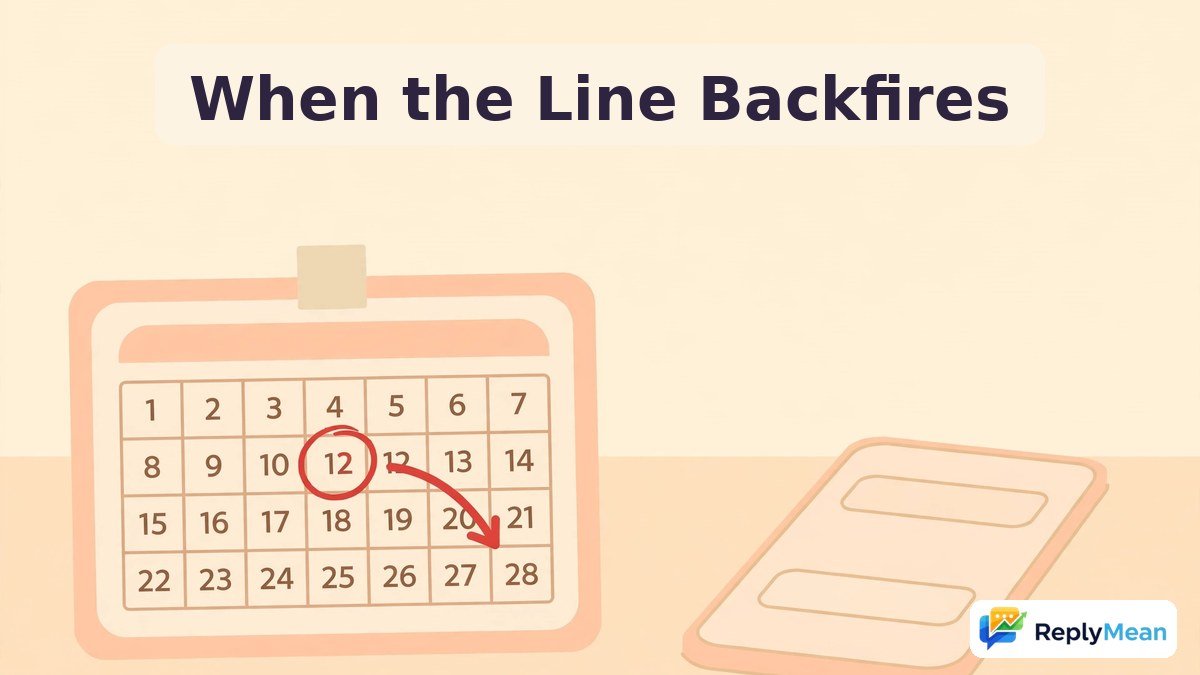
When “Thank You for Your Understanding” Backfires
The standard phrase has a presumption built into its grammar: it thanks the reader for understanding before the reader has said they do. In a routine delay that presumption is harmless filler. In four situations it is the most expensive sentence in the email.
- When the reader has not agreed to anything. Announcing a price rise, a closure or a policy change and closing with thanks for their understanding tells the reader the decision is not open — many will write back precisely to prove they do not understand, or accept.
- Inside a live dispute. To a customer mid-complaint, the phrase reads as the company closing the argument on their behalf. It is the line screenshots are made of.
- Before bad news they can still contest. Thanks offered in advance for a reaction you have not seen is a small act of pressure, and readers feel it as one.
- When the delay is yours and repeated. The third time the same reader is thanked for the same virtue, the thanks becomes the apology’s substitute — and they notice the apology never arrived.
The repair is a change of order, not of vocabulary: acknowledge the impact, state the fact, invite the response, and only then thank them for something they have actually done. “I know this lands badly. The start date moves to March. Tell me what that breaks at your end, and I will fix what I can” outperforms any entry on this page in the hard cases — because it thanks nobody in advance.
Short Thanks for Chats and Quick Replies
Not every wait ends in an email. For the chat thread, the ticket reply and the two-line update, the full phrases are over-dressed; these ten keep the naming habit at chat length:
- “Thanks for waiting — update below.”
- “Appreciate your patience on this one.”
- “You’re a star for holding on.”
- “Thanks for bearing with me!”
- “Grateful for the flexibility, as ever.”
- “Thanks for not chasing — fix is live.”
- “Your patience = noted and appreciated.”
- “Thanks for rolling with the change.”
- “Appreciate you — new date: Friday.”
- “Thanks for your grace on this. Truly.”
Frequently Asked Questions
What are the best other ways to say thank you for your understanding in a work email?
Name the deed, keep the register formal: entry 1 (“I truly appreciate your patience”) for a delay, entry 3 (“I’m grateful for your flexibility”) for a changed plan, entry 9 for a long, acknowledged wait. Each says what the reader actually did.
Is “thank you for your understanding” rude or presumptuous?
In routine use, no — it is filler, not an insult. It turns presumptuous when the reader has not agreed to the thing being thanked for: a contested decision, a live complaint, bad news they can still challenge. There, readers feel managed.
How many of the standard alternatives actually replace the phrase?
Four of the twenty-five (4, 16, 19, 25) keep the word “understanding” itself; seven more rename the same virtue — patience; one (14) swaps in open-mindedness, a virtue for idea discussions. The distinct moves: name patience, name flexibility, credit support.
What is the difference between thanking someone for their patience and for their flexibility?
Patience is for waiting: nothing changed except the clock. Flexibility is for adapting: the plan moved and the reader moved with it. The flexibility line for a plain wait thanks them for a concession never made; the patience line for a rearranged schedule understates it.
“Bear with me” or “bare with me”?
“Bear with me” — bear, meaning endure. “Bare with me” asks the reader to undress, which is why entry 2, warm as it is, deserves a proofread before it goes to anyone senior.
What should I write instead when the reader is angry?
Do not thank them in advance for anything. Acknowledge the impact plainly, give the fact and the date, invite their reply — then thank them afterwards for something real: reading to the end, sending the documents, staying on the call.
Final Thoughts
That is the honest shape of other ways to say thank you for your understanding: twenty-five headings holding perhaps a dozen real moves — patience named seven ways, flexibility four, a few warm character claims, four entries keeping the very word they replace. The upgrade is never a fancier synonym; it is a more accurate sentence.
Cambridge defines patience as “the ability to wait, or to continue doing something despite difficulties, or to suffer without complaining or becoming annoyed” — a fair account of what your reader has been doing while your email was late. Thank them for that, by name, and the line stops sounding like a form letter.