
Cancelation or Cancellation – What’s the Difference?
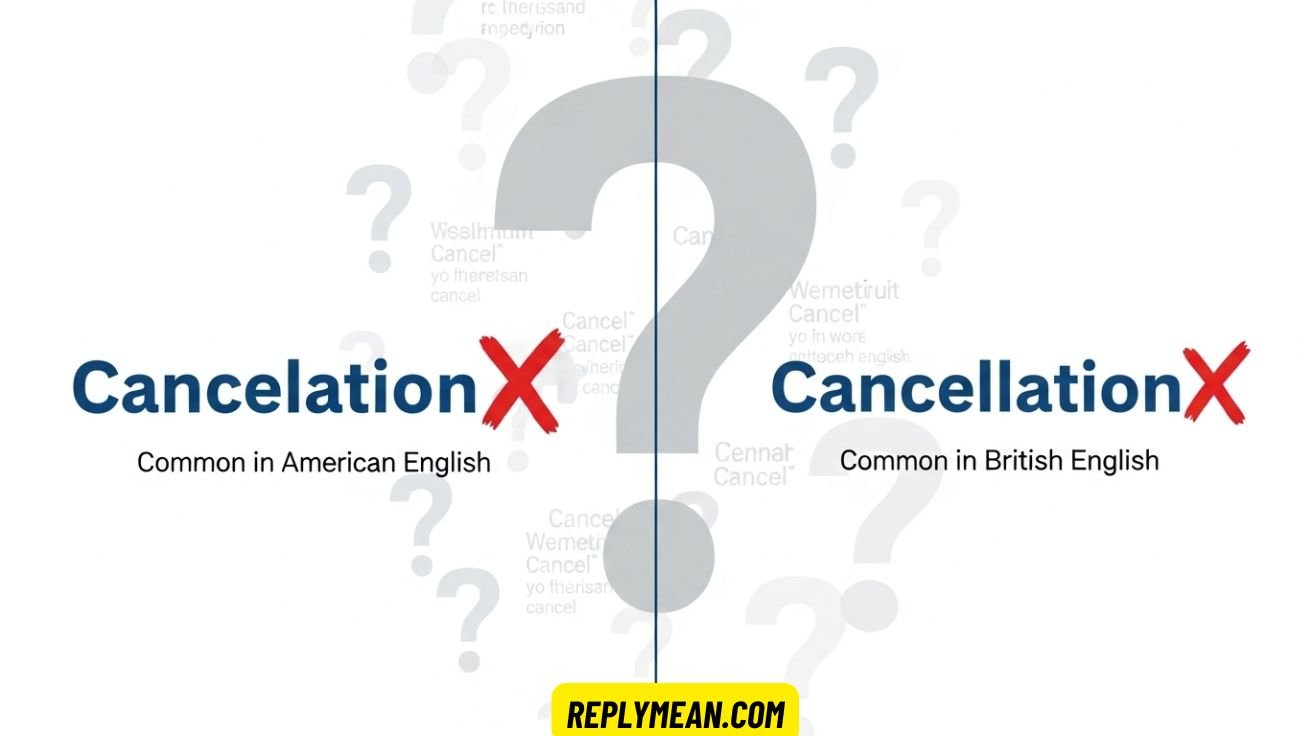
Cancelation or Cancellation refers to the spelling of a noun that means stopping or calling something off. The word comes from the verb “cancel.” In standard English, cancellation with two L’s is the correct form. The spelling cancelation appears rarely in modern writing.
Many students feel confused when they see Cancelation or Cancellation in books or online. The two spellings look almost the same. One small letter changes the word form. Learning the correct spelling makes writing clearer and stronger.
In American English, writers usually use cancellation in school and business writing. Dictionaries and style guides support this form. The double L follows common spelling rules. Understanding this difference helps avoid simple spelling mistakes.
Cancellation vs Cancelation: Quick Answer for American English Writers
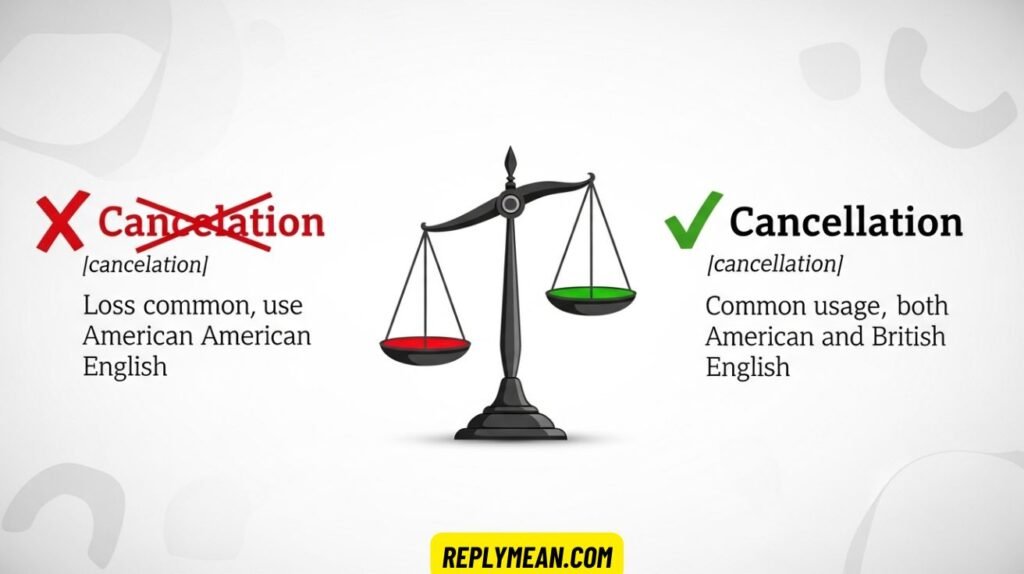
The simplest answer to the question cancellation or cancelation is that cancellation with two L’s is the correct and standard spelling in American English. Although some people still ask is cancelation correct, most dictionaries list it only as a rare variant.
The difference comes from verb to noun spelling patterns and double consonant spelling rules. When the verb “cancel” changes into a noun using the suffix -ation, the letter L doubles. This follows common spelling patterns in English grammar and applies to many suffix -ation words.
The table below shows the key difference clearly.
| Word | Type | Standard in American English | Example Sentence |
| Cancel | Verb | Yes | They cancel the meeting. |
| Canceling | Verb form | Yes | She is canceling her trip. |
| Cancelling | Verb form | UK variant | He is cancelling the show. |
| Cancellation | Noun | Yes | The cancellation surprised everyone. |
| Cancelation | Noun | Rare variant | The cancelation notice arrived late. |
Learning the difference between cancel and cancellation helps prevent common spelling mistakes in daily writing.
Common Mistakes When Using “Cancellation” and How to Avoid Them
One of the most frequent common grammar errors in English happens when writers drop one L and write “cancelation.” This mistake usually appears in fast typing, especially in emails or short documents. These spelling mistakes in emails can reduce professional writing accuracy, even when the meaning is clear.
Many learners struggle because English has complex spelling differences in English across regions and word forms. For example, writers may remember “canceling” with one L in American English and incorrectly assume the noun also uses one L. However, the noun follows different spelling rules for doubling consonants.
Here are three simple correction ideas written as a structured learning list instead of bullet points.
- Always check the noun form separately from the verb form.
- Remember that why cancellation has two Ls connects to the suffix -ation pattern.
- Follow standard English usage from trusted dictionaries.
These small grammar and spelling tips can greatly improve writing clarity.
How to Spell Related Words: Cancel, Canceling, Cancellation Explained
The confusion around canceling vs cancelling vs cancellation happens because of American vs British spelling differences. In American English, the verb becomes “canceling” with one L, but in British English it becomes “cancelling” with two L’s. However, the noun “cancellation” keeps the double L everywhere.
This pattern exists because of historical English spelling rules that treat verbs and nouns differently. Many learners notice that pronunciation does not change, which makes spelling harder.
The table below explains the pattern.
| Form | American English | British English | Word Type |
| Cancel | Cancel | Cancel | Verb |
| Canceling | Canceling | Cancelling | Verb (-ing) |
| Canceled | Canceled | Cancelled | Verb (past) |
| Cancellation | Cancellation | Cancellation | Noun |
Understanding these spelling patterns in English grammar helps writers avoid confusion and strengthens English writing tips for beginners.
Which Countries Prefer “Cancellation” Over “Cancelation”?
The spelling cancellation is used across the United States, the United Kingdom, Canada, Australia, and most English-speaking countries. Even though cancelation sometimes appears in informal writing, it is rarely used in professional publications.
Global dictionaries such as Oxford English Dictionary and American editorial systems follow the same rule. This global agreement supports consistent dictionary spelling standards.
Regional variation still exists in verbs, but the noun stays stable because it fits long-standing verb to noun spelling patterns.
This consistency is helpful for international communication and academic writing.
The Impact of Spelling Differences on Professional Writing
Spelling affects how readers judge your work. Small errors can reduce trust, especially in business communication. Using the correct cancellation spelling shows attention to detail and improves professional writing accuracy.
For example, a contract email using the rare spelling “cancelation” may appear less polished. Many companies follow strict business writing spelling rules to maintain brand professionalism.
Consider the comparison table below.
| Sentence Type | Example | Professional Quality |
| Correct | The cancellation of the agreement is final. | High |
| Incorrect | The cancelation of the agreement is final. | Lower |
This example shows how formal vs informal spelling choices affect communication.
Quick Tips to Remember the Correct Spelling Every Time
Many learners want simple spelling tips for students that are easy to remember. The easiest method is to focus on the sound pattern and the suffix pattern at the same time.
Think of the word as “can-cell-a-tion,” which visually reminds you of the double L. This connects directly to double consonant spelling rules used across English.
Another useful method is to practice reading examples of cancellation in sentences. Repetition helps your brain store correct spelling automatically.
The following numbered memory system can help.
- The verb is “cancel.”
- Add the suffix “-ation.”
- Double the L to keep the short vowel sound.
These steps follow spelling rules for doubling consonants and improve long-term writing accuracy.
How Spell Checkers Handle “Cancellation” vs “Cancelation”

Modern spell check tools sometimes accept both spellings, which increases confusion about is cancelation correct. Software often includes variant spellings even when they are rare.
Programs like Microsoft Word and Google Docs rely on built-in dictionaries based on dictionary spelling standards, but settings may differ by region. Because of this, writers should not depend entirely on automated tools.
Human proofreading is still essential for avoiding common spelling mistakes and maintaining professional writing accuracy.
A quick comparison table explains this clearly.
| Tool | Accepts Cancellation | Accepts Cancelation | Reliability |
| Google Docs | Yes | Sometimes | Medium |
| Microsoft Word | Yes | Sometimes | Medium |
| Manual Dictionary Check | Yes | Rarely | High |
This shows why careful editing remains important.
Pronunciation Guide: Does Spelling Affect How You Say It?
One interesting fact about cancellation vs cancelation is that pronunciation does not change. Both versions sound exactly the same.
The pronunciation is written as /ˌkæn.səˈleɪ.ʃən/.
This situation happens often in English because spelling follows historical rules rather than sound alone. Many learners studying English writing tips for beginners find this surprising.
Even though pronunciation stays the same, using correct spelling improves standard English usage.
Is “Cancelation” Ever Considered Correct? Grammar Experts Weigh In
Some writers ask whether cancelation meaning is officially accepted. The answer is that the word exists but is extremely rare. Most dictionaries mark it as a variant spelling.
Grammar experts explain that language evolves, but formal writing still follows consistent patterns. Because of this, correct spelling of cancellation remains the recommended choice.
Historically, both forms appeared in older texts, but publishing standards gradually moved toward one version for clarity.
This trend reflects how spelling patterns in English grammar develop over time.
How to Use “Cancellation” and “Cancelation” in Business Communication
Business writing requires clear and consistent language. Using correct spelling improves readability and trust. When companies send invoices, contracts, or policy notices, they almost always use cancellation.
Incorrect spelling can create confusion or make documents look less professional. This is why organizations follow strict business writing spelling rules and editorial guidelines.
Consider the short case example below.
A subscription company tested two email versions. One email used “cancelation,” and the other used “cancellation.” Customers rated the second email as more professional and easier to trust. This shows how spelling affects perception.
In business environments, following formal vs informal spelling standards is essential.
Understanding the Basic Difference Between Cancelation and Cancellation
The confusion between cancelation and cancellation happens because both spellings look correct at first glance. Many writers assume that removing one “L” does not change accuracy. However, in standard American English, cancellation with two L’s is the preferred spelling. This difference comes from historical spelling patterns and modern dictionary usage across academic, professional, and everyday writing contexts.
When learners study English spelling, they often notice that some words change when suffixes are added. The word “cancel” becomes “cancellation” when the suffix “-ation” is added, and the consonant doubles. This rule helps maintain pronunciation consistency. Understanding this pattern makes spelling easier and reduces mistakes in emails, essays, and professional communication.
See Also : Requester vs Requestor: Spelling, Use & Examples
Why English Spelling Rules Cause Confusion
English spelling rules are not always simple because the language developed from many sources, including Latin and French. These influences created multiple spelling patterns for similar words. Because of this, writers often see variations like canceling and cancelling, which increases confusion when forming the noun cancellation.
Another reason for confusion is that pronunciation usually stays the same even when spelling changes. Writers cannot rely only on sound when spelling words correctly. Learning common suffix patterns and reading regularly can help build familiarity with correct forms, making it easier to remember the standard spelling in both formal and informal writing situations.
The Role of Double Consonant Spelling in English
Double consonant spelling is an important concept in English grammar. When certain suffixes are added to words, the final consonant may double to keep the vowel sound short. In the word cancellation, the letter L doubles before adding the suffix “-ation,” which follows a common spelling pattern seen in many English nouns.
Examples of this pattern appear in words like “permission” and “admission,” where consonants are doubled before suffixes. Recognizing this pattern helps writers avoid spelling mistakes. Once learners understand how doubling works, they can apply the same rule to many words and improve overall writing accuracy across different types of documents.
American vs British Spelling Differences
American and British English often use different spelling styles, which can confuse learners. For example, Americans usually write “canceling,” while British writers use “cancelling.” These variations developed over time as dictionaries and education systems standardized regional spelling preferences.
However, the noun “cancellation” keeps the double L in both American and British English. This consistency helps maintain clarity across regions. Understanding regional differences is useful, especially for international communication, academic writing, and online publishing where audiences may come from multiple English-speaking countries.
How Dictionaries Decide Correct Spellings
Dictionaries play an important role in defining standard spelling. Lexicographers study usage patterns in books, media, and academic writing before deciding which forms become standard. Over time, cancellation became more widely used than cancelation, which is why most dictionaries list it as the preferred spelling.
Dictionary editors also review historical usage and modern trends. Even if a variant exists, it may still be marked as rare or informal. Writers who follow dictionary standards improve clarity and professionalism. Checking reliable dictionaries is one of the best ways to confirm spelling when uncertainty appears.
Common Spelling Mistakes Students Make
Students often make spelling mistakes when writing quickly or relying only on pronunciation. Words that look similar, like cancelation and cancellation, create confusion because both seem logical. Without understanding suffix patterns, learners may choose the shorter spelling by accident.
Practice and repetition help reduce these mistakes. Reading academic texts and reviewing corrected writing builds stronger spelling memory. Teachers also encourage proofreading because small spelling errors can affect grades. Over time, recognizing common patterns helps students develop more accurate writing habits.
The Importance of Correct Spelling in Professional Writing
Correct spelling plays a major role in professional communication. Business emails, reports, and contracts require clear and accurate language. Even small mistakes can affect how readers judge professionalism and attention to detail. Using the correct spelling cancellation helps maintain credibility.
Employers often expect polished writing because it reflects organizational standards. When spelling errors appear in official documents, they may cause confusion or reduce trust. Careful proofreading and using reliable style guides can help writers maintain consistent spelling across all professional communication materials.
How Spell Check Tools Influence Modern Writing
Spell check tools have changed how people write today. Programs like word processors automatically correct many spelling errors, making writing faster and easier. However, these tools sometimes accept alternative spellings, which may confuse users about which form is standard.
Because spell check software depends on dictionary databases, settings may vary by region. Writers should still review their work carefully instead of relying completely on automation. Manual proofreading helps catch uncommon variants and ensures consistent spelling in formal writing.
The Connection Between Word Structure and Meaning
Understanding word structure helps writers learn spelling more effectively. The word cancellation comes from the verb cancel combined with the suffix “-ation,” which forms a noun describing an action or result. This pattern appears in many English words.
When learners recognize how prefixes and suffixes work, spelling becomes more predictable. Studying word formation also improves vocabulary and reading comprehension. Writers who understand structure are less likely to confuse similar spellings because they see how each word develops logically.
See Also : 50 Other Ways to Say Thank You for Your Quick Response
Practical Ways to Remember the Correct Spelling
Simple memory techniques make spelling easier to remember. One helpful method is breaking the word into parts, such as “can-cell-a-tion.” Seeing the double L visually reinforces the correct pattern and reduces confusion during writing tasks.
Another effective method is repeated exposure through reading and writing practice. Writing example sentences using cancellation helps reinforce memory. Over time, correct spelling becomes automatic, allowing writers to focus more on ideas and communication rather than worrying about small spelling details.
FAQs
Which is correct, cancelation or cancellation?
Cancellation is the correct and standard spelling in modern English.
Cancelation is a rare variant and is generally avoided in formal writing.
Does cancelation have one L or two?
Cancelation has one L, but it is not the preferred spelling.
Cancellation uses two L’s and is accepted in standard dictionaries.
Is it cancellation or cancelation in the US?
In American English, cancellation is the correct and commonly used spelling.
Most U.S. style guides and dictionaries recommend cancellation.
Does the double L matter in cancellation?
Yes, the double L matters because it follows standard English spelling rules.
Using cancellation with two L’s improves clarity and professionalism in writing.
Conclusion
I explained Cancelation or Cancellation in simple English for young learners and writers. You now know that cancellation uses two L letters in standard American writing. This rule follows common spelling patterns and helps you write clearly in school work and daily practice. When you remember this pattern, you build strong grammar habits and improve confidence in every sentence you write.
Keep practicing the correct form Cancelation or Cancellation whenever you write essays, emails, and reports. Choose cancellation in formal writing and follow trusted dictionaries and classroom lessons. Regular reading and careful proofreading strengthen your spelling skills over time. These steady habits guide your progress and support clear communication in academic tasks and future professional writing goals.