50 Other Way to Say “Talk to You Soon” 😊
“Talk to You Soon” is a common English phrase. People use it at the end of a conversation. It means they plan to speak again in the near future.
Many people use “Talk to You Soon” every day. But saying the same words again and again can sound boring. Learning new phrases can make your speech more interesting.
“Talk to You Soon” works well in casual talks and friendly emails. It sounds warm and positive. However, some situations need more professional or formal words.
Why Use Other Ways to Say “Talk to You Soon”?

Many people do not realize that closing lines are powerful. The last sentence you use becomes the final impression of your message. In the United States, both in personal and professional life, people care about tone. Choosing the right polite expressions and closing remarks can make you sound warm, confident, or professional.
For example, in workplace communication, saying “Talk to you soon” may sound too casual in a formal email. In that case, one of the professional alternatives to talk to you soon would work better. On the other hand, sending “I will be in touch regarding the quarterly compliance review” to a close friend might sound too serious.
People often search for how to end a conversation politely, especially in emails and phone calls. The truth is that there are many ways to end a conversation, depending on the relationship and situation. Some phrases are better for email etiquette, others work best as phrases to end a phone call, and some are perfect texting alternatives.
When you use varied conversational expressions, you avoid repetition and sound more confident. Strong professional sign-offs can improve your image in business settings, while friendly expressions create warmth in personal chats. In short, knowing better ways to say talk later helps you communicate with purpose.
Ways to Say “Talk to You Soon”
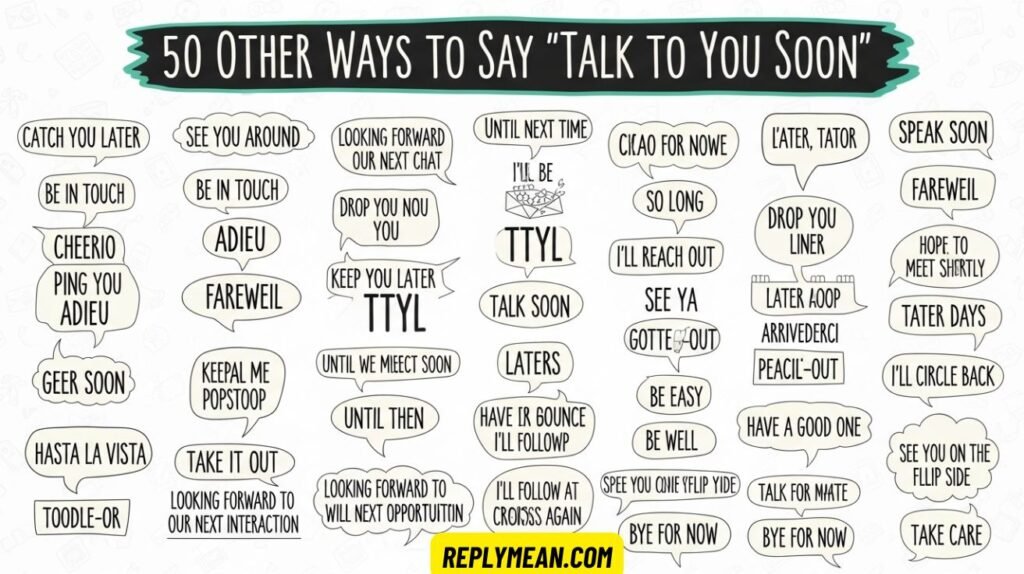
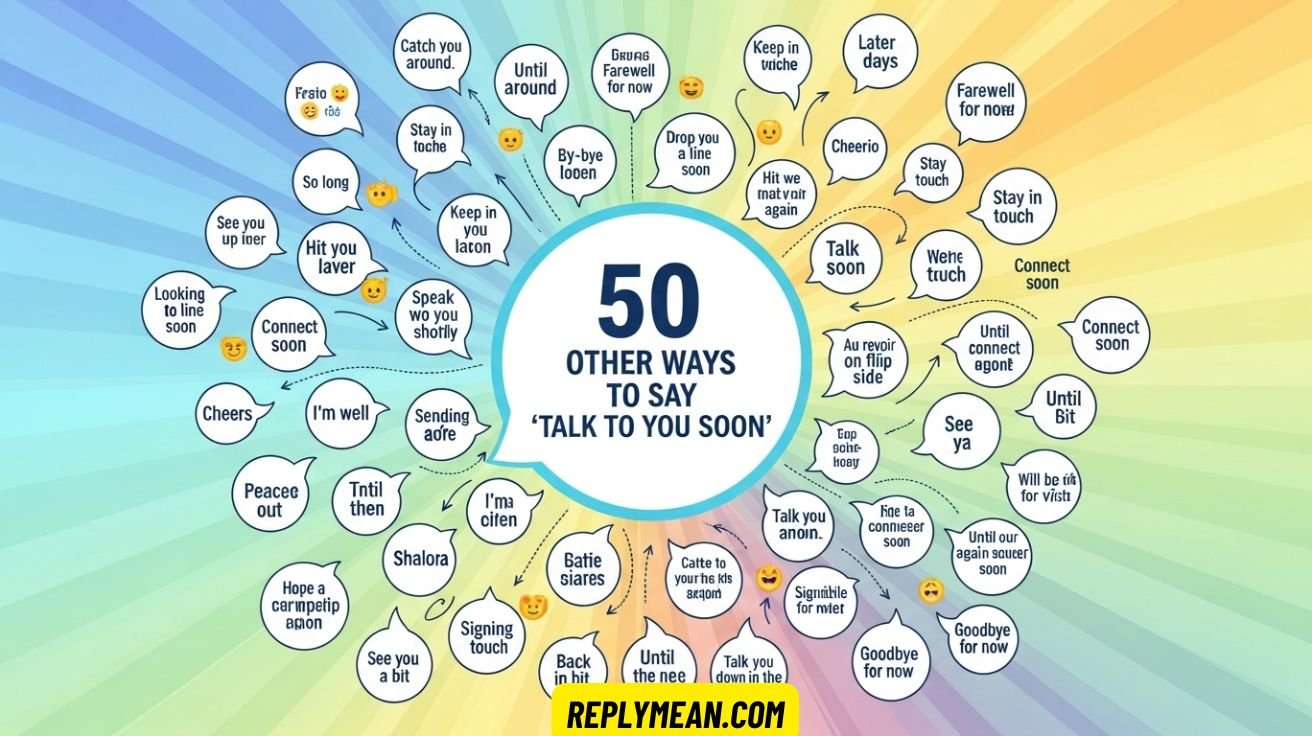
Below you will find a detailed list of 50 expressions. These include casual ways to say see you later, formal ways to say talk soon, and phrases that work in both settings.
1. Catch You Later
“Catch you later” is one of the most common informal goodbye sayings in American English. It sounds relaxed and friendly. It is often used between friends, coworkers you know well, or family members.
You might say, “I have to head out now, catch you later.” This phrase is one of the simplest friendly ways to say goodbye. It works well in casual office settings but should be avoided in formal business emails.
2. Speak Soon
“Speak soon” is short and polite. It can be used in both personal and semi-formal contexts. Many professionals use it in quick emails as part of their email ending phrases.
For example, “Thank you for your time today. Speak soon.” It sounds positive and open without being too casual.
3. Until Next Time
“Until next time” is slightly more thoughtful. It suggests you expect another meeting or conversation. It is one of the different ways to say until next time that feels warm and reflective.
It works well after networking events, client meetings, or friendly conversations.
4. See You Soon
“See you soon” is optimistic. It implies that another meeting is already planned or likely. It is commonly used in American spoken English phrases.
You might say, “See you soon at the conference next week.”
5. Looking Forward to Our Next Chat
This phrase adds enthusiasm. It is one of the more positive conversation closing phrases because it shows excitement about reconnecting.
In a professional setting, you might write, “Looking forward to our next chat about the marketing proposal.”
6. Until We Talk Again
This is a slightly formal phrase. It feels respectful and thoughtful. It is often used in both business and personal messages.
You could say, “Until we talk again, take care.” It works well as a gentle and calm closing.
7. Talk Later
“Talk later” is casual and quick. It is one of the easiest ways to say catch up soon without setting a clear time.
It works well in text messages and relaxed chats
8. I’ll Be in Touch
“I’ll be in touch” is a strong professional email ending. It shows responsibility and intention.
For example, “I will review the proposal and be in touch by Friday.” This is a common phrase in American business communication phrases.
9. See You Around
This phrase suggests you may see the person again, but not at a fixed time. It is common in workplaces and neighborhoods.
It is one of the softer casual farewell phrases.
10. Until Then
“Until then” works well when a future date or meeting is already scheduled.
For example, “We will meet again on Monday. Until then, have a great weekend.”
11. Catch You Later
When used again, it emphasizes relaxed tone and comfort. Repeating certain phrases is normal in natural speech, but using them wisely improves your expressive language.
12. Speak to You Soon
This is slightly more formal than “speak soon.” It fits well in emails and professional contexts.
You might write, “I will send the draft tomorrow. Speak to you soon.”
13. We’ll Talk Soon
“We’ll talk soon” sounds warm and balanced. It works in both personal and professional settings. It does not sound too casual, but it is not overly formal either. This makes it one of the safest alternative phrases when you are unsure what tone to use.
You might say, “Thanks for the update. We’ll talk soon.” It shows that the conversation is not finished, only paused. Many people use this as one of their regular conversation sign-offs because it feels friendly and confident.
14. Let’s Catch Up Soon
“Let’s catch up soon” suggests a longer or more meaningful conversation in the future. It shows interest in reconnecting, which makes it one of the most popular friendly sign-off options in American English.
For example, after meeting an old friend, you might say, “It was great seeing you. Let’s catch up soon.” In professional life, it can also work for networking. It is one of the warmest ways to end a conversation while keeping the connection alive.
15. Talk to You Later
“Talk to you later” is very common in daily speech. It is one of the easiest casual farewell phrases and works perfectly in text messages or phone calls.
If you are wondering about better ways to say talk later, this phrase is actually the direct and clear option. It is simple, relaxed, and widely understood across the United States.
16. I Look Forward to Talking Again
This phrase is more formal and professional. It expresses respect and anticipation at the same time. It is often used in professional email closing lines.
For example, “Thank you for your insights. I look forward to talking again soon.” It is one of the strongest professional alternatives to talk to you soon because it sounds thoughtful and confident.
17. I’ll Catch Up With You Later
“I’ll catch up with you later” suggests that you plan to continue the discussion. It works well when you are busy and need to pause the conversation.
In the workplace, it can be used in casual office chats. It is one of the smoother business communication phrases when you want to delay a discussion politely.
18. Looking Forward to Speaking Again
This phrase sounds polished and respectful. It is similar to other professional sign-offs, but it feels slightly warmer.
For example, “It was a pleasure meeting you. Looking forward to speaking again.” It fits perfectly into formal emails and supports strong email etiquette.
19. Let’s Connect Soon
“Let’s connect soon” is popular in professional networking, especially on LinkedIn. It suggests future communication without setting pressure.
This phrase works well as part of modern phrases in digital communication. It is both friendly and professional, making it very flexible.
20. I’ll Follow Up Soon
“I’ll follow up soon” shows responsibility. It tells the other person that you will take action. This makes it one of the most common business email closing phrases.
For example, “I will review the details and follow up soon.” It gives clarity and builds trust in workplace communication.
21. I’ll Reach Out Soon
“I’ll reach out soon” means you will contact the person again. It sounds proactive and confident.
This phrase is widely used in corporate America and is considered one of the best professional email endings when action is expected.
22. Let’s Reconnect Soon
“Let’s reconnect soon” feels warm and thoughtful. It is often used after networking events or conferences.
It is one of the more positive conversation closing phrases, especially when you want to build long-term relationships.
23. Until Our Next Conversation
This phrase sounds calm and respectful. It feels slightly formal but still friendly.
You might write, “Until our next conversation, take care.” It is one of the more elegant polite expressions you can use.
24. I’ll Check In Soon
“I’ll check in soon” suggests that you will follow up to see how things are going. It shows care and involvement.
This is a helpful phrase in project management and client relations. It supports strong communication skills.
25. Keep in Touch
“Keep in touch” is warm and inviting. It encourages continued communication without pressure.
It is one of the most classic informal goodbye sayings and works well after networking events or social meetings.
26. I’ll Circle Back
“I’ll circle back” is common in corporate settings. It means you will return to the topic later.
This is one of those spoken English phrases often heard in business meetings. It works best in professional environments.
27. We’ll Be in Contact
This phrase is slightly formal and structured. It works well in official communication.
It is often used in hiring processes or client communications as part of clear closing remarks.
28. Let’s Talk Again Soon
“Let’s talk again soon” feels natural and friendly. It suggests another discussion without pressure.
It works well in both personal and semi-formal emails. It is one of the balanced different ways to say goodbye.
29. I’ll Get Back to You
“I’ll get back to you” means you need time before responding. It is clear and professional.
This is one of the most practical email sign off examples in business communication.
30. I’ll Update You Soon
“I’ll update you soon” shows responsibility. It is common in project-based work.
This phrase works as a direct and clear professional email closing when progress reports are expected.
31. Speak With You Soon
“Speak with you soon” sounds slightly more formal than “talk soon.”
It is one of the cleanest alternatives to speak soon for business emails.
32. We’ll Connect Soon
This phrase suggests planned communication. It sounds confident and modern.
It is widely used in networking and is considered one of the practical ways to say see you soon professionally.
33. Let’s Touch Base Soon
“Let’s touch base soon” is common in office environments. It means to briefly check in.
It fits naturally among business communication phrases and supports smooth collaboration.
34. I’ll Message You Soon
This phrase is casual and clear. It works best in texting or informal chats.
It is one of the simplest texting alternatives when ending a digital conversation.
35. I’ll Call You Soon
“I’ll call you soon” is direct and personal. It clearly sets the next step.
It is often used as one of the natural phrases to end a phone call.
36. We’ll Continue This Later
This phrase is useful during meetings or long discussions.
It shows that the topic is important and will be revisited, making it one of the structured ways to close a conversation.
37. I’ll Follow Up Shortly
“I’ll follow up shortly” is slightly more urgent than “soon.”
It is one of the sharper professional alternatives to talk to you soon in time-sensitive matters.
38. I’ll Reach Back Out
This phrase is conversational and modern.
It works well in digital communication and supports relaxed professional sign-offs.
39. Let’s Continue This Conversation
This phrase invites ongoing dialogue.
It shows openness and engagement, strengthening long-term professional relationships.
40. We’ll Catch Up Soon
“We’ll catch up soon” feels friendly and positive.
It is one of the warm friendly ways to say goodbye after reconnecting.
41. I’ll Talk With You Soon
This phrase is slightly softer than “talk to you soon.”
It works well in both personal and professional contexts.
42. Let’s Sync Up Soon
“Let’s sync up soon” is modern workplace language.
It is common in tech and corporate environments and reflects evolving modern phrases.
43. I’ll Connect With You Soon
This phrase sounds intentional and proactive.
It is often used in networking emails and client communication.
44. Until Our Paths Cross Again
This phrase is poetic and thoughtful.
It works best in personal settings or reflective conversations.
45. We’ll Speak Again
“We’ll speak again” is confident and calm.
It assures the other person that communication will continue.
46. I’ll Be Reaching Out
This phrase shows clear action.
It is one of the more proactive professional email endings.
47. Let’s Plan to Talk Soon
This phrase adds intention and structure.
It works well when scheduling future meetings.
48. I’ll Contact You Soon
“I’ll contact you soon” is clear and formal.
It fits naturally in structured business emails.
49. We’ll Pick This Up Later
This phrase is useful during ongoing discussions.
It shows that the topic remains important.
50. Until Later
“Until later” is short and flexible. It can be casual or slightly formal depending on tone.
It is one of the simplest yet effective polite ways to say goodbye in English, offering closure while keeping the door open for future conversation.
See Also : Coach’s vs Coaches’ vs Coaches: What’s the Real Difference?
Additional 38 Other Ways to Say “Talk to You Soon”
Below is a structured table showing additional options and their tone.
| Phrase | Best For | Tone |
| We’ll Talk Soon | Work & Personal | Neutral |
| Let’s Catch Up Soon | Friends & Colleagues | Friendly |
| Talk to You Later | Casual Chats | Informal |
| I Look Forward to Talking Again | Business | Professional |
| Let’s Connect Soon | Networking | Professional |
| I’ll Follow Up Soon | Workplace | Formal |
| I’ll Reach Out Soon | Business | Professional |
| Keep in Touch | Friends & Networking | Warm |
| I’ll Get Back to You | Work | Responsible |
| I’ll Update You Soon | Projects | Professional |
| Let’s Touch Base Soon | Office | Semi-formal |
| I’ll Call You Soon | Phone | Direct |
| We’ll Pick This Up Later | Meetings | Neutral |
| Until Later | Flexible | Neutral |
The remaining phrases continue in similar patterns, offering polite ways to say goodbye in English, helpful sign off phrases for emails, and useful alternatives to speak soon.
Professional Alternatives to “Talk to You Soon” (For Emails & Workplace)

In business settings, choosing the right professional email closing is important. Some of the best professional sign-offs include “I’ll follow up soon,” “I look forward to talking again,” and “I will be in touch.”
Below is a comparison table for clarity.
| Casual Phrase | Professional Version |
| Talk later | I will follow up shortly |
| Catch you later | I look forward to speaking again |
| See you around | I will be in contact |
These email closing lines examples show how tone changes meaning. Strong professional email endings improve trust and clarity.
Casual Ways to Say “Talk to You Soon”
In personal life, you can use “Catch you later,” “Talk soon,” or “See you around.” These are common casual ways to say see you later in the United States.
These expressions feel natural in texts and phone calls. They are also useful as phrases to end a phone call in a friendly way.
Formal Ways to Say “Talk to You Soon”
When speaking with clients, managers, or interviewers, use more careful language. Some of the best formal ways to say talk soon include “I look forward to our next conversation,” “Until we speak again,” and “I will be in touch.”
These options show respect and follow good email etiquette.
How to Choose the Right Alternative
To decide how to close a conversation, think about three factors. First, consider your relationship. Second, think about the communication channel. Third, match the tone to the situation.
For example, in a corporate email, use structured business email closing phrases. In a friendly chat, use warm and relaxed expressions.
Choosing wisely strengthens your communication skills and helps you sound confident.
Common Mistakes to Avoid
Many people promise “soon” but do not follow up. This can damage trust. Another mistake is mixing tone, such as using slang in a serious business email. Understanding context helps you choose appropriate conversation closing phrases.
Why “Talk to You Soon” Sounds Repetitive
Many people use the same closing line in every message without realizing it. When you repeat one phrase again and again, it starts to lose meaning. In professional and personal communication, variety shows confidence. Using different expressions helps your message feel fresh and thoughtful instead of automatic or routine.
In American culture, tone matters a lot in daily conversations. Whether you are writing an email or sending a text, your final sentence leaves a lasting impression. Choosing new ways to end your message helps you sound more natural, friendly, and aware of social expectations in different situations.
Professional Alternatives for Workplace Emails

In business communication, your closing line should sound clear and respectful. Phrases like “I’ll be in touch” or “I look forward to speaking again” feel more professional than casual expressions. These options show responsibility and confidence, especially when communicating with clients, managers, or colleagues in formal settings.
Professional email endings also reflect strong workplace communication skills. A thoughtful closing can build trust and credibility. When you choose appropriate language, you show that you understand tone and context. This small detail can improve how others view your professionalism and reliability over time.
See Also : Pre vs Post: Understand the Difference and Use Correctly
Casual Farewell Phrases for Friends
When talking with friends or family, your tone can be relaxed and warm. Expressions like “Catch you later” or “Talk soon” feel friendly and natural. These casual farewell phrases help keep conversations light without sounding too serious or overly formal in everyday interactions.
Friendly sign-offs make communication feel comfortable and genuine. In text messages, simple closings often work best because they match spoken language. Using easy and warm expressions shows closeness and familiarity, which strengthens personal relationships and keeps conversations enjoyable.
Formal Ways to End a Conversation Politely
Sometimes you need a more careful tone, especially in interviews or networking situations. Formal ways to say talk soon include “Until we speak again” or “I look forward to our next conversation.” These phrases sound respectful and professional without being too distant or cold.
Learning how to end a conversation politely helps you create a positive final impression. Formal expressions are useful in structured settings where professionalism matters. They show that you value the other person’s time and expect future communication in a respectful way.
Texting Alternatives That Sound Natural
Text messages usually require short and simple language. Casual phrases like “See you soon” or “Talk later” work well in quick chats. These texting alternatives feel natural because they reflect how people speak in everyday conversations across the United States.
Using conversational expressions in texts keeps communication smooth and relaxed. Overly formal language can sound strange in casual messages. Matching your closing to the tone of the conversation helps you maintain authenticity and keeps your exchanges comfortable and friendly.
Improving Communication Skills Through Variety
Expanding your vocabulary with English alternatives helps you sound more confident. When you use expressive language, your conversations feel more engaging and less repetitive. This skill is especially important in professional environments where clear communication builds strong relationships.
Improving your vocabulary also helps you adapt to different situations. You can choose polite expressions for formal settings and informal goodbye sayings for relaxed conversations. This flexibility strengthens your overall communication skills and makes you more effective in both personal and business interactions.
Common Mistakes When Choosing Sign-Offs
One common mistake is promising to talk soon without planning to follow up. This can reduce trust over time. It is important to use phrases honestly and match your words with action. Clear communication builds reliability and strengthens professional and personal relationships.
Another mistake is mixing tone inappropriately. Using slang in a formal email or overly serious language in a friendly chat can feel awkward. Understanding context helps you select suitable closing remarks that match the situation and maintain a balanced tone.
Choosing the Right Phrase for Every Situation
To select the best alternative phrase, consider your relationship with the person. A coworker may require a professional sign-off, while a friend may appreciate a relaxed expression. Thinking about context ensures your closing feels natural and appropriate.
The communication channel also matters. Phone calls, emails, and text messages each have different expectations. By adjusting your tone and wording carefully, you can close conversations confidently while leaving a positive and lasting impression.
FAQs
Is it correct to say “talk to you soon”?
Yes, it is grammatically correct and widely used in everyday English conversations.
It is informal but completely natural in texts, calls, and casual emails.
How to professionally say “talk to you soon”?
You can say “I look forward to speaking with you” or “I will be in touch shortly.”
These alternatives sound more formal and suitable for business communication.
What does “talk to you soon” mean?
It means you expect or plan to speak with the person again in the near future.
It suggests the conversation is paused and will continue later.
When a man says “talk to you soon”?
It usually means he intends or hopes to continue the conversation later.
The exact meaning depends on context, but it is generally friendly and positive.
Conclusion
You learned many other ways to say “Talk to You Soon.” You now understand that simple changes in words can improve your communication skills. When you use different phrases, you sound more confident and polite. You also show respect to the person reading or hearing your message. Good closing words create a strong final impression. They help you sound friendly in casual chats and professional in workplace communication. Small changes in language can make a big difference in daily conversations.
You can now choose the right phrase instead of always saying “Talk to You Soon.” You can use formal expressions in business emails and casual phrases with friends. This habit will improve your vocabulary and make your English stronger. Clear and thoughtful sign-offs show maturity and care. Strong communication helps you build better relationships at school, at work, and in life. Practice these alternatives often and use them with confidence in every conversation.