50 Other Ways to Say “Looking Forward to Speaking with You”
Looking Forward to Speaking with You means you are excited or ready to talk with someone. It is a polite way to show interest in a conversation. People use it in emails, messages, or letters to be respectful and professional.
Many people use the same phrase again and again. It can sound boring or too simple. Learning new ways to say it makes your emails more interesting and professional.
Using Looking Forward to Speaking with You shows respect and politeness. It helps in school, work, or meeting new people. Choosing the right words makes your emails clear, friendly, and professional.
Why You Should Use Alternatives to “Looking Forward to Speaking with You” in Professional Emails
In the U.S. business world, email tone shows your professionalism. When you use the same closing line every time, your message can feel automatic instead of thoughtful. Learning strong alternatives to looking forward makes your communication sound fresh and personal.
Using different email closing lines also helps you match the situation. For example, a job interview email needs more formal language, while a team message can be more relaxed. Knowing the difference between formal communication phrases and friendly wording helps you build trust.
When you improve your endings, you also improve your business writing tips and overall email language improvement. This shows confidence, clarity, and respect. It also helps you master business email etiquette, which is very important in American companies.
Professionals who use varied and thoughtful language often appear more engaged. They are better at expressing anticipation professionally, writing effective meeting confirmation phrases, and using appropriate client communication wording. Strong email endings can even improve your networking email language when reaching out to new contacts.
How to Choose the Right Alternative Based on Context
Before choosing a phrase, think about who you are emailing. Tone matters in American business culture.
If you are writing to a senior executive, use more polite business expressions and structured corporate communication phrases. If you are emailing a colleague you work with daily, you can use more relaxed and friendly language.
When deciding how to end an email professionally, consider the purpose of your message. If you are confirming a meeting, choose wording that shows preparation. If you are following up, use strong professional follow-up phrases that show confidence but not pressure.
Below is a simple comparison table that shows tone differences in the United States workplace.
| Situation | Recommended Tone | Example Type |
| Job interview | Formal and respectful | Structured and polite |
| Client email | Professional and warm | Confident and clear |
| Internal team message | Friendly and collaborative | Relaxed but respectful |
| Networking email | Polished and positive | Enthusiastic but professional |
Choosing the right tone helps with expressing eagerness in emails without sounding too casual or too stiff. This balance is key to strong communication skills phrases and professional growth.
Synonyms for “Looking Forward to Speaking with You”
Now let’s explore 50 synonyms for looking forward to speaking with someone. These examples include both formal and informal options. Each one includes guidance so you know when to use it.
1. Can’t wait to talk with you
This phrase conveys genuine excitement and energy, making it perfect for informal or semi-formal emails. Using ways to say excited to talk like this shows that you are enthusiastic about the upcoming conversation. For example, “I can’t wait to talk with you about the new marketing project next week” communicates warmth and eagerness while remaining professional. In American business culture, showing enthusiasm can make your communication feel more personal and engaging.
It is also effective in emails where you want to encourage collaboration or discussion. By using this phrase, you are practicing expressing eagerness in emails and improving your workplace communication skills. It signals to the recipient that you value their input and are ready to actively participate in the conversation.
2. Excited to connect soon
This is a professional yet friendly alternative to “looking forward to speaking with you.” Using excited to connect or eager to connect soon shows optimism and a proactive approach. For instance, “Excited to connect soon and discuss how we can enhance our strategy” communicates positivity without being overly casual. This is especially effective in networking email language or client communications in the U.S.
It also demonstrates thoughtful planning and engagement. Incorporating this phrase into your emails is an excellent example of enthusiastic email wording. It signals readiness and professionalism while maintaining a personable tone, which helps strengthen your business email etiquette and overall professional communication examples.
3. Eager to chat with you
Using eager to chat with you conveys both interest and proactivity. For example, “I’m eager to chat with you about the upcoming product launch” shows that you are prepared and genuinely interested in the conversation. This is particularly suitable for team discussions, project planning, or client follow-ups. It reflects strong communication skills phrases and a collaborative mindset.
The phrase also fits well in emails where you want to encourage dialogue. By expressing your eagerness, you practice expressing interest professionally while keeping the tone approachable. In American workplaces, this helps you maintain a balance between enthusiasm and professionalism in formal vs informal email tone.
4. Anticipating our conversation
This is a slightly more formal alternative, ideal for corporate emails or executive communications. Using anticipating our conversation conveys respect and careful preparation. For instance, “I am anticipating our conversation to review the quarterly results” is professional, polite, and sets a constructive tone. It fits perfectly in formal conversation phrases or important business meetings.
It also signals that you value the recipient’s time and input. This phrase strengthens your professional follow-up phrases and business email alternatives, showing that you are attentive and serious about the discussion. It is especially effective in client-facing emails or strategic planning scenarios.
5. Ready to catch up
This phrase is friendly, warm, and informal, making it suitable for emails to colleagues or long-term clients. Saying ready to catch up shows openness and approachability. For example, “I’m ready to catch up and hear about your latest updates on the project” is inviting and personable while maintaining professionalism. It improves client communication wording and keeps the email tone approachable.
It is also useful for re-establishing connections or following up after some time. Using this language helps strengthen polite expressions in emails and encourages relaxed, collaborative dialogue, which is essential in American workplace culture.
6. Looking ahead to our talk
This is a neutral and professional option that fits a wide range of business scenarios. Using looking ahead to our talk conveys anticipation without excessive excitement. For example, “Looking ahead to our talk about the new budget plan next week” communicates clarity and professionalism. It is suitable for emails that confirm meetings or upcoming discussions and aligns with meeting confirmation phrases.
The phrase also reflects organized communication and foresight. Incorporating this into your email demonstrates professional email phrases and strong business writing tips, helping your message feel structured and intentional without being too casual or too formal.
7. I’m keen to discuss this with you
Using keen adds a sense of focus and intention. For instance, “I’m keen to discuss this with you and explore potential solutions” communicates enthusiasm without being over-the-top. This phrase is widely used in professional American English and fits perfectly in formal communication phrases or team project discussions.
It also conveys engagement and seriousness, showing that you value the recipient’s insights. Using this phrase effectively strengthens your professional follow-up phrases and overall workplace communication skills, making your emails feel intentional and thoughtful.
8. Can’t wait to hear from you
This phrase emphasizes the recipient rather than the sender. Saying can’t wait to hear from you shows that you value the other person’s input. For example, “Can’t wait to hear from you on your thoughts about the proposal” communicates interest and encourages a response. It is particularly strong in client communication wording or project collaboration emails.
It also creates a more engaging, two-way conversation tone. Using this alternative in your emails is a great example of expressing anticipation professionally and incorporating polite ways to express excitement, making your communication feel dynamic and interactive.
9. Excited about our upcoming chat
This phrase combines warmth and professionalism, making it ideal for meetings or brainstorming sessions. For instance, “Excited about our upcoming chat regarding the new product launch” conveys enthusiasm without being informal. It is an excellent example of alternative phrases for emails and helps maintain a positive tone.
It also sets expectations for a productive discussion. By using this language, you strengthen email language improvement and demonstrate professional email phrases that are engaging, friendly, and polished.
10. Awaiting our conversation eagerly
This is a formal and respectful phrase, showing genuine interest in the upcoming discussion. For example, “I am awaiting our conversation eagerly to finalize the project details” conveys both anticipation and professionalism. It fits well in executive emails or important client communications and is a strong formal conversation phrase.
It also communicates patience and attentiveness, enhancing your business email alternatives and email sign-off alternatives. Recipients often perceive this phrasing as thoughtful and considerate, which improves professional relationships.
11. Happy to speak with you soon
This phrase is warm, polite, and approachable. For example, “I’m happy to speak with you soon and answer any questions you have” is friendly while remaining professional. Using happy to speak with you helps maintain a positive tone and works well for polite business expressions in client or internal team emails.
It also conveys openness and goodwill. Incorporating this language demonstrates strong professional email phrases and business writing tips, making the recipient feel welcomed and valued in the conversation.
12. Anxious to discuss further
While the word “anxious” can sometimes imply worry, in American professional emails it often signals eagerness and attentiveness. For example, “I’m anxious to discuss further opportunities for collaboration” conveys urgency and genuine interest. It is especially useful in expressing eagerness in emails related to project deadlines or critical updates.
This phrase also communicates commitment and proactive engagement. Using it thoughtfully strengthens corporate communication phrases and professional follow-up phrases, showing that you are serious about moving the conversation forward and valuing the recipient’s input.
13. Ready for our conversation
This phrase communicates confidence and preparedness. Using ready for our meeting shows that you are organized and professional, which is highly valued in American workplaces. It works well for emails confirming calls, client discussions, or team meetings. For example, “I’m ready for our conversation and looking forward to your insights on the project.”
It also demonstrates respect for the recipient’s time. By expressing readiness, you signal that you value the discussion and have prioritized it. In terms of corporate communication phrases, it strikes a balance between formal and approachable, making it suitable for both internal and client-facing emails.
14. I’m thrilled to connect with you
This phrase adds excitement and energy to your email. Saying excited to connect or I’m thrilled to connect with you shows positivity and enthusiasm, which can make your message more engaging. For instance, “I’m thrilled to connect with you to explore potential collaboration opportunities.”
It is particularly effective in networking email language and team introductions. Using enthusiastic email wording helps create a friendly atmosphere, encouraging open discussion and collaboration. In American business culture, this phrasing communicates both professionalism and warmth.
15. Can’t wait to hear your thoughts
Focusing on the recipient, this phrase shows that you value their opinion. Using professional follow-up phrases like this is great for client emails or team projects. For example, “I can’t wait to hear your thoughts on the proposal.”
It creates a two-way conversation vibe. By emphasizing the other person’s input, your email becomes more collaborative, strengthening your workplace communication skills and demonstrating effective client communication wording.
16. Looking forward to catching up
This phrase is ideal for informal or semi-formal contexts. When you write looking forward to catching up, it conveys friendliness and interest in personal or professional updates. For example, “Looking forward to catching up and hearing your latest updates.”
It works particularly well with colleagues or partners you already know. It maintains warmth while still being professional, which is an important skill in formal vs informal email tone management.
17. Eager to hear your ideas
Using eager to connect soon or eager to hear your ideas signals curiosity and interest. For example, “I’m eager to hear your ideas on how we can improve our process.”
This phrase encourages creativity and collaboration. In terms of collaboration email wording, it invites the recipient to contribute actively, showing that you value their input and are engaged in the conversation.
18. Can’t wait to collaborate
This is perfect for teamwork and partnership emails. Writing can’t wait to collaborate communicates excitement about joint efforts. For instance, “I can’t wait to collaborate on this exciting project with your team.”
It is an excellent example of polite ways to express excitement while maintaining a professional tone. This phrasing motivates others and sets a positive tone for project discussions and partnerships.
19. Looking forward to our discussion
This phrase is formal, professional, and widely accepted in business emails. Using professional email phrases like this provides clarity and sets expectations. For example, “I’m looking forward to our discussion about the new marketing strategy.”
It works for client meetings, team calls, or any formal conversation. Using this language improves business email etiquette and ensures your messages remain polite and respectful.
20. Excited to explore this with you
This phrasing shows curiosity and readiness to tackle a topic together. Excited to explore this with you works well for brainstorming sessions or problem-solving discussions. For example, “I’m excited to explore this with you during our call tomorrow.”
It helps create an engaging and collaborative tone, which is an essential element of communication skills phrases. Recipients often respond positively to emails that convey genuine interest and enthusiasm.
21. Anticipating our upcoming talk
This phrase is polite and professional, suitable for important meetings. Using anticipating our conversation demonstrates respect and readiness. For example, “I am anticipating our upcoming talk to align on next steps.”
It works well for executives, clients, or formal team communications. Using such formal conversation phrases strengthens your credibility and shows attentiveness to the discussion.
22. Ready and eager to speak
Combining readiness and enthusiasm, this phrase conveys strong engagement. Writing ready and eager to speak signals both confidence and interest. For example, “I’m ready and eager to speak about the project details at your convenience.”
This phrase works in collaborative settings and professional follow-up phrases, ensuring the recipient knows you are committed and attentive to the conversation.
23. Happy to connect soon
A warm and friendly phrase, happy to connect soon works well in casual business emails and networking scenarios. For example, “I’m happy to connect soon and discuss your new ideas.”
It helps maintain a positive tone while staying professional, improving workplace communication skills. This phrase is particularly effective when establishing rapport with clients or colleagues.
24. Looking forward to exchanging ideas
This phrase highlights collaboration. Using alternative phrases for emails like this shows that you value shared input. For example, “I’m looking forward to exchanging ideas on the upcoming campaign.”
It is perfect for team meetings or brainstorming sessions. It encourages open discussion and strengthens collaboration email wording in professional communication.
25. Eager to engage in our conversation
This phrase signals proactive participation. Writing eager to engage in our conversation emphasizes your interest in meaningful dialogue. For example, “I’m eager to engage in our conversation about the new strategy.”
It works well for strategic discussions, client meetings, and networking emails. Using this language demonstrates both focus and enthusiasm in business email alternatives.
26. I look forward to our discussion
A formal, neutral option, this works for virtually any professional email. For example, “I look forward to our discussion on Monday.”
It demonstrates respect for the recipient’s time and is a classic formal communication phrase. This phrase is widely recognized and safe in American business culture.
27. I anticipate our meeting
This is an executive-friendly alternative. Using anticipating our conversation in this context conveys respect and preparation. Example: “I anticipate our meeting to align on the quarterly goals.”
It is particularly effective in professional communication examples for higher-level business emails.
28. I look forward to connecting with you
Friendly yet professional, this phrase works in networking or client emails. For example, “I look forward to connecting with you next week.”
It is a versatile email sign-off alternative suitable for almost any professional context, from casual team emails to external communication.
29. I await your insights
This emphasizes the recipient’s input and is excellent for collaborative discussions. Example: “I await your insights on the proposal.”
It is a strong follow-up email phrase and highlights expressing interest professionally, making the reader feel valued.
30. I look forward to our scheduled call
Perfect for confirmed meetings, this phrase clarifies timing. Example: “I look forward to our scheduled call on Tuesday at 3 PM.”
It works in meeting confirmation phrases and ensures clarity, demonstrating organized and professional behavior.
31. I appreciate the opportunity to speak with you
This is ideal for interviews or formal client discussions. Example: “I appreciate the opportunity to speak with you about your new project.”
It is polite, respectful, and fits polite expressions in emails, strengthening professional relationships.
32. I look forward to learning more
This phrase expresses curiosity and engagement. Example: “I look forward to learning more about your marketing strategy.”
It works in professional email phrases and encourages open dialogue, fostering collaboration and knowledge sharing.
33. I’m pleased to schedule time to speak
This phrase is formal and structured, ideal for busy professionals. Example: “I’m pleased to schedule time to speak with you next week.”
It fits formal communication phrases and shows organization, which is highly appreciated in corporate email etiquette.
34. I’m eager to connect soon
A polite, proactive phrase. Example: “I’m eager to connect soon to discuss the project timeline.”
This is a classic eager to connect soon option for networking or internal collaboration.
35. I look forward to collaborating
This shows enthusiasm for teamwork. Example: “I look forward to collaborating with you on the new campaign.”
It is ideal for collaboration email wording and emphasizes shared effort in professional settings.
36. I’m enthusiastic about our discussion
This adds a lively tone. Example: “I’m enthusiastic about our discussion and next steps.”
It helps convey energy and engagement, enhancing enthusiastic email wording.
37. I look forward to your perspective
Focusing on the other person, this is perfect for client emails. Example: “I look forward to your perspective on the project plan.”
It demonstrates respect and expressing interest professionally.
38. I value the chance to speak with you
This phrase is polite and appreciative. Example: “I value the chance to speak with you about the proposal.”
It works well for polite business expressions in both internal and external emails.
39. I’m glad we’ll be speaking soon
Friendly and approachable, this phrase works in semi-formal emails. Example: “I’m glad we’ll be speaking soon about your ideas.”
It balances warmth and professionalism, suitable for U.S. business culture.
40. I’m looking forward to our exchange
Neutral and collaborative, this phrase is perfect for team discussions. Example: “I’m looking forward to our exchange on the new strategy.”
It fits professional communication examples and encourages open dialogue.
41. I welcome the opportunity to talk
Formal and polite, ideal for client communication. Example: “I welcome the opportunity to talk and clarify details.”
It reinforces polite expressions in emails while maintaining professionalism.
42. I look forward to addressing this together
This highlights teamwork. Example: “I look forward to addressing this together and finding solutions.”
It strengthens collaboration email wording and shows shared responsibility.
43. I’m happy to connect
Short, warm, and professional. Example: “I’m happy to connect and discuss your ideas.”
It is suitable for networking email language and informal client communications
44. I’m eager to move forward together
Shows initiative and teamwork. Example: “I’m eager to move forward together on the proposal.”
It works well in professional follow-up phrases and project collaboration emails.
45. I’m excited to discuss next steps
Perfect for planning and strategy discussions. Example: “I’m excited to discuss next steps for our partnership.”
This is a clear example of enthusiastic email wording and forward-thinking communication.
46. I look forward to working with you
Classic and versatile. Example: “I look forward to working with you on this project.”
It is widely recognized in formal communication phrases and demonstrates commitment.
47. I anticipate productive discussions
Formal and professional, showing confidence in outcomes. Example: “I anticipate productive discussions in tomorrow’s meeting.”
It strengthens conversation anticipation phrases and executive-level emails.
48. I look forward to sharing ideas
Friendly and collaborative. Example: “I look forward to sharing ideas during our next session.”
It works well for teams and creative meetings, improving collaboration email wording.
49. I’m keen to hear your feedback
Professional and engaged. Example: “I’m keen to hear your feedback on the draft proposal.”
It emphasizes expressing interest professionally and values the recipient’s input.
50. I’m looking forward to our conversation next week
A neutral, safe, and professional ending. Example: “I’m looking forward to our conversation next week to finalize details.”
It works in almost all U.S. business contexts and aligns perfectly with formal vs informal email tone expectations. It is also a key example of professional email phrases for consistent, polite communication.
See Also : 50 Other Ways to Say “In Loving Memory”
Case Study: Why Email Endings Matter in the U.S. Workplace
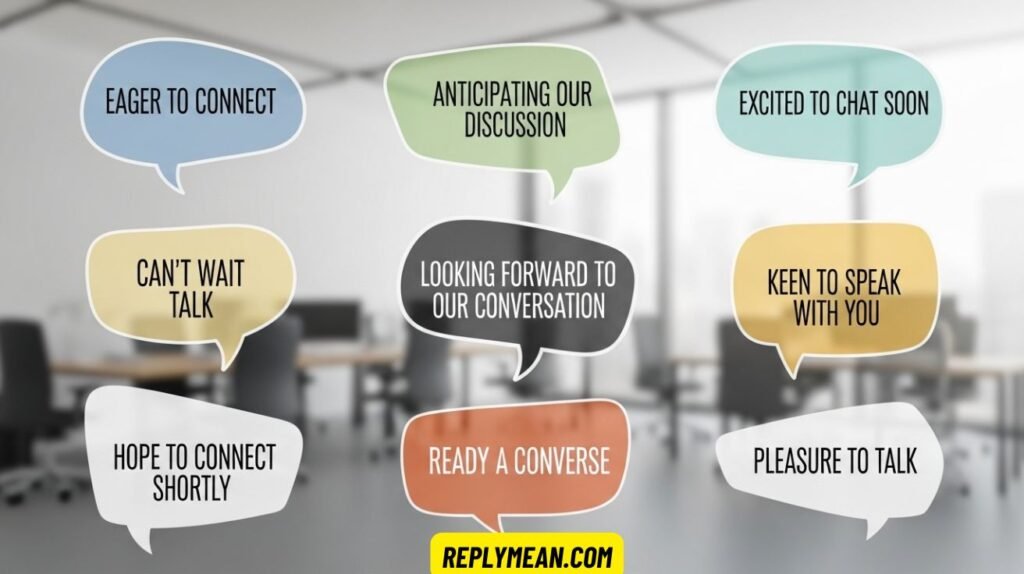
A marketing manager in New York once shared that changing her standard email ending improved her response rate. Instead of writing the same closing line every time, she used personalized email sign-off alternatives. When confirming meetings, she wrote “I look forward to our scheduled call.” When networking, she used “Excited to connect soon.” She noticed that her emails felt more natural and professional.
This small change improved her how to sound professional in emails approach and strengthened her reputation in her company.
Why Email Closings Matter in Professional Communication
A strong email closing sets the tone for your entire message. In American business culture, the way you end an email can affect how you are perceived. Using professional email phrases or email sign-off alternatives shows attention to detail, improves clarity, and strengthens workplace communication skills, making your emails more effective and engaging for clients or colleagues.
Choosing the right closing demonstrates thoughtfulness. Simple words like “Looking forward to speaking with you” are polite, but using alternatives to looking forward shows creativity. Polite expressions in emails help convey enthusiasm, professionalism, and respect. Over time, using varied endings improves business email etiquette and builds stronger connections in meetings, networking, and collaborative projects.
Understanding Formal vs. Informal Email Tone
Email tone depends on the recipient and context. Formal emails often require structured formal communication phrases, while internal team messages can be relaxed. Recognizing formal vs informal email tone ensures your message sounds professional yet approachable. Using the right words, such as anticipating our conversation for executives or “Can’t wait to talk with you” for colleagues, enhances your effectiveness.
Knowing the difference prevents miscommunication. Overly casual language in corporate emails may appear unprofessional, while overly formal wording can feel stiff. Using polite ways to express excitement in both tones creates warmth and engagement. This skill strengthens networking email language and improves communication skills phrases in all U.S. workplace scenarios, from client emails to team updates.
Alternatives to “Looking Forward to Speaking with You”
Relying on one phrase can make your emails repetitive. Exploring ways to say excited to talk or synonyms for looking forward to adds variety and clarity. Alternatives like “Excited to connect soon” or “Eager to chat with you” make your emails sound enthusiastic and professional. These phrases demonstrate engagement and thoughtful professional communication examples.
Using alternatives also improves your business writing tips. Varied closings can be tailored to meeting confirmation phrases, project discussions, or networking. Selecting the right phrase ensures your email fits the tone and context. Whether you’re crafting email language improvement for clients or internal teams, variety helps you sound confident, approachable, and ready to collaborate.
See Also : 50 Other Ways to Say “Not Only”
How to Express Eagerness Professionally
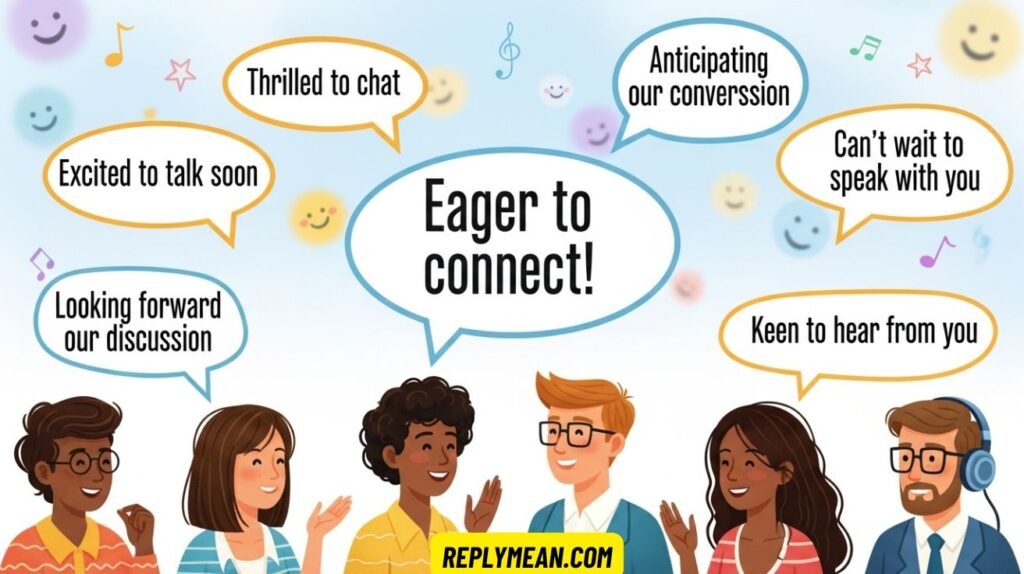
Showing excitement without being informal is key. Phrases like “I’m eager to discuss this with you” balance enthusiasm with professionalism. Such expressing eagerness in emails conveys interest in projects or meetings without sounding pushy. Using these phrases strengthens your corporate communication phrases and ensures your tone aligns with the U.S. workplace standards.
Professional eagerness encourages collaboration. Using collaboration email wording like “Looking forward to exchanging ideas” or “Excited about our upcoming chat” creates positive engagement. These alternatives emphasize respect and attentiveness, helping recipients feel valued. Incorporating these phrases into your email closing lines improves readability, tone, and overall effectiveness in professional interactions.
FAQs
How do you say “looking forward to you professionally”?
You can say “I am eager to connect with you” or “I look forward to our conversation” in a professional tone.
What can I say instead of “I look forward to”?
Use alternatives like “I anticipate,” “I am eager to,” or “Excited to connect soon.”
What is another way of saying I look forward to your reply?
You can write “I await your response” or “Looking forward to hearing from you.”
How do I say “I will get back to you politely”?
Use “I will follow up shortly” or “I’ll respond as soon as possible.”
Final Thoughts
Using different ways to say Looking Forward to Speaking with You helps make your emails sound better and more professional. When you choose clear and polite words, people understand that you are serious and respectful. Good email endings also show that you care about the person you are writing to. Simple phrases can make your message more friendly, confident, and easy to read.
Practicing these alternatives improves your workplace communication skills and helps you write stronger professional email phrases. You can use them in school, work, or when talking to new people. Each time you write clearly, you build trust and respect. Choosing the right words keeps your emails polite, warm, and professional, making your conversations successful.